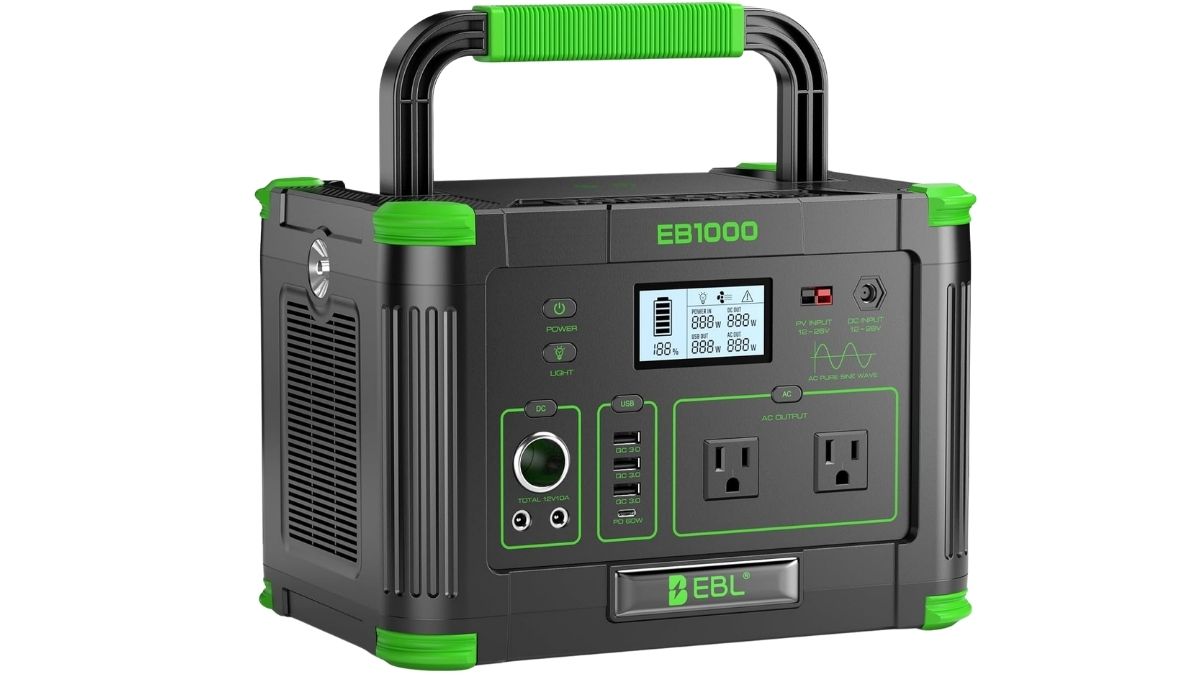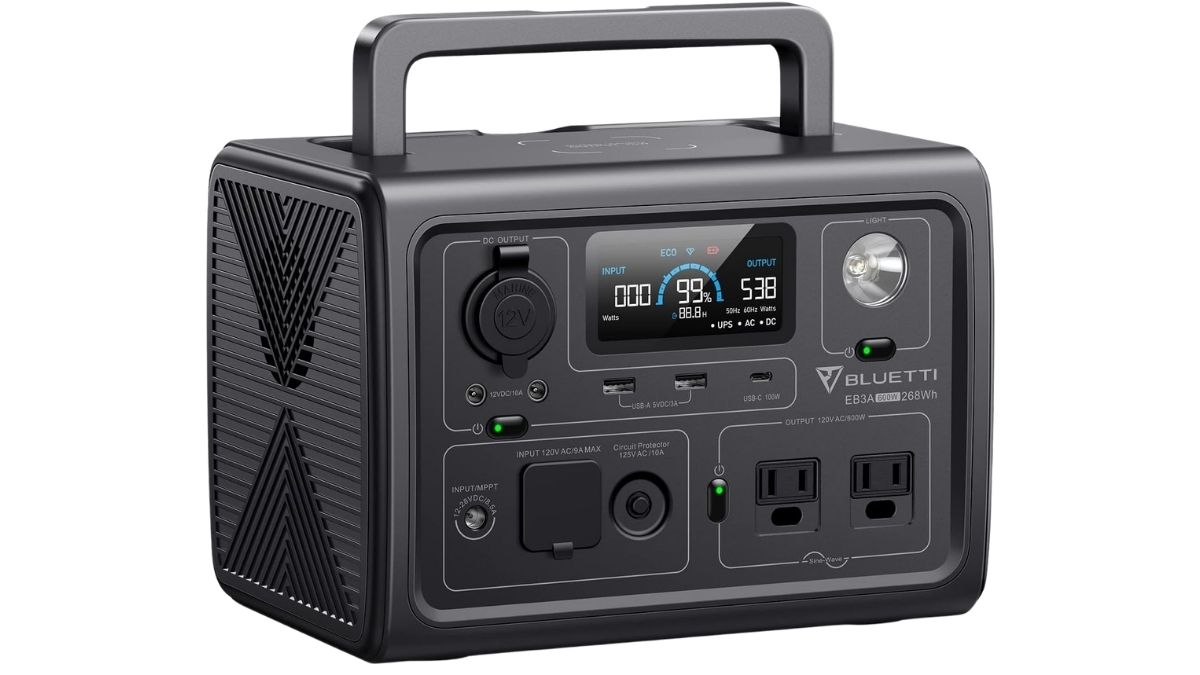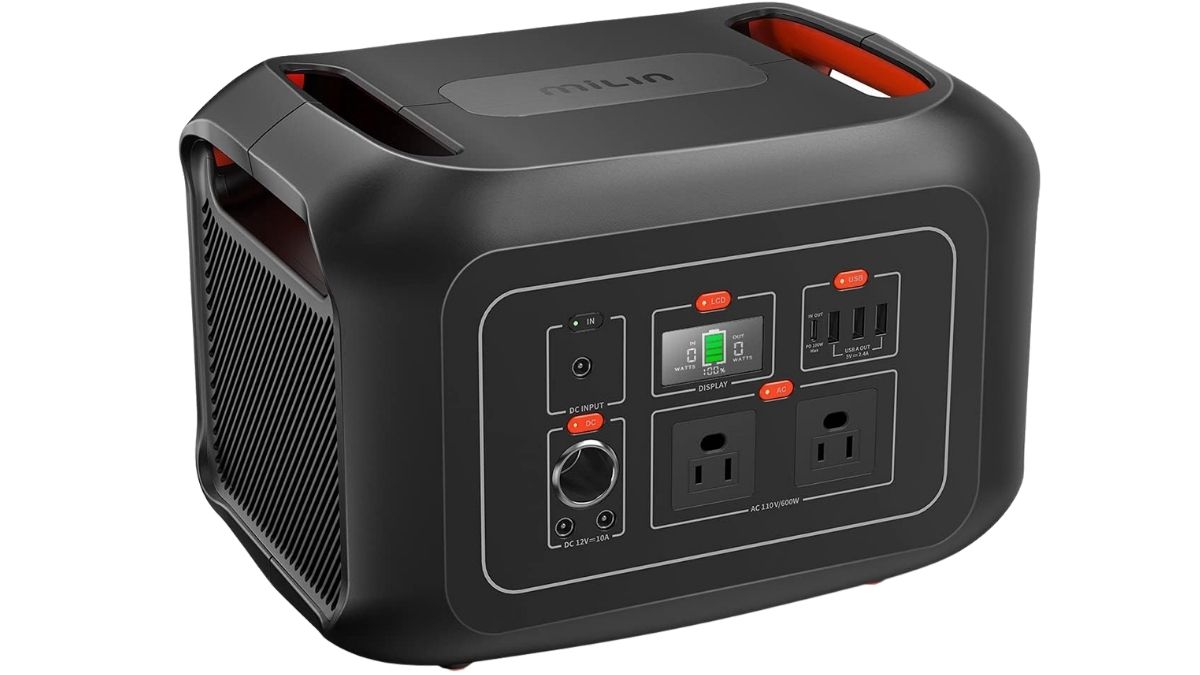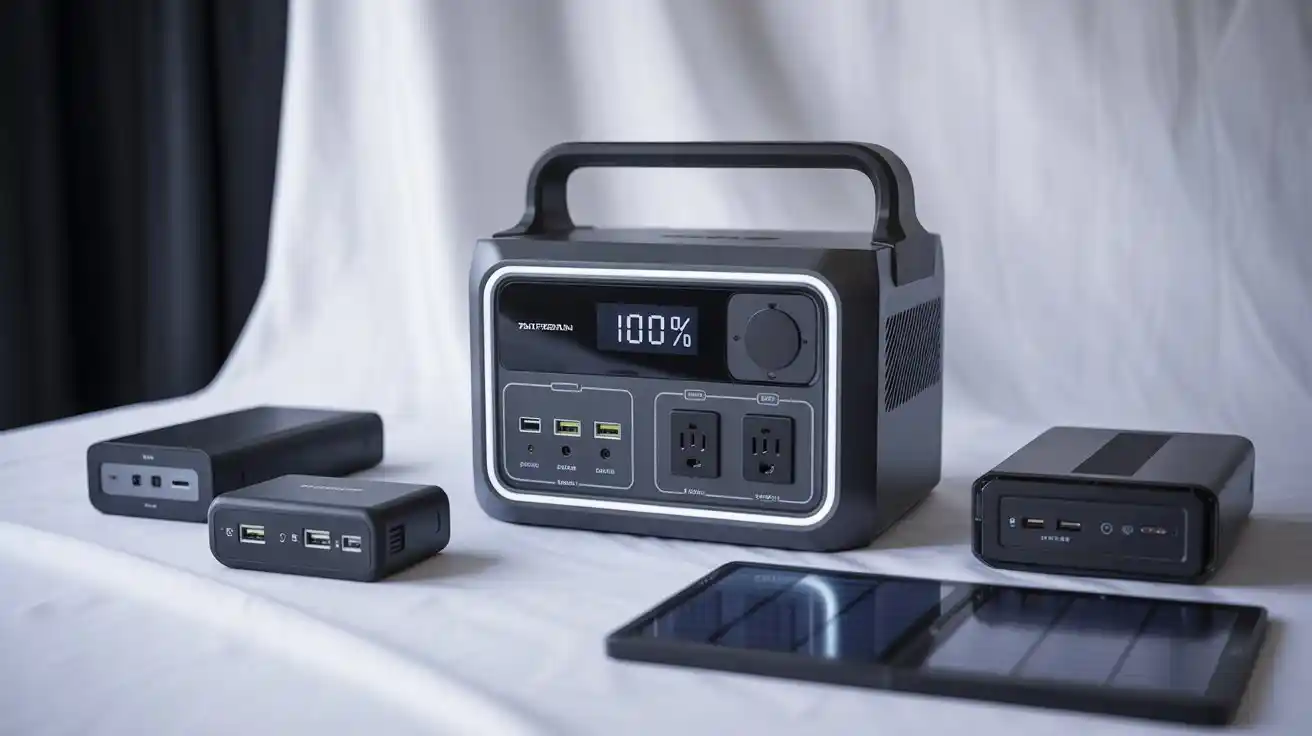
The best portable power stations with pass-through charging for backup use are the EcoFlow Delta 2 Max, Bluetti AC200L, and EcoFlow Delta Pro. These units charge from the wall or solar while simultaneously powering your devices, making them ideal for home outages and medical device backup. For the best long-term results, choose a model with LiFePO4 cells, a UPS mode rated under 30ms, and a pass-through efficiency above 90%.
Top Picks at a Glance
| Model | Capacity | UPS Mode | Battery | Best For |
|---|---|---|---|---|
| EcoFlow Delta 2 Max | 2048 Wh | Yes (less than 30ms) | LiFePO4 | Best overall backup |
| Bluetti AC200L | 2048 Wh | Yes (30ms) | LiFePO4 | Solar + home backup |
| Jackery Explorer 2000 Plus | 2042 Wh | Not rated | LiFePO4 | Portability + capacity |
| EcoFlow Delta Pro | 3600 Wh | Yes (less than 30ms) | LiFePO4 | Whole-home backup |
| Anker SOLIX C800 | 768 Wh | Not rated | LiFePO4 | Budget / small loads |
| Goal Zero Yeti 1500X | 1516 Wh | Not rated | NMC | Modular expansion |
Why Pass-Through Charging Matters for Backup Power
Most people buy a portable power station thinking it will cover them during a blackout. Then the outage hits and they realize the station is only half charged. That is the problem pass-through charging solves.
Pass-through charging means the station accepts power from the wall or solar while simultaneously running your connected devices. You do not have to choose between charging and using it.
For home backup specifically, this matters in two real scenarios:
- You plug the station in as a permanent standby, keeping it topped off while your devices run through it every day.
- During a prolonged outage, you charge from solar panels during daylight hours while still running your refrigerator or CPAP overnight.
Not every station handles this well. Some generate too much heat during simultaneous charge and discharge, degrading the battery faster. Others throttle charging speed under high load. The models in this guide were selected because they handle pass-through reliably without significant trade-offs.
What Is Pass-Through Charging? (Clear Definition)
Pass-through charging refers to a power station’s ability to receive input power from AC wall, solar, or car while actively delivering output power to connected devices at the same time. The station’s Battery Management System (BMS) manages both flows simultaneously.
There are two circuit designs used in practice:
- Bypass circuit: Wall power routes directly to the output without stressing the battery cells. The battery only tops off in the background. This is the most battery-friendly design and is used in some EcoFlow models.
- Standard pass-through: Input and output flow through the BMS together, meaning the battery both charges and discharges at the same time. This works reliably but generates more heat during heavy use.
Does pass-through charging damage the battery? On LiFePO4 stations with solid thermal management, the risk is minimal. The bigger concern is keeping the battery at 100% State of Charge (SOC) for weeks at a time. Most quality stations let you cap charging at 80 to 90% through their app to extend long-term battery health.
How to Choose the Right Pass-Through Power Station for Backup
Battery Chemistry: LiFePO4 vs NMC
LiFePO4 (lithium iron phosphate) cells are the right choice for any pass-through backup application. They handle heat better, last 3,000 to 3,500+ charge cycles, and are chemically more stable. NMC batteries like those in the Goal Zero Yeti 1500X are more energy-dense and lighter but degrade faster under the repeated charge-discharge stress of pass-through use.
If you plan to run pass-through daily or even weekly, prioritize LiFePO4. Over 3 to 5 years of regular use, you will notice the gap in capacity retention.
UPS Mode and Switchover Time
Pass-through and UPS mode are related but not the same thing. UPS mode means the station is always sitting between your wall outlet and your devices. When wall power cuts, the transition to battery is nearly instant.
- Under 30ms: Safe for most computers, routers, and network equipment
- Under 20ms: Recommended for CPAP and home medical devices
- 30ms and above: Fine for refrigerators, lights, and non-sensitive loads
Check the spec sheet directly. Some brands advertise pass-through support but do not publish a UPS switchover time, which usually means the transition is noticeable.
Pass-Through Efficiency Rating
A station with 85% pass-through efficiency loses 15% of your wall power as heat. At 90% and above, you are wasting much less energy and putting less thermal stress on the battery. EcoFlow and Bluetti both publish efficiency figures in their spec sheets. If a brand does not list it, that is worth questioning before buying.
Solar and AC Input Simultaneously
For solar backup setups, confirm that MPPT solar input and AC wall input can run at the same time. Some stations disable one source when the other is connected. The Bluetti AC200L handles this best in this price range, with 2400W of combined input available from AC and solar together.
App-Based Smart Charging Limits
The best pass-through stations let you set a charge ceiling through their app. Capping at 80% is the standard recommendation for long-term standby use. EcoFlow’s app is the most feature-complete here, offering charge schedules, real-time watt monitoring, and battery health reports.
Best Portable Power Stations with Pass-Through Charging for Backup Use (2026 Reviews)
1. EcoFlow Delta 2 Max – Best Overall for Home Backup
The Delta 2 Max is the most balanced option for US homeowners. At 2048 Wh with LiFePO4 cells, it covers the core backup needs: refrigerator, router, lights, and device charging. It charges from 0 to 80% in under an hour using dual AC input pulling 2400W from the wall, and it operates in full UPS mode with a verified sub-30ms switchover time.
The pass-through architecture on EcoFlow’s X-Stream system is particularly efficient, routing power with minimal thermal overhead compared to standard designs. At 49 lbs, it stays in one place but is manageable to reposition when needed.
Limitation: Won’t run central air conditioning or electric water heaters. At 49 lbs, it is not a grab-and-go unit.
2. Bluetti AC200L – Best for Solar Plus Pass-Through Backup
The AC200L is the strongest choice for homeowners with solar panels or those planning a solar-plus-storage backup setup. It accepts up to 2400W of MPPT solar input alongside AC charging, and both can run simultaneously. Capacity is 2048 Wh with LiFePO4 cells rated at 3,500 cycles.
The UPS mode is rated at 30ms and the Bluetti app lets you set charge limits and monitor usage in real time. It outputs 2000W continuous from AC, which handles most home loads comfortably.
Limitation: Heaviest unit in this list at 61 lbs. Not the right pick if you need to move it regularly.
3. Jackery Explorer 2000 Plus – Best for Capacity Plus Portability
The Explorer 2000 Plus starts at 2042 Wh and expands up to 12 kWh with add-on battery packs, making it one of the more flexible options at this price tier. It uses LiFePO4 cells rated at 4,000 cycles, the highest in this group, and accepts up to 3000W of solar input.
Pass-through is fully supported, but Jackery does not officially publish a UPS switchover time for this model. That means brief interruptions are possible when wall power cuts. For most home loads this is a non-issue. For CPAP machines or computers, it matters.
4. EcoFlow Delta Pro – Best for Whole-Home or Extended Backup
The Delta Pro starts at 3600 Wh and scales to 25 kWh with extra battery packs. Its 3600W AC output can run more demanding appliances, and it integrates with EcoFlow’s Smart Home Panel to connect directly to your home’s breaker box.
Pass-through with sub-30ms UPS is standard on this model. This is more than most single-room setups need, but it is the right call for anyone who lost power for multiple days during a major weather event and wants a serious solution.
5. Anker SOLIX C800 – Best Budget Option
At 768 Wh, the SOLIX C800 handles modest backup needs well: router, phone and tablet charging, a few LED lights, and a small fan. LiFePO4 cells with a 3,000+ cycle rating give it solid longevity. It is compact enough to live on a shelf permanently and fully supports pass-through charging.
This is not the right unit for refrigerator backup or CPAP. It doesn’t have the capacity or output wattage for sustained high-draw appliances. Buy it for what it is: a reliable small-load backup at a fair price.
6. Goal Zero Yeti 1500X – Best for Modular Expansion
The Yeti 1500X is the oldest design in this list but still holds up for one specific use case: homeowners who want to start small and expand capacity over time. It supports Goal Zero’s modular battery ecosystem, meaning you can add extra battery tanks as your backup needs grow without buying an entirely new unit.
Capacity sits at 1516 Wh with a 2000W AC output, which is enough to run a refrigerator, router, and lights through a standard overnight outage. It fully supports pass-through charging and accepts up to 600W of solar input via MPPT.
The trade-off is the battery chemistry. The Yeti 1500X uses NMC cells rated at around 500 cycles, which is significantly lower than any LiFePO4 option in this guide. If you plan to use pass-through daily or weekly, that cycle count will show up in reduced capacity within a few years.
Full Specification Comparison Table
| Model | Capacity (Wh) | AC Output (W) | AC Input (W) | Max Solar (W) | UPS | Battery | Cycles |
|---|---|---|---|---|---|---|---|
| EcoFlow Delta 2 Max | 2048 | 2400 | 2400 | 1000 MPPT | Less than 30ms | LiFePO4 | 3000+ |
| Bluetti AC200L | 2048 | 2000 | 3000 | 2400 MPPT | 30ms | LiFePO4 | 3500+ |
| Jackery Explorer 2000 Plus | 2042 | 3000 | 1200 | 3000 MPPT | Not rated | LiFePO4 | 4000+ |
| EcoFlow Delta Pro | 3600 | 3600 | 3600 | 1600 MPPT | Less than 30ms | LiFePO4 | 3500+ |
| Anker SOLIX C800 | 768 | 800 | 800 | 400 MPPT | Not rated | LiFePO4 | 3000+ |
| Goal Zero Yeti 1500X | 1516 | 2000 | 600 | 600 MPPT | Not rated | NMC | 500+ |
Which Power Station Is Right for Your Backup Need?
| Your Backup Situation | Recommended Model | Key Reason |
|---|---|---|
| Home outage (fridge + router + lights) | EcoFlow Delta 2 Max | UPS mode + 2000Wh for 8 to 16 hrs |
| CPAP or medical device backup | EcoFlow Delta 2 Max | Sub-30ms UPS switchover |
| Solar charging during outage | Bluetti AC200L | Highest combined solar + AC input |
| Work from home (laptop, monitors, router) | Anker SOLIX C800 | Right-sized, affordable, LiFePO4 |
| Whole-home or multi-day outage | EcoFlow Delta Pro + extra packs | Scalable to 25 kWh, panel integration |
| RV or van with solar roof | Jackery Explorer 2000 Plus | Expandable, high solar input |
Mistakes to Avoid When Using Pass-Through Charging
- Keeping the station at 100% charge permanently: Constant full-charge accelerates battery degradation. Set a charge ceiling of 80 to 90% in the app for standby use.
- Choosing NMC batteries for daily pass-through: NMC cells are not built for repeated simultaneous charge-discharge cycles. Stick with LiFePO4 for any backup station that will see regular pass-through use.
- Ignoring switchover time for sensitive devices: A 200ms gap will crash a laptop mid-work or interrupt a CPAP cycle. Verify the spec before purchasing if this matters to you.
- Blocking ventilation during use: Pass-through generates heat inside the unit. Keep at least 6 inches of clearance on all sides, especially at the vents.
- Overloading the output during charging: If your load exceeds the AC input rating, the station draws from both the wall and the battery simultaneously at higher rates, increasing heat and wear.
Pass-Through Power Station Buyer’s Checklist
| What to Check | What to Look For | Why It Matters |
|---|---|---|
| Battery chemistry | LiFePO4 | 3000+ cycles, handles heat better |
| UPS switchover time | Less than 30ms (medical: less than 20ms) | Protects computers, CPAP, routers |
| Pass-through efficiency | 90%+ published in spec sheet | Less heat, less wasted energy |
| Charge ceiling setting | App-adjustable to 80 to 90% | Protects battery in long-term standby |
| Solar + AC simultaneous | Confirm in specs | Required for solar backup strategy |
| AC output watts | Exceeds your largest appliance | Fridges need 1200 to 1500W peak |
| Capacity | 2000+ Wh for fridge + lights | Covers 8 to 12 hrs of essential loads |
| Warranty | 5 years or 3000+ cycle guarantee | Signals long-term backup reliability |
Final Recommendation
For most US homeowners, the EcoFlow Delta 2 Max is the right starting point. It covers the typical home backup load, has a proven sub-30ms UPS mode, uses LiFePO4 chemistry, and the app gives you real control over charge behavior. It handles simultaneous charge and discharge cleanly without the heat issues that affect older or cheaper designs.
If solar is part of your setup, the Bluetti AC200L edges ahead on input flexibility. If budget is the constraint and your loads are small, the Anker SOLIX C800 does the job without unnecessary cost.
Avoid any station that does not publish a pass-through efficiency rating or uses NMC chemistry if you plan to run it in standby mode year-round.
Frequently Asked Questions
What is the difference between pass-through charging and UPS mode?
Pass-through charging means the power station can charge and run devices at the same time. UPS mode is a specific feature where the station is always active between the wall and your devices, so the switch to battery power during an outage is nearly instant and unnoticeable. Not all pass-through stations include UPS mode.
Can I leave a portable power station plugged in all the time?
Yes, if it uses LiFePO4 cells and has app-controlled charge limits. Set the charge ceiling to 80 to 90% for long-term standby use. Avoid permanently plugging in NMC-based stations at 100% charge.
Does pass-through charging damage the battery?
On quality LiFePO4 stations with proper battery management, the risk is low. The main concern is sustained use at 100% SOC with high heat. Good ventilation and a smart charge limit of 80 to 90% will protect the battery during extended pass-through operation.
Which portable power station has the best pass-through efficiency?
EcoFlow’s Delta series and Bluetti’s AC series consistently publish strong pass-through efficiency figures above 90%. Always verify with the official spec sheet. If a brand does not list pass-through efficiency, ask their support team before buying.
How long can a 2000 Wh station run a refrigerator?
A modern energy-efficient refrigerator averages 100 to 200 watts with compressor cycling. A 2000 Wh station at 90% inverter efficiency gives roughly 1800 usable watt-hours, meaning 9 to 18 hours of refrigerator runtime alone. Running lights, a router, or charging devices alongside it will reduce that number.
Do I need solar input for home backup use?
Not for short outages. A fully charged 2000 Wh station covers 12 to 24 hours of essential loads. Solar input becomes important for multi-day outages when you cannot recharge from the wall.