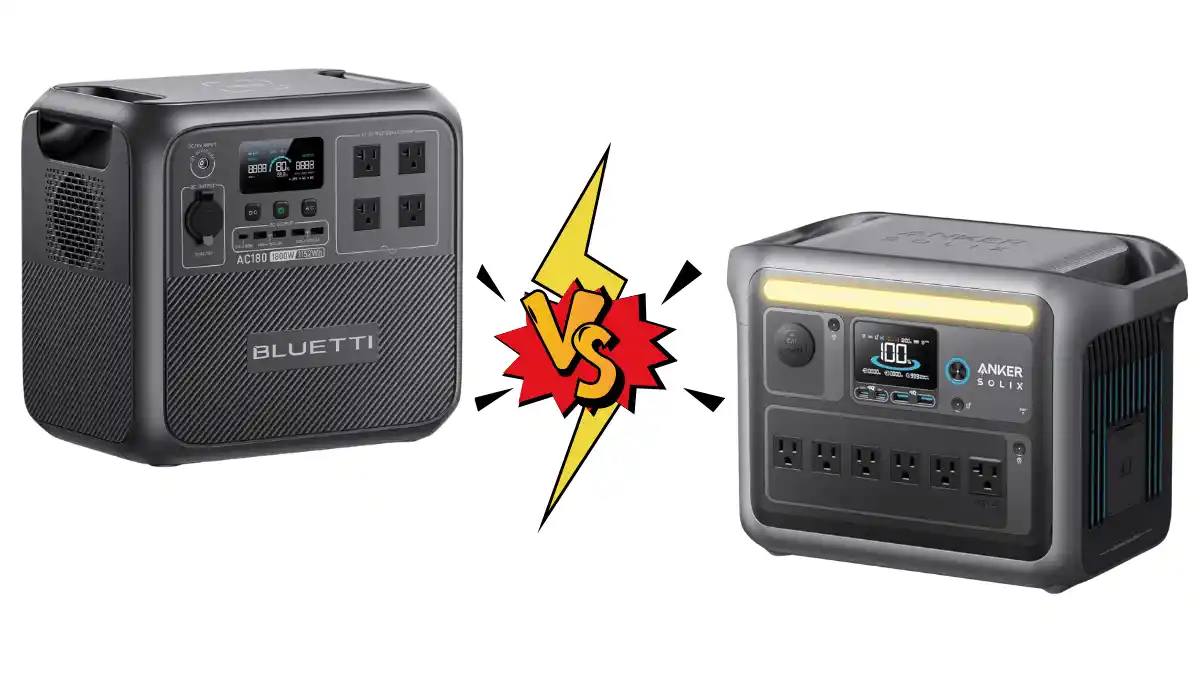
The BLUETTI AC180 is the better pick if you want more base battery capacity, longer battery lifespan, higher surge power, and generator recharging support. The Anker SOLIX C1000 wins if you need faster AC charging, a lighter unit to carry around, more AC outlets, or the option to expand capacity with an add-on battery pack.
Both use LiFePO4 chemistry and deliver 1,800W of continuous AC output, so neither is a bad choice , the right one depends on how and where you plan to use it.
Our Pick: BLUETTI AC180, best overall for home backup and general emergency use.
BLUETTI AC180 if: you want outage backup with more capacity (1,152Wh), higher surge power (2,700W), or generator charging.
Anker SOLIX C1000 if: you camp or travel, want a lighter unit (28.4 lbs), or need faster recharging and optional expansion to 2,112Wh.
Key difference: The C1000 recharges from AC in about 58 minutes. The AC180 takes about 1.3 hours.
Why This Comparison is Crucial
If you are shopping for a portable power station in the 1kWh range in the U.S. right now, these two models are consistently the most compared. They sit in the same price bracket, target the same users (campers, homeowners prepping for outages, RV travelers, and off-grid users), and they are both solid products from established brands.
The problem is that most comparison articles just line up specs side by side and call it done. That does not help you make a real decision. This comparison goes deeper: what each unit actually does better, where each one falls short, what most buyers overlook, and which one fits specific real-world situations.
Battery Capacity and Lifespan: AC180 Takes the Edge
The BLUETTI AC180 has a 1,152Wh LiFePO4 battery. The Anker SOLIX C1000 comes in at 1,056Wh. That is roughly a 9% difference , enough to add an extra hour or two of runtime when powering a mid-draw device like a laptop or Wi-Fi router.
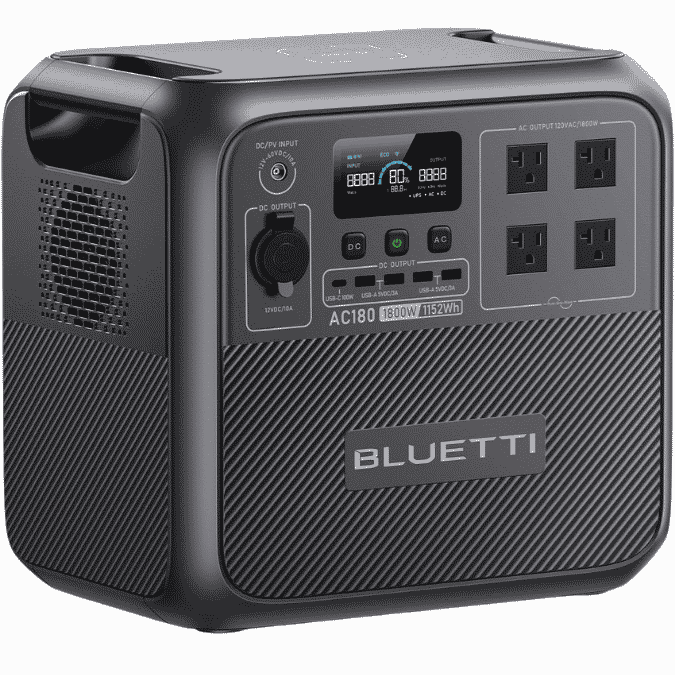
On longevity, the AC180 is rated for 3,500+ charge cycles before dropping to 80% capacity. The C1000 is rated for 3,000+ cycles. Both figures are excellent for LiFePO4 chemistry, and in practice either unit will last you a decade or more with regular use. But if you are running daily cycles , as a home backup system, for example , the AC180 holds a measurable edge in long-term battery health.
One thing most comparisons miss: the AC180 does support capacity expansion through BLUETTI’s B80, B230, or B300 battery packs, but only in Power Bank Mode , meaning those packs charge the AC180, not expand it directly. The Anker C1000 lets you add an expansion battery that functionally doubles usable capacity to 2,112Wh in a much more seamless way. If long-duration backup is your priority, that difference matters more than the base capacity gap.
Winner: AC180 for base capacity and cycle life. C1000 for scalability.
Power Output and Ports: A Real Tie With Trade-offs
Both units deliver 1,800W of continuous AC output. That is enough to run a full-size refrigerator, a portable air conditioner, most power tools, or a CPAP machine with comfort.
Where they differ is surge handling. The AC180 pushes 2,700W peak, which gives it more headroom when powering motors or compressors that draw extra current on startup , think a window AC unit or a circular saw. The C1000 caps at 2,400W surge, which still covers most household appliances but is a little tighter.
On the port side, it comes down to what you are plugging in:
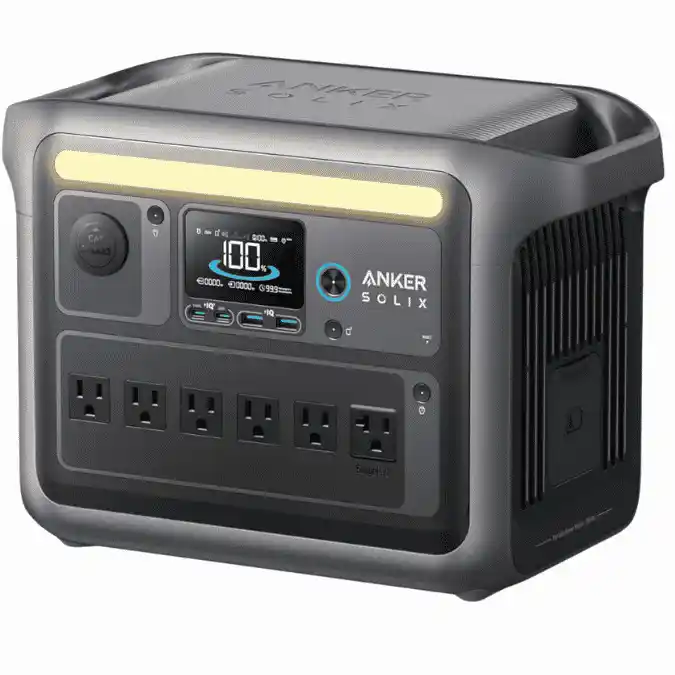
- The Anker C1000 gives you 6 AC outlets and two 100W USB-C ports , better if you are running multiple high-draw AC devices or charging two laptops at full speed simultaneously.
- The BLUETTI AC180 gives you 4 AC outlets, one 100W USB-C port, four USB-A ports, DC5521 barrel outputs, and a 15W wireless charging pad. Better if you have older accessories or want to top off your phone without digging for a cable.
Neither port setup is objectively superior , it depends on what gear you carry.
Winner: Tie. Pick based on your actual devices.
Charging Speed: Anker SOLIX C1000 Wins Clearly
This is where the Anker pulls decisively ahead. The SOLIX C1000 uses Anker’s HyperFlash technology to achieve a full recharge in approximately 58 minutes via AC wall power. That is genuinely fast for a 1kWh unit.
The BLUETTI AC180 supports up to 1,440W AC input and recharges in about 1.3 hours. Still fast, but noticeably slower than the Anker.
For solar charging, the C1000 accepts up to 600W of solar input vs. the AC180’s 500W cap. If you run solar panels regularly, the C1000 will replenish faster under the same sun conditions.
There is one important exception: the AC180 supports generator charging, and the C1000 does not. If you are in an area where grid power is unreliable and you already own a gas generator, this is a real advantage for the BLUETTI.
Warning: Fast AC charging generates heat. Both units have cooling fans, but if you are charging at max speed in a hot environment, make sure there is adequate airflow around the unit. Do not block the vents.
Winner: Anker SOLIX C1000 , faster AC and solar recharge in standard conditions.
Portability and Build Quality: Anker Is Lighter, BLUETTI Is Sturdier
The Anker SOLIX C1000 weighs 28.4 lbs. The BLUETTI AC180 weighs 35.2 lbs. That nearly 7-pound difference is noticeable when you are loading gear into a truck, hauling equipment to a campsite, or moving the unit between rooms.
For frequent travelers, weekend campers, or anyone who regularly transports their power station, the C1000 is simply easier to deal with.
The AC180 has a more rugged construction that is designed for demanding environments. If your power station will sit in a garage, basement, or workshop and rarely moves, the weight is less of a concern and the durability may matter more.
Both units have carry handles. Neither is small , you will not be packing either of these in a backpack. But the C1000 is the more practical travel companion.
Winner: Anker SOLIX C1000 for portability. BLUETTI AC180 for rugged durability.
App and Smart Features: Both Are Capable, Anker Has a Small Edge
The BLUETTI AC180 connects via Bluetooth through the Bluetti App. You can monitor battery status, adjust charging modes (including Silent Mode and Turbo Mode), and control output ports remotely.
The Anker SOLIX C1000 connects via both Wi-Fi and Bluetooth through the Anker App. The Wi-Fi connection means you can monitor and control it from anywhere , not just when you are in Bluetooth range. For home backup use cases where the unit might be in a garage or basement, this is a practical advantage.
Both apps are well-rated and functional. Neither has major reliability issues reported from users.
Winner: Anker SOLIX C1000 , Wi-Fi connectivity adds real flexibility for home use.
Use-Case Decision Guide
Wondering which one should you buy? Refer to this table:
| Your Situation | Better Choice |
|---|---|
| Home emergency backup, stationary use | BLUETTI AC180 |
| Weekend camping, frequent travel | Anker SOLIX C1000 |
| Running high-surge appliances (AC units, tools) | BLUETTI AC180 |
| You need to recharge as fast as possible | Anker SOLIX C1000 |
| Solar charging is your primary method | Anker SOLIX C1000 |
| You already own a gas generator | BLUETTI AC180 |
| You want to expand capacity later | Anker SOLIX C1000 |
| Charging many USB devices at once | BLUETTI AC180 |
| You want wireless phone charging | BLUETTI AC180 |
| Budget is tight, want more Wh per dollar | BLUETTI AC180 |
Pros and Cons
BLUETTI AC180:
| Pros | Cons |
|---|---|
| More base battery capacity (1,152Wh) | Heavier (35.2 lbs) |
| Higher surge power (2,700W) | Slower AC recharge (~1.3 hrs) |
| More charge cycles (3,500+) | Lower solar input (500W) |
| Generator charging supported | |
| Wireless charging pad included | |
| 4 USB-A ports |
Anker SOLIX C1000:
| Pros | Cons |
|---|---|
| Fastest recharge in class (~58 min) | Lower base capacity (1,056Wh) |
| Lighter and more portable (28.4 lbs) | No generator charging |
| Expandable up to 2,112Wh | No wireless charging pad |
| Higher solar input (600W) | |
| Wi-Fi + Bluetooth app connectivity | |
| 6 AC outlets |
Things to Know Before You Buy
BLUETTI AC180:
- The “expansion battery” support is Power Bank Mode only , external BLUETTI batteries charge the AC180 but do not directly extend runtime in the way the Anker expansion pack does. This is often misrepresented in competitor reviews.
- At 35+ lbs, it is manageable but not something most people want to carry long distances.
Anker SOLIX C1000:
- 1,056Wh is a noticeably smaller battery. If you are running a mini fridge continuously through an overnight outage, you will feel that difference.
- No generator charging means if grid power and solar are both unavailable, your options for recharging are limited.
Both units carry a 5-year warranty, which is standard for premium LiFePO4 power stations in this class.
Expert Recommendation
For most buyers in the USA who want a reliable power station for home outages, light camping, and general emergency preparedness, the BLUETTI AC180 offers the better combination of capacity, battery life, and value. The higher surge rating and generator compatibility make it more versatile across a wider range of real-world scenarios.
If you camp frequently, travel with your gear, need the fastest possible recharge cycle, or want the option to scale up capacity in the future, the Anker SOLIX C1000 is the smarter long-term investment. Its lighter weight and HyperFlash charging genuinely change how convenient the unit is to use day to day.
Neither is a wrong choice. The decision comes down to how you actually use it.
FAQs
Is the BLUETTI AC180 better than the Anker SOLIX C1000?
It depends on your use case. The AC180 has more base capacity, higher surge power, and a longer battery lifespan. The SOLIX C1000 charges faster, weighs less, and supports capacity expansion. For home backup and stationary use, the AC180 is generally the better value. For travel and fast charging, the C1000 has the advantage.
How long does the BLUETTI AC180 take to charge?
The AC180 charges from 0 to 80% in approximately 45 minutes and reaches a full charge in about 1.3 hours using a standard AC wall outlet with Turbo Charging mode enabled.
Can the Anker SOLIX C1000 expand its battery capacity?
Yes. The SOLIX C1000 supports an optional expansion battery that increases total capacity from 1,056Wh to 2,112Wh, making it a better choice for users who need extended runtime for long outages or multi-day camping trips.
Does the BLUETTI AC180 support solar charging?
Yes. The AC180 supports up to 500W of solar input. You can fully recharge it using solar panels alone in approximately 2.8 to 3.3 hours under good sunlight conditions.
Which power station is lighter , BLUETTI AC180 or Anker SOLIX C1000?
The Anker SOLIX C1000 is lighter at 28.4 lbs compared to the BLUETTI AC180’s 35.2 lbs , a difference of nearly 7 pounds that is noticeable when carrying or transporting the unit regularly.
Which is better for home backup power , AC180 or SOLIX C1000?
The BLUETTI AC180 is generally the better home backup option due to its higher capacity, longer battery cycle life, generator charging support, and 20ms UPS switchover time that protects connected devices during outages.
Do both power stations have app control?
Yes. The BLUETTI AC180 uses the Bluetti App via Bluetooth. The Anker SOLIX C1000 uses the Anker App via both Wi-Fi and Bluetooth, giving it a range advantage for remote monitoring.
What is the warranty on these power stations?
Both the BLUETTI AC180 and the Anker SOLIX C1000 come with a 5-year manufacturer warranty, which is standard for premium LiFePO4 portable power stations in this category.