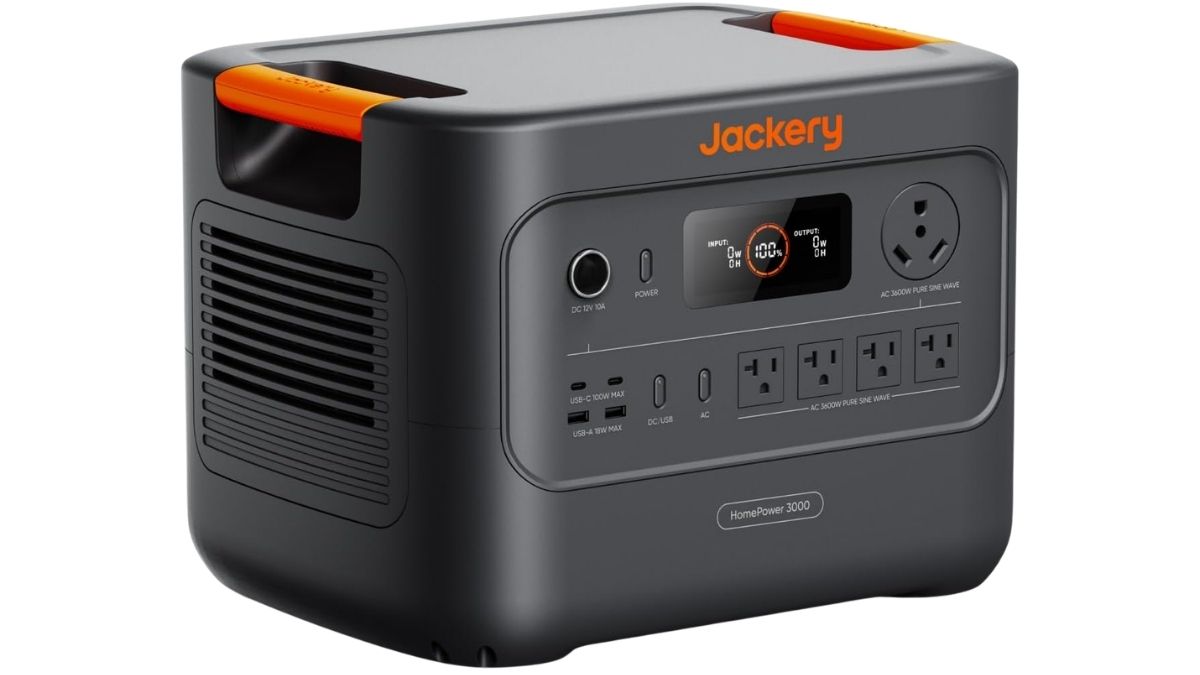
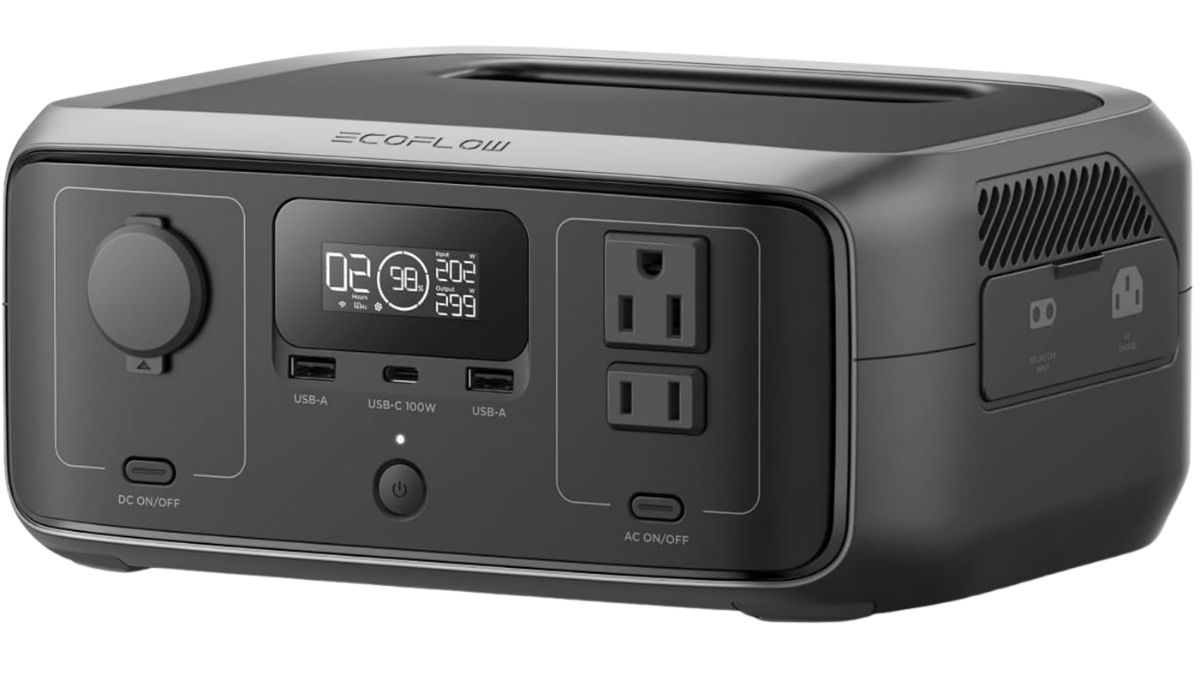
If you are trying to choose between the Jackery Explorer 1000 v2 vs EcoFlow DELTA 3 Plus, here is the short answer: the EcoFlow DELTA 3 Plus is the better pick for home backup and multi-device use, while the Jackery Explorer 1000 v2 is the stronger choice for campers and off-grid users who prioritize portability and long-term battery life.
Both are solid LiFePO4 power stations in the 1kWh range. But they are built for different priorities, and buying the wrong one is a real cost.
This guide breaks down every key category with actual specs, honest trade-offs, and a clear final recommendation.
Quick Summary
| Feature | Jackery Explorer 1000 v2 | EcoFlow DELTA 3 Plus |
|---|---|---|
| Battery Capacity | 1,070 Wh | 1,024 Wh |
| AC Output (Continuous) | 1,500W | 1,800W |
| Surge Power | 3,000W | 3,600W |
| AC Charging Speed | ~700W (~1.5 hrs) | 1,500W (~56 min) |
| Solar Input | Up to 400W | Up to 1,000W |
| Battery Cycles | 4,000 to 70% | 4,000 to 80% |
| AC Outlets | 3 | 6 |
| USB-C Output | 100W | 140W |
| Weight | 23.8 lbs | 27.6 lbs (approx.) |
| Expandable Capacity | No | Up to 5,120 Wh |
| UPS Switchover | Basic EPS | 10ms UPS |
| IP Rating | None | IP65 battery pack |
| Warranty | 5 years | 5 years |
| Best For | Camping, portability, solar | Home backup, heavy appliances, expansion |
Full Specs Comparison: Jackery Explorer 1000 v2 vs EcoFlow DELTA 3 Plus
Before getting into the real-world breakdown, here is where each unit stands on paper.
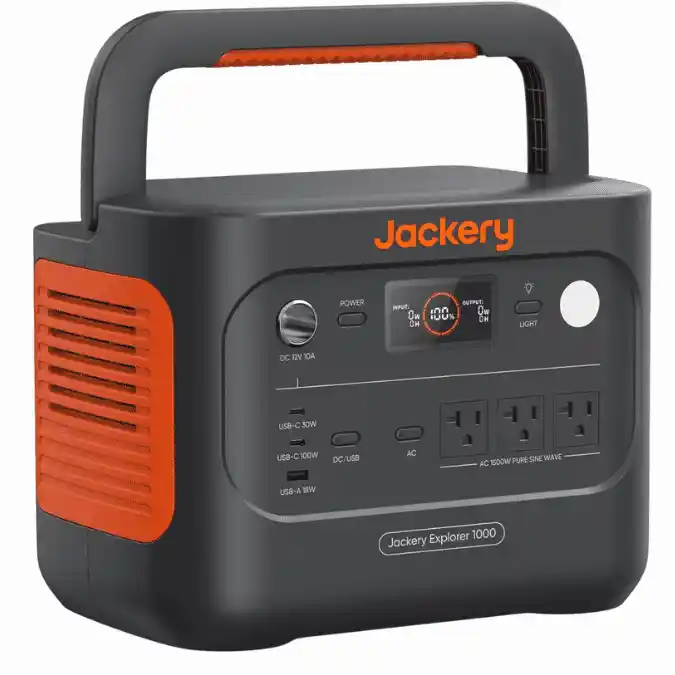
The Jackery Explorer 1000 v2 carries a 1,070Wh LiFePO4 battery with a 1,500W continuous AC output and a 3,000W surge peak. It weighs 23.8 lbs, has a foldable handle for easy transport, and accepts up to 400W of solar input. Its ChargeShield fast charging allows a 0-100% charge in about one hour under the right conditions.
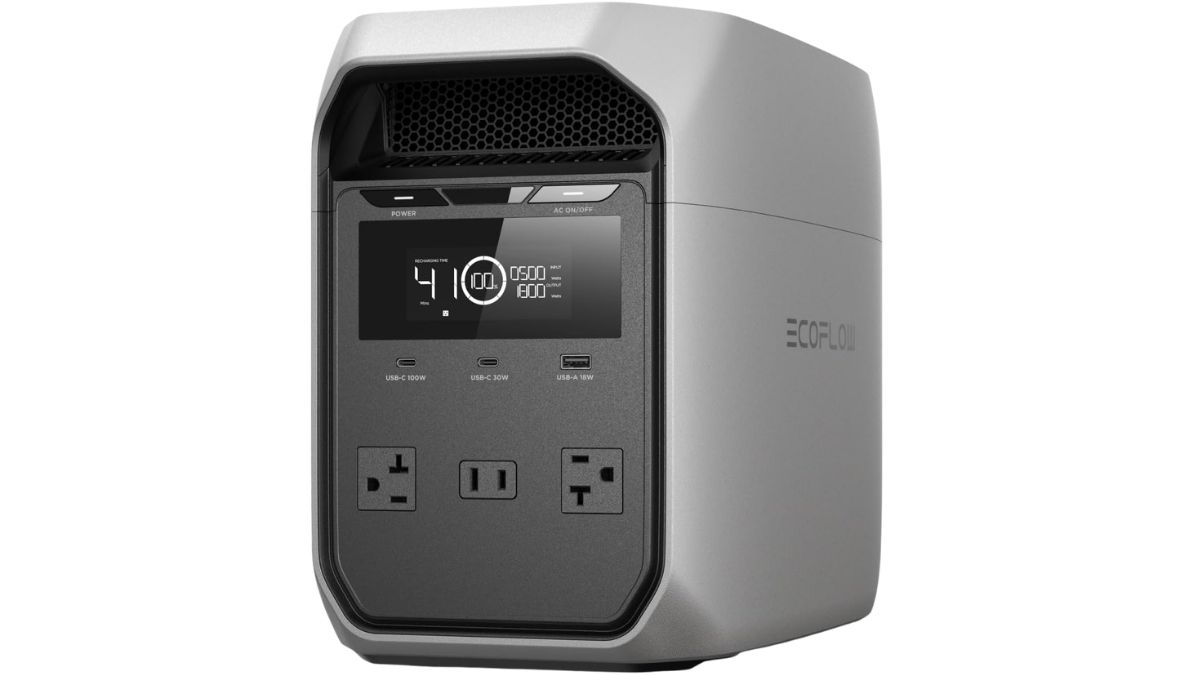
The EcoFlow DELTA 3 Plus runs a 1,024Wh LFP battery with a 1,800W continuous output and 3,600W surge. It accepts up to 1,000W of solar input (dual MPPT), charges from 0-100% in about 56 minutes via X-Stream AC charging, and can expand to 5,120Wh with compatible DELTA series extra batteries. Its IP65-rated battery pack adds weather resistance that the Jackery lacks.
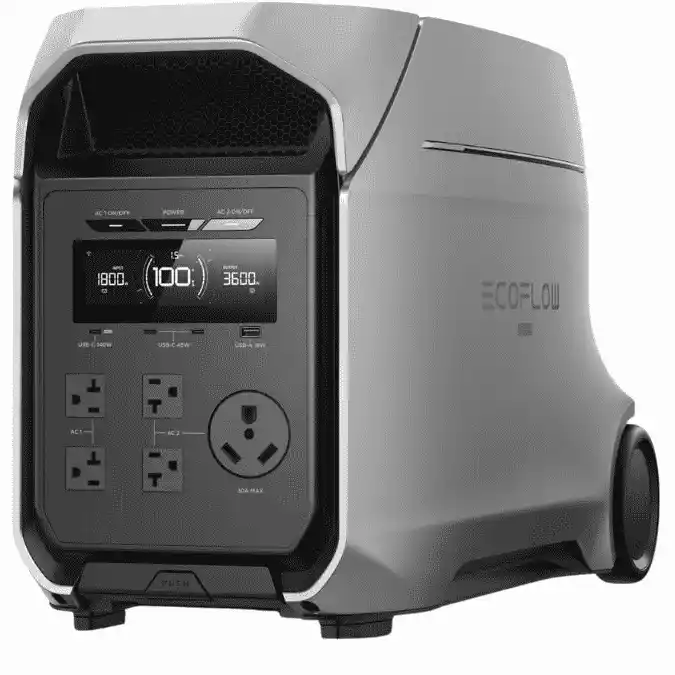
On paper they look close. In real use, they serve different needs.
Battery Life and Long-Term Durability
Both units use LiFePO4 (LFP) chemistry, which is the right call for anyone thinking about long-term ownership. Lithium iron phosphate handles more charge cycles, runs cooler, and degrades more slowly than older NMC batteries.
The Jackery Explorer 1000 v2 is rated for 4,000 cycles to 70% capacity. The EcoFlow DELTA 3 Plus matches that at 4,000 cycles, but to 80% capacity. That means after 4,000 full charge-discharge cycles, the EcoFlow retains more usable capacity than the Jackery on paper.
At one cycle per day, both units project to over 10 years of regular use. For most buyers, the real-world difference here is minimal. But if you are running daily cycles for home backup, the EcoFlow’s retention threshold is slightly more favorable over time.
Winner: EcoFlow DELTA 3 Plus, narrowly, on cycle-life retention.
Power Output: What Can Each One Actually Run?
This is where the two units separate most clearly.
The Jackery Explorer 1000 v2 delivers 1,500W of continuous AC power. That covers laptops, phones, LED lights, a mini fridge, a CPAP machine, a small TV, and most camping gear with no issues. It will struggle with high-draw appliances like a full-size coffee maker, hair dryer on high, or electric skillet running simultaneously.
The EcoFlow DELTA 3 Plus pushes 1,800W continuous, with X-Boost technology extending its effective range to appliances drawing over 2,600W. X-Boost works by intelligently managing voltage delivery so the unit does not trip on loads it would otherwise reject. That means you can run a hair dryer, kettle, or even an oven on shorter bursts without the station shutting off.
For RV users or anyone running a home backup setup, the EcoFlow’s output headroom matters. Running a refrigerator and a few other devices simultaneously is much more comfortable at 1,800W.
If you are a camper powering a fridge overnight plus some USB devices and lights, 1,500W from the Jackery is completely sufficient.
Winner: EcoFlow DELTA 3 Plus for high-wattage needs. Jackery is fine for camping and moderate use.
Charging Speed: Getting Back to Full Power
This is one of the biggest practical differences between these two units.
The EcoFlow DELTA 3 Plus uses X-Stream fast charging and accepts up to 1,500W from a wall outlet, hitting 0-100% in approximately 56 minutes. That is fast by any measure. On solar, it accepts up to 1,000W via dual MPPT inputs, hitting full charge in about 70 minutes under ideal conditions.
The Jackery Explorer 1000 v2 charges at around 700W from AC, taking roughly 1.5 to 2 hours for a full charge under standard conditions. However, using the Jackery app and ChargeShield technology, it can complete a 0-100% charge in about one hour in its rapid emergency mode. Solar input caps at 400W.
For a camper who charges once a day at a campsite with solar, the Jackery’s 400W cap is not a dealbreaker. But if you rely on solar as a primary charging source and want the fastest recharge time, the EcoFlow’s 1,000W solar input is a significant advantage.
For home backup, the EcoFlow’s 56-minute AC charge means you can top it off fast before a storm or during a short grid window.
Winner: EcoFlow DELTA 3 Plus on both AC and solar charging speed.
Ports and Connectivity
The EcoFlow DELTA 3 Plus comes with 6 AC outlets, 4 USB-A ports, 2 USB-C ports (140W max), and DC outputs. It can power up to 13 devices simultaneously according to EcoFlow.
The Jackery Explorer 1000 v2 has 3 AC outlets, 2 USB-A ports, 2 USB-C ports (100W max), and a 12V car port. For solo camping or a small group, that is more than enough. For a household with multiple devices running during a power outage, it can feel limiting.
Both units offer Bluetooth and Wi-Fi app connectivity. The EcoFlow app is widely considered the more feature-rich option, with real-time energy graphs, discharge limit settings, storm guard mode, and UPS outage reminders. The Jackery app handles basic monitoring and charging control well, but has a simpler feature set.
The EcoFlow also includes a 10ms UPS auto-switchover, which is critical for keeping sensitive equipment like NAS servers, desktop computers, or 3D printers running without interruption during grid failures. The Jackery has basic EPS functionality but does not match the 10ms response time.
Winner: EcoFlow DELTA 3 Plus across ports, UPS speed, and app depth.
Portability and Build Design
This is the one category where the Jackery Explorer 1000 v2 clearly wins.
At 23.8 lbs with a compact form factor and foldable handle, it is the easier unit to carry, store in a vehicle, or haul to a campsite. The design is clean and practical.
The EcoFlow DELTA 3 Plus weighs approximately 27.6 lbs. It is not difficult to carry, but the extra weight adds up when you are loading gear. The EcoFlow does have an IP65-rated battery pack, which means better protection against water splashes and dust. That is a real advantage for outdoor and jobsite use where the Jackery has no rated protection.
For backpackers or minimalist campers, neither unit is ideal. Both are car-camping class. But the Jackery is the easier one to move around.
Winner: Jackery Explorer 1000 v2 on weight and portability. EcoFlow wins on weather resistance.
Expandability
The EcoFlow DELTA 3 Plus can connect with multiple DELTA series extra batteries (DELTA 3, DELTA 2, DELTA 2 Max, DELTA Pro 3 extra batteries) and expand capacity up to 5,120Wh. For extended power outages, RV trips, or off-grid setups, this changes the unit’s usefulness entirely.
The Jackery Explorer 1000 v2 is a standalone unit with no expansion option. What you buy is your total capacity. If you need more runtime, you recharge.
For anyone considering using this as a serious home backup station, the EcoFlow’s expandability is a major advantage.
Winner: EcoFlow DELTA 3 Plus, no competition here.
Pros and Cons
Jackery Explorer 1000 v2
| Pros | Cons |
|---|---|
| Lightest in its class at 23.8 lbs | Only 3 AC outlets |
| 4,000 cycle LiFePO4 battery | Lower 1,500W output |
| Simple plug-and-play design | No expandable capacity |
| Compact and easy to carry | Slower AC charging (~700W) |
| Good solar pairing with SolarSaga panels | Lower 400W solar input cap |
| 1-hour emergency charge mode | No IP rating on main unit |
EcoFlow DELTA 3 Plus
| Pros | Cons |
|---|---|
| 1,800W output with X-Boost up to 2,600W+ | Heavier at ~27.6 lbs |
| 56-minute AC charge via X-Stream | Slightly more expensive |
| 1,000W dual MPPT solar input | Extra batteries sold separately |
| Expandable to 5,120Wh | App required for some features |
| 10ms UPS for sensitive equipment | |
| IP65-rated battery pack | |
| 6 AC outlets and 140W USB-C |
Who Should Buy Which?
Buy the Jackery Explorer 1000 v2 if:
- You camp regularly and want a lightweight, easy-to-carry station
- You are building a Jackery solar ecosystem with SolarSaga panels
- You want the simplest possible user experience without app dependency
- You primarily charge via wall outlet and do not need sub-hour turnaround
- Budget is a priority and you do not need expansion
Buy the EcoFlow DELTA 3 Plus if:
- You need reliable home backup power during outages
- You want to run a refrigerator, hair dryer, or power tools from the same station
- Fast recharging matters, whether from AC or solar
- You plan to expand capacity later with extra batteries
- You need a proper UPS for computers, NAS systems, or medical equipment
- You want weather-resistant build quality for outdoor or jobsite use
Real-World Use Case Examples
Weekend camping trip: The Jackery Explorer 1000 v2 handles this easily. Power a mini fridge overnight (100W average), charge phones and a laptop, and run LED lights. At 23.8 lbs with a foldable handle, it loads and unloads without effort. Pair it with a SolarSaga 200W panel and you recover most of the overnight draw by early afternoon.
Two-day power outage at home: This is where the EcoFlow DELTA 3 Plus earns its price. Run your refrigerator (keeping food safe), charge phones and laptops, keep a fan or small TV running, and cycle through multiple devices without watching the outlet count. The 10ms UPS means your home office setup stays on through the switch.
RV or van build: The EcoFlow DELTA 3 Plus wins here too. The 1,000W solar input charges fast while you drive or sit at a site. The expandable capacity means you can grow the system over time. The Jackery is capable but will hit limitations faster in this context.
Common Mistakes to Avoid
Do not buy either unit expecting whole-home backup. Both are 1kWh-class stations. They can cover critical devices during an outage but will not run your HVAC, water heater, or high-draw appliances continuously.
Do not assume solar charging specs match real-world results. Both 400W (Jackery) and 1,000W (EcoFlow) are maximum ratings under ideal direct sunlight. Partial cloud cover, panel angle, and temperature all affect actual input. Budget for 60-70% of rated solar input in practical conditions.
Do not rely on X-Boost for sustained high-wattage use. X-Boost on the EcoFlow allows the unit to power appliances above its rated output by managing voltage, but it does not give you more total energy. It is useful for occasional bursts, not for running a 2,500W appliance continuously.
Expert Recommendation
For most buyers in the US shopping for a portable power station in 2026, the EcoFlow DELTA 3 Plus is the stronger overall investment. Its charging speed, output headroom, expandability, UPS function, and larger port selection cover more real-world scenarios. The roughly $100-200 price premium over the Jackery is justified if you plan to use it for anything beyond light camping.
The Jackery Explorer 1000 v2 is not a compromise product. It is genuinely excellent for what it is designed for. If you camp regularly, prioritize weight, or are already invested in the Jackery ecosystem, it is a reliable buy that will last years.
The honest split: EcoFlow DELTA 3 Plus for home and power users, Jackery Explorer 1000 v2 for outdoor and travel users.
Quick Decision Guide
| Your Situation | Recommended Unit |
|---|---|
| Weekend camping, light loads | Jackery Explorer 1000 v2 |
| Home backup during outages | EcoFlow DELTA 3 Plus |
| Running a refrigerator | EcoFlow DELTA 3 Plus |
| RV or van life | EcoFlow DELTA 3 Plus |
| Portability first, weight matters | Jackery Explorer 1000 v2 |
| Want to expand capacity later | EcoFlow DELTA 3 Plus |
| Budget-conscious buyer | Jackery Explorer 1000 v2 |
| Need fast recharge turnaround | EcoFlow DELTA 3 Plus |
| CPAP or medical device overnight | Either (check wattage first) |
| Running power tools on a jobsite | EcoFlow DELTA 3 Plus |
Frequently Asked Questions
Which is better for camping, the Jackery Explorer 1000 v2 or EcoFlow DELTA 3 Plus?
The Jackery Explorer 1000 v2. It weighs less, has a foldable handle, and is easier to carry to a campsite.
Can the EcoFlow DELTA 3 Plus run a refrigerator?
Yes. Its 1,800W output handles a standard fridge with ease, giving roughly 6-8 hours of runtime on the base 1,024Wh capacity.
How long does the Jackery Explorer 1000 v2 take to charge?
About 1.5 to 2 hours via standard AC. Using ChargeShield rapid mode through the Jackery app, it can hit 0-100% in around one hour.
Does the EcoFlow DELTA 3 Plus have a UPS function?
Yes. It switches to battery within 10 milliseconds during a grid outage, keeping sensitive devices like computers and NAS servers running without interruption.
Which has a longer battery life, the Jackery 1000 v2 or EcoFlow DELTA 3 Plus?
Both are rated 4,000 cycles. The EcoFlow retains 80% capacity at that point; the Jackery retains 70%. Slight edge to EcoFlow for long-term retention.
Can I expand the EcoFlow DELTA 3 Plus capacity?
Yes, up to 5,120Wh using compatible DELTA series extra batteries. The Jackery Explorer 1000 v2 has no expansion option.
Is the Jackery Explorer 1000 v2 worth buying in 2026?
Yes, for camping and outdoor use. It is lightweight, has a 4,000-cycle LiFePO4 battery, and charges in about an hour. Not the right pick for home backup.our fast charge keep it relevant against newer competitors.