
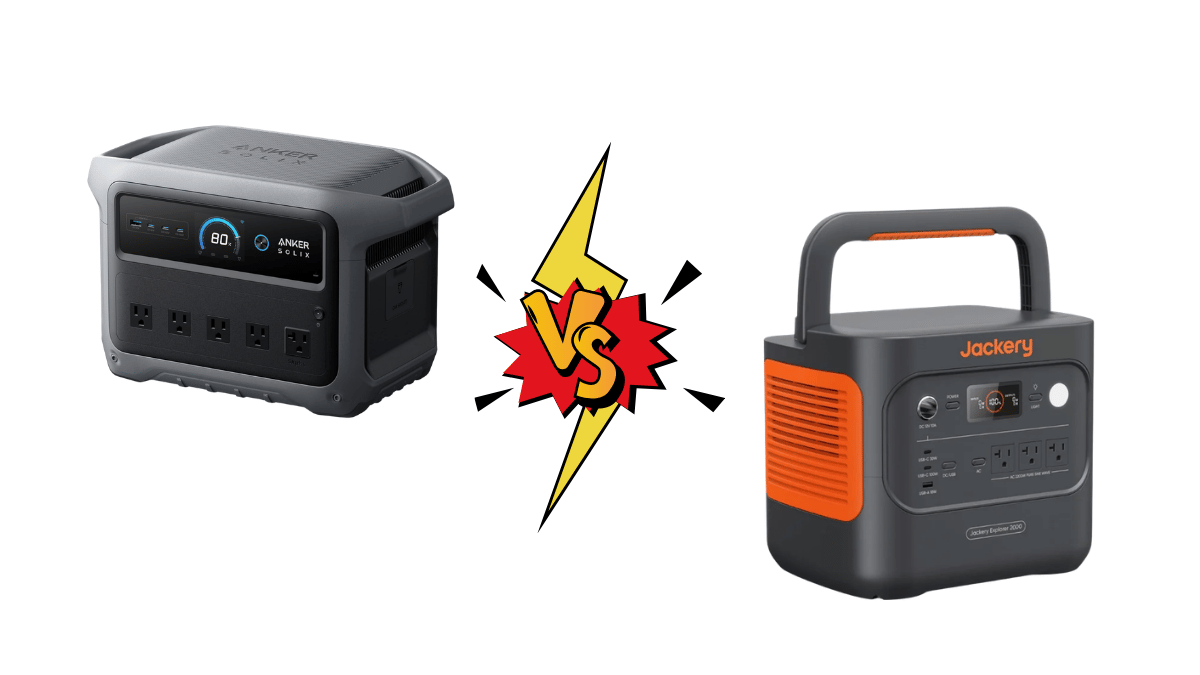
The portable power station market is booming. The U.S. portable power station market alone was valued at $266.39 million in 2024 and is projected to grow to $504.95 million by 2032 at a CAGR of 8.04 %. Whether you’re prepping for hurricane season, heading out on a camping trip, or building a van life setup, the 1000W vs 2000W portable power station decision is probably the single biggest question right now.
But here’s the problem:
Most people shopping for a portable power station start with the wrong question: they look at the number on the box and try to figure out if it’s “enough,” when “enough” depends entirely on what you’re trying to run and for how long.
This post breaks down the real-world differences between 1000W and 2000W portable power stations, all actionable data to help you buy right the first time.
Watts vs. Watt-Hours: The #1 Misunderstanding
Before comparing anything, you need to understand two critical specs:
Watt-hours (Wh) tells you how much total energy the unit stores; think of it as the size of the fuel tank. Watts (W) tells you how much power it can deliver at one time; think of it as the engine. You need both numbers to answer the question, and neither one alone is enough.
Here’s why this matters:
- A 2000Wh unit with a 1000W output can’t run a 1500W appliance even though its tank is large.
- A 1000W unit with 500Wh of capacity can technically run a 1000W device, but only for about 25 minutes.
Bottom line: Always check both numbers before buying.
Head-to-Head: 1000W vs 2000W Portable Power Station
Here’s a detailed spec comparison based on the latest models:
| Feature | 1000W Class | 2000W Class |
|---|---|---|
| Continuous Output | 1,000–1,200W | 2,000–2,400W |
| Surge/Peak Output | 2,000W (typical) | 3,000–4,800W (typical) |
| Battery Capacity | 768–1,100Wh | 1,500–2,200Wh |
| Weight | 20–30 lbs | 35–60 lbs |
| Price Range | $400–$1,200 | $800–$2,500 |
| Charge Cycles (LiFePO4) | 3,000+ | 3,000+ |
| Typical Charge Time (AC) | 1–1.5 hours | 1.5–2.5 hours |
| Solar Input | 200–500W | 400–1,000W |
| Best For | Weekend camping, light backup | Multi-day trips, full home backup |
Budget reality: every 100Wh of capacity costs roughly $100–$150. A 500Wh unit runs $400–$700, a 1000Wh unit costs $700–$1,200, and a 2000Wh system hits $1,500–$2,500.
What Can a 1000W Portable Power Station Actually Run?
The 1000W power station is the sweet spot for the majority of individuals. It has the capability to operate a small-sized refrigerator, a coffee machine, a TV, or a microwave briefly. When you need more for camping, blackouts, or a jobsite, 1000W delivers.
Realistic Runtime Estimates (1000Wh Battery)
| Device | Wattage | Estimated Runtime |
|---|---|---|
| Smartphone (full charge) | 10–20W | 40–80 charges |
| Laptop | 60–100W | 8–12 hours |
| LED Lights | 20W | 40+ hours |
| Camping Fridge | 50–60W | 12–15 hours |
| CPAP Machine | 40W | 20+ hours |
| Microwave (700W) | 700W | ~1 hour |
| Space Heater (1500W) | 1500W | ❌ Exceeds output |
1000Wh translates to roughly 800–850 watt-hours of usable power after accounting for inverter efficiency losses. That means you can run a camping refrigerator for 12–15 hours, keep laptops and phones charged for multiple days, or maintain home systems during an 8–10 hour outage.
Ideal users: Multi-night campers with a compressor cooler, home office backup for a workday, CPAP users, and people who want a useful outage backup for devices and lighting without expecting to run the kitchen.
For a deeper breakdown with full device lists and runtime calculations, check out our complete post on what a 1000W portable power station can run.
What Can a 2000W Portable Power Station Actually Run?
A 2000W portable power station can handle nearly anything short of large, high-demand household appliances, think refrigerators, power tools, blenders, coffee makers, microwaves, and multiple small electronics all at once.
Realistic Runtime Estimates (2000Wh Battery)
| Device | Wattage | Estimated Runtime |
|---|---|---|
| Full-Size Refrigerator | 100–200W (avg) | 8–15+ hours* |
| Coffee Maker | 1,000–1,500W | 1–1.5 hours |
| Microwave | 1,000–1,200W | 1.5–2 hours |
| Portable AC (5000 BTU) | 400–600W | 3–4 hours |
| Power Tools (Circular Saw) | 1,200–1,800W | Short bursts OK |
| Space Heater | 1,500W | ~1.1 hours |
| TV + Router + Lights | ~150W combined | 10+ hours |
*Refrigerators cycle on and off, extending effective runtime significantly.
At the 2000W tier, you’re in genuine home backup territory. A 2000Wh unit with a continuous output rating of 2000W or higher handles most of what a household needs during an outage.
What it still can’t do: Central air conditioning and heat pumps are 240V systems drawing 3,000–7,000W or more. Portable power stations operate on 120V. No portable power station runs central air.
Battery Technology: Why LiFePO4 Matters in 2026
As of 2026, the majority of reputable power station manufacturers use or are switching to LFP (LiFePO4) battery chemistry. LFPs are very unlikely to have thermal runaway and can retain their lifespan through 3,000 to 6,000 charge cycles.
Some manufacturers, including Goal Zero, BougeRV, Jackery, and BioLite, still use NMC in some models. NMC batteries are often slightly lighter because they have a higher energy density.
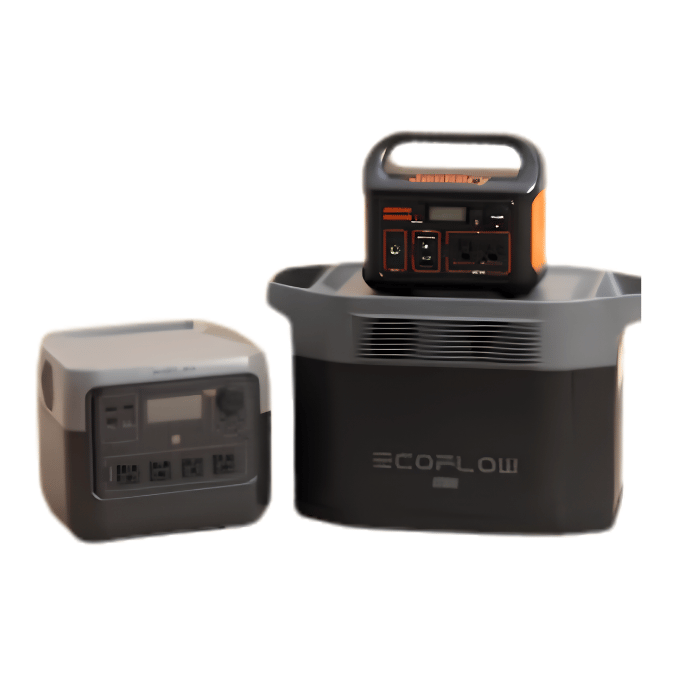
Pro Tip: A 2000Wh unit with poor cells can perform worse than a 1000Wh unit with solid LiFePO4 engineering. Always prioritize battery chemistry over raw capacity numbers.
The Surge Watt Factor: Don’t Ignore This
A unit rated for 1000W continuous / 2000W surge can run a 900W microwave steadily and handle a 1500W spike when your refrigerator compressor kicks on. But if you try to run a 1200W device on a 1000W-rated power station, the unit will shut down immediately with an overload error. There’s no “close enough.”
Surge power is the short-term peak power (usually 2–3 seconds) the inverter can handle for motor startups. This is typically 2× the continuous rating.
The takeaway: If your appliances have motors (fridges, power tools, AC units), the surge rating is just as important as the continuous wattage.
1000W vs 2000W: Which One Is Right for YOU?
✅ Choose a 1000W Portable Power Station If:
- You primarily need power for weekend camping trips
- You’re into RV or van life and handle essentials, such as interior lights, water pump, phone and laptop charging, small appliances like coffee makers and fans
- You want home emergency backup for typical outages lasting 4–8 hours
- Portability matters more than raw power (units weigh 20–30 lbs)
- Your budget is under $1,000
✅ Choose a 2000W Portable Power Station If:
- You need multi-day outings or power-hungry gear, like refrigeration, lighting rigs, comms repeaters, pumps, tool chargers
- You want to run multiple high-watt appliances simultaneously
- You want backup that feels genuinely useful; enough for a refrigerator, Wi-Fi, lights, device charging, TV, CPAP, and short kitchen bursts (but not whole-home backup for central A/C or 240V appliances)
- You’re okay carrying 40–60 lbs for significantly more capability
Quick Decision Flowchart
START → What's your primary use case?
│
├─ Weekend camping / car camping → 1000W ✓
├─ Multi-day off-grid / boondocking → 2000W ✓
├─ Home outage backup (4–8 hrs, essentials) → 1000W ✓
├─ Home outage backup (12+ hrs, fridge + kitchen) → 2000W ✓
├─ Van life / RV (with solar recharging) → 1000W ✓
├─ Jobsite / power tools → 2000W ✓
└─ CPAP / medical devices only → 1000W ✓
Tips to Maximize Your Portable Power Station’s Lifespan
No matter which wattage class you choose, follow these maintenance basics:
- Avoid running it to zero regularly; keep it above 20 %. Store it in moderate temperatures, since extreme heat or cold hurts the cells.
- If you’re pairing it with solar panels, angle them properly; it’s simple physics, but it makes all the difference.
- Recharge every 3–6 months during long-term storage to prevent deep discharge damage.
- Before buying, check the surge watt specification on the power station and the locked rotor amperage on your refrigerator’s compressor label.
Final Verdict
There’s no universal winner here. Only the right tool for your needs.
Most people either drastically overestimate or underestimate their needs. A weekend camper buying a 2000Wh unit “just in case” wastes $1,000+ on capacity they’ll never use. Meanwhile, a van lifer trying to get by with 500Wh runs out of power by noon.
The 1000W class is the Goldilocks zone for most of you, enough for realistic camping, light home backup, and daily essentials without overspending. The 2000W class steps up when you need serious home backup, multi-appliance capability, or jobsite power.
The key is calculating your actual daily consumption. List every device you’ll run, note its wattage, estimate hours of use, and add them up. That simple math will tell you exactly which tier you need.
Looking for more portable power station buying guides, reviews, and comparisons? Explore PP Stations for in-depth, unbiased coverage built for real-world power needs.
FAQs
What can a 2000W portable power station run?
A 2000W portable power station runs full-size refrigerators, microwaves, coffee makers, power tools, and multiple devices simultaneously (basically everything except central air conditioning.)
What is a good wattage for a portable power station?
For most people, 1000W–2000W continuous output covers camping, home backup, and everyday essentials. Match your wattage to your highest-draw appliance, not your lowest.
Which is better, a 1000 watt or 2000 watt inverter?
Neither is universally better. A 1000W inverter handles light loads and weekend trips. A 2000W inverter is necessary if you’re running kitchen appliances, power tools, or multiple devices at once.
How long will a 2000W power station last?
Runtime depends on load. A 2000Wh unit powers a 100W refrigerator for 15+ hours, a 1500W space heater for about one hour, or a phone for 150+ charges.
How long does a 2000W portable power station battery last before replacement?
Most 2000W stations with LiFePO4 batteries last 3,000–6,000 charge cycles, which is roughly 8–10 years of regular use before capacity drops below 80 %.
