If you’re out camping, you prefer quiet, reliable power for CPAP, lights, and gadgets, without hauling noisy fuel generators.
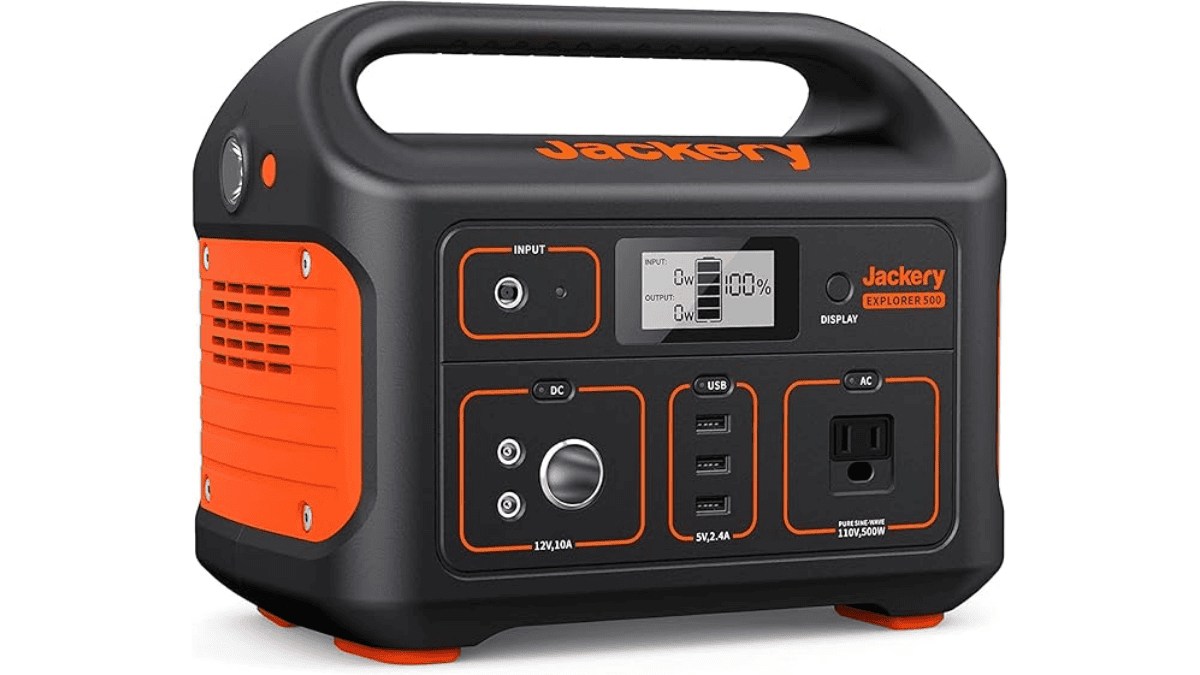
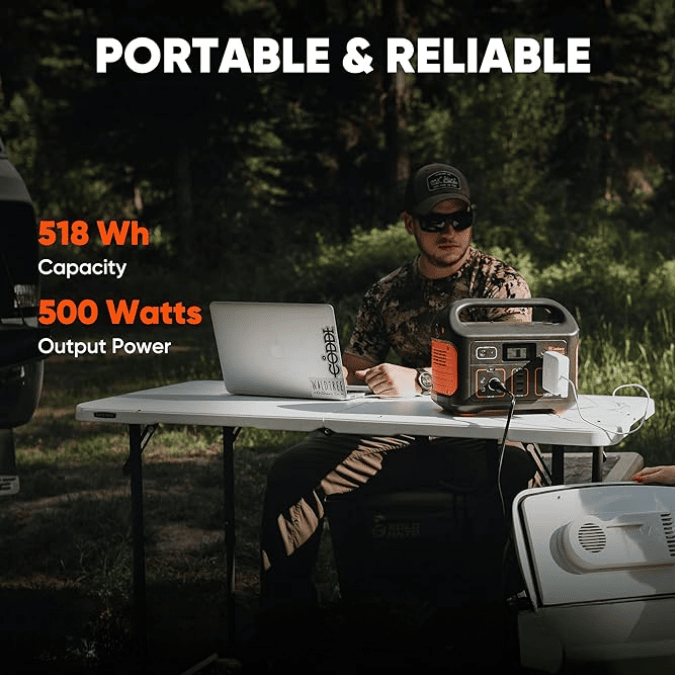
The Jackery Explorer 500 is a 518Wh portable power station with a 500W inverter that’s built for quiet, simple power when you are camping, tailgating, or riding out a short outage.
In this Jackery Explorer 500 Review, we talk about what matters in real use: how long it runs common gear, what it will not run, and what most users keep praising. (Also a few complaints.)
If you already know you need high watt kitchen or heating loads, the top pick we recommend for that lives in a higher watt class than this unit, and we point you in the right direction near the end.
Who this is for (and who should skip)
The Jackery 500 is for weekend campers, overlanders, anglers, tailgaters, and road trippers who want quiet AC plus USB power for small to mid devices, and light emergency backup for things like a modem, router, and small electronics.
The core reality is simple: 518Wh capacity and a 500W max inverter means “modest power needs,” not cooking appliances and heat tools.
If you want to run an Instant Pot, a blender, a microwave, a space heater, or anything that routinely pushes above 500W, skip this class and move up.
Spec snapshot
Jackery sells the Explorer 500 around a 518Wh battery and a 500W continuous, 1000W surge pure sine wave AC output.
Official recharge times are 7.5 hours on wall power, 7.5 hours on a car outlet, and about 9.5 hours with a 100W solar panel in good sun.
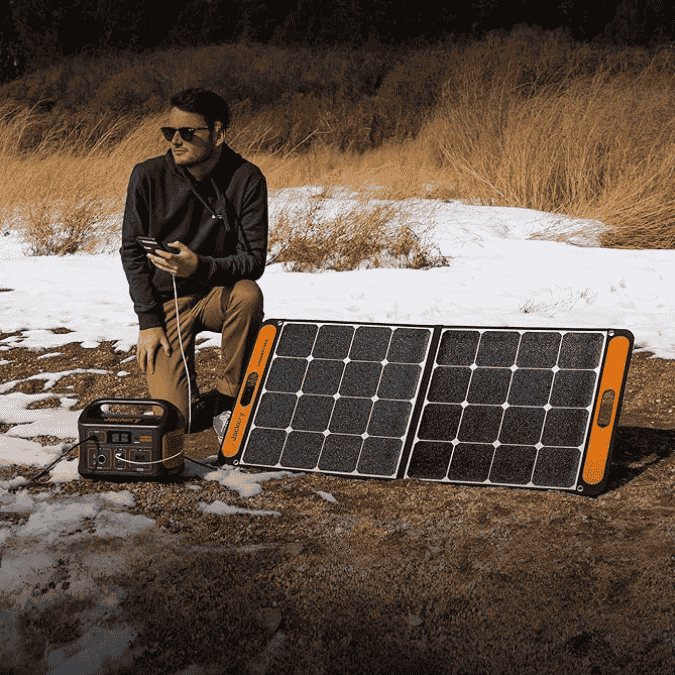
One important detail is that this unit is popular specifically because its 12V output is regulated, which matters for 12V fridges and coolers that throw errors when voltage droops.
Unboxing and first setup
In the box, you get the Explorer 500, an AC adapter, a car charger cable, and a user manual.
Setup is straightforward: charge it fully once, then test your main devices at home before relying on it outdoors.
Ports and outputs
Jackery lists one AC outlet and multiple 12V outputs, plus support for pass-through charging.
Key outputs to know:
- 1× AC outlet (500W continuous, 1000W surge/peak) + 3× USB-A ports for phones, lights, cameras, and small gadgets.
- 12V car outlet and 12V barrel outputs for coolers, routers, fans, and DC gear.
It gets the praise for the front display because it shows input watts, output watts, and remaining battery percent, which makes planning easy in the field.
Jackery’s own runtime guidance uses an efficiency factor of about 0.85 for AC use.
A practical estimate is:
Estimated runtime (hours) ≈ (518Wh × 0.85) ÷ device watts
Below are realistic planning numbers for you.
| Device (typical use) | Approx power draw | Estimated time from full charge |
|---|---|---|
| Phone charging (power bank use) | 10W | ~44 hrs |
| LED lights + small fan | 25W | ~18 hrs |
| Laptop (light work) | 60W | ~7.3 hrs |
| Router + modem | 15W | ~29 hrs |
| CPAP (with DC adapter, typical) | 20W | ~22 hrs |
| 12V fridge (average draw varies) | 40W | ~11 hrs |
The CPAP line is not theoretical. One detailed report showed a CPAP dropping from about 45W on AC to about 20W using a 12V DC adapter, and using under 20 % of the battery over about 7 hours.
Charging options (wall, car, solar)
The Explorer 500 supports three charging routes: wall, car, and solar. Recharge time is about 7.5 hours on wall power and about 9.5 hours on a 100W solar panel.
Solar input is limited by the unit’s DC input range. The manual shows solar charging support in the 12V to 30V range, which is exactly why most people pair it with a 100W class panel, not a huge array.
Trying to charge it with smaller panels can cause issues. A 60W panel might not provide enough power for the unit to start charging reliably, while a 100W panel will work just fine, even pulling meaningful wattage in weaker evening sun.
Pass-through charging (can you use it while charging?)
Yes. Jackery calls out pass-through charging as a supported feature, and owners use it exactly that way during trips and outages.
This is especially useful in a vehicle, where you can top it up from the 12V outlet while keeping tablets, phones, and other small devices alive.
Pros and cons
| Pros | Cons |
|---|---|
| Regulated 12V output is a real advantage for 12V fridges and DC gear. | DC barrel connectors can require adapters. |
| Easy display, simple operation, and very low stress in the field. | Solar charging can be picky with small panels; 100W class is the safe bet. |
| Quiet enough for sleep setups, including CPAP scenarios. | |
| Reliable long-term ownership reports exist, including multi-year use and repeat purchases. |
Can Jackery 500 power a refrigerator?
Yes, in the right scenario, and the key word is “average draw,” not the compressor surge.
For portable 12V fridge freezers and electric coolers, the Explorer 500 is frequently praised because of the regulated 12V output. A user reported stable 12V under load for 15 hours on a DC fridge freezer, with the unit still showing over 50 % remaining and no fridge errors.
For a full-size home refrigerator, it depends. Many have startup surges that are high at compressor start, and some will trip smaller inverters. If the fridge runs reliably on a quality 500W inverter, it can work for short coverage, but this is not the safest “set and forget” use case in this size class.
If your plan is “keep the kitchen cold during a long outage,” the practical move is stepping up to a bigger inverter and battery.
Jackery Explorer 300 vs 500
If you are stuck between a Jackery Explorer 300 and a Jackery Explorer 500, the decision usually comes down to runtime versus portability.
Jackery’s own comparison frames the 500 as the higher capacity option, while the 300 is smaller and charges faster.
| Model | Battery | Inverter | Best fit |
|---|---|---|---|
| Explorer 300 | lower | lower | light weekend charging, minimal gear |
| Explorer 500 | 518Wh | 500W | cooler, CPAP, more devices, longer trips |
If your trip includes a 12V fridge or CPAP, the 500 is usually the calmer choice because you’re not constantly doing battery math.
“Is the Jackery 500 worth it?”
Well, it usually is, as long as you buy it for the right job.
The pattern is consistent: people who treat it as quiet power for small to mid devices tend to love it. That includes road trips, kids’ electronics, fans, lights, and DC coolers.
However, people who expect it to replace a gas generator for high watt appliances end up disappointed.
So, is Jackery worth it as a brand in this segment? Users value reliability, ease of use, and strong support experiences, although slow resolution in defect cases has also been noticed.
The biggest mistake is running medical devices on AC when a DC option exists. CPAP users have noted dramatically better runtime when using the DC cord instead of the standard wall brick.
Buying a too-small solar panel can also backfire in the long run. If solar matters, plan around a 100W panel class, because smaller panels underperform for charging in real conditions.
Buying recommendation
This Jackery Explorer 500 Review lands in a clear place: it is a strong mid-size pick for quiet power and predictable DC performance, especially if your kit includes a 12V cooler, routers, lights, camera gear, or CPAP.
It is not the right tool for heavy cooking, heating, etc., and if these are not your prime usage options, the Explorer 500 is a practical buy.
FAQs
Is the Jackery 500 worth it?
Jackery 500 is worth it for quiet, modest loads under 500W.
Is Jackery a good brand?
Jackery is clearly a highly-rated brand, and the Explorer 500 holds a strong Amazon rating, too.
Can Jackery 500 power a refrigerator?
It can run mini fridges under 500W, not most full-size household refrigerators.
Can you use the Explorer 500 while charging?
Yes, the Explorer 500 supports pass-through charging, so you can use it while recharging.
How long does it take to charge (wall/car/solar)?
About 7.5 hours to charge from an AC wall outlet or a 12V car adapter, and about 9.5 hours with SolarSaga 100W.