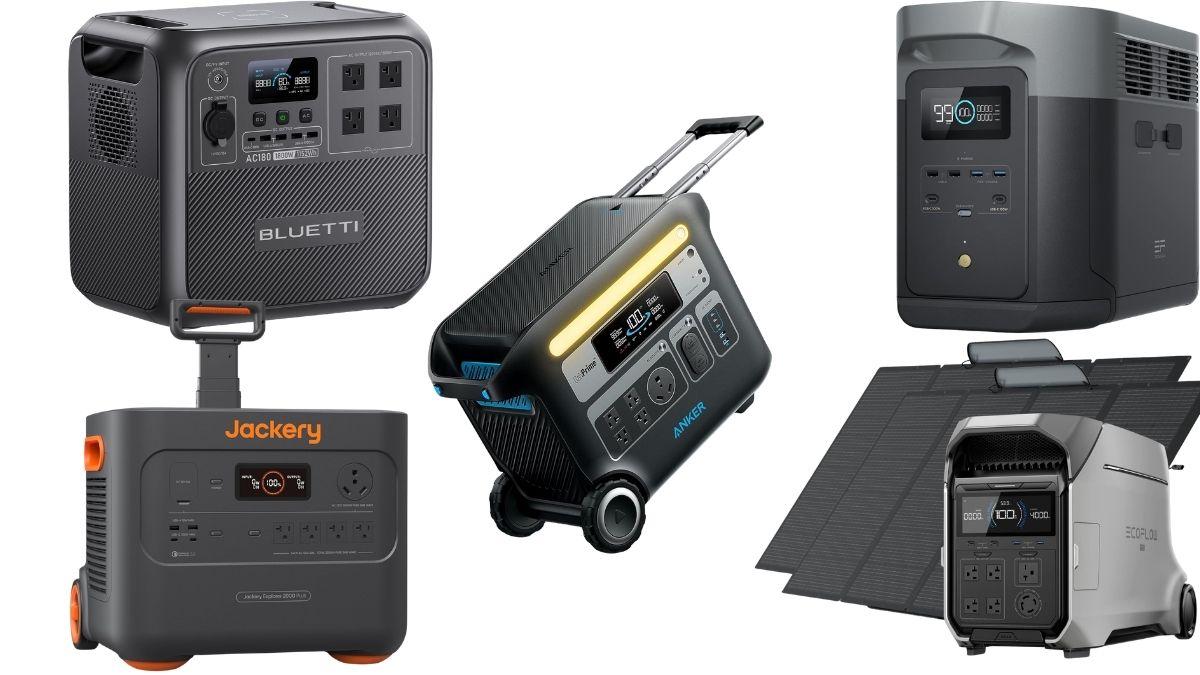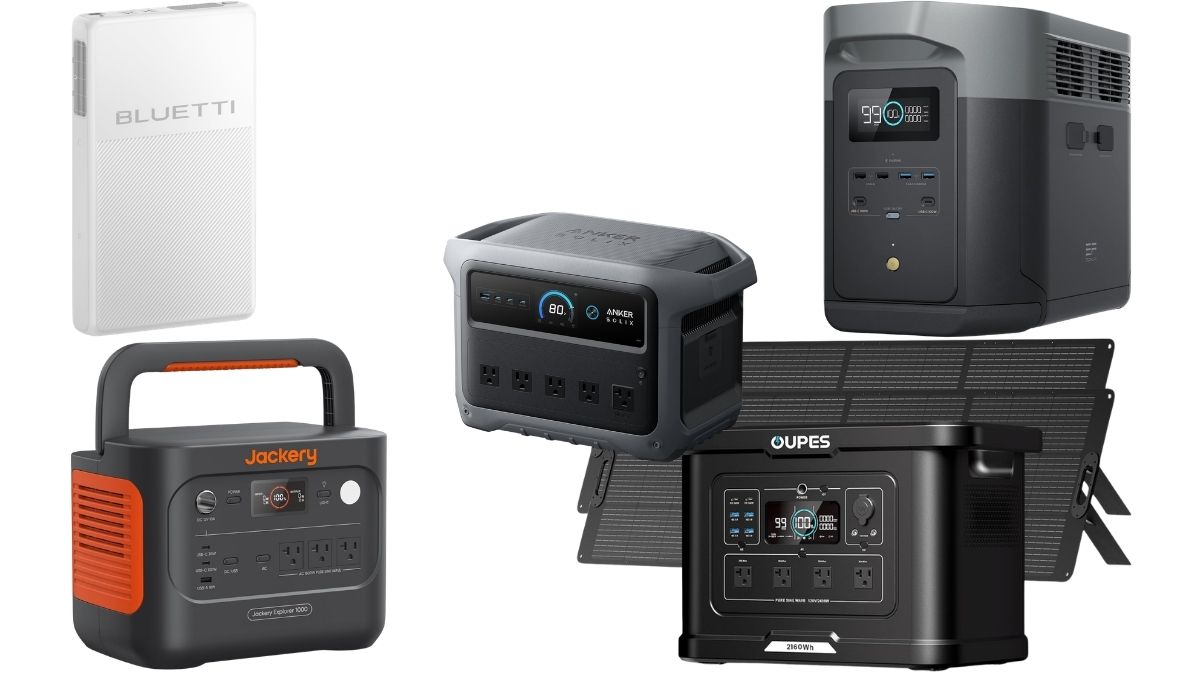
A portable power station can run many refrigerators during a power outage, but the right model depends on your refrigerator’s starting surge, average energy use, and how long you need backup power. For most homes, a 1,000Wh to 2,000Wh-class unit is the starting point, while larger systems make more sense for longer outages or additional appliances.
Comparison of the Best Portable Power Stations for Refrigerators
| Product | Category | Battery Capacity | Continuous Output | Best Fit | Main Drawback |
|---|---|---|---|---|---|
| Anker SOLIX C1000 Gen 2 | Best Overall Refrigerator Backup | 1,024Wh | 2,000W | Home outages and mixed emergency loads | Less reserve than larger systems |
| BLUETTI FridgePower | Best Refrigerator-Focused Backup | 2,016Wh | 1,800W | Dedicated fridge protection | Less portable for frequent moves |
| EcoFlow DELTA 2 Max | Best for Extended Outages | 2,048Wh | 2,400W | Longer backup plans and expansion | Larger and heavier design |
| Jackery Explorer 1000 v2 | Best Compact Refrigerator Backup | 1,070Wh | 1,500W | Renters and RV users | Shorter runtime than larger units |
| OUPES Exodus 2400 | Best RV or Off-Grid Refrigeration | 2,160Wh | 2,400W | Solar-ready off-grid setups | Smaller evidence base than established models |
Can a Portable Power Station Actually Run a Refrigerator?
Yes, a portable power station can run many refrigerators if the unit has enough stored energy, continuous output, and surge capability. The challenge is that refrigerators are not constant loads. Their compressors cycle on and off, and the startup demand can be much higher than the running wattage.
Before purchasing, check your refrigerator’s label or manual for power requirements. You need to compare the refrigerator’s running watts against the power station’s continuous output, while also checking that the startup surge stays below the inverter’s peak rating.
For emergency planning, remember that a refrigerator is only one possible outage load. You may also want to power items such as a router, lights, phones, or medical equipment, which means available capacity can disappear faster than expected.
Best Portable Power Stations for a Refrigerator, by Category
Anker SOLIX C1000 Gen 2 Portable Power Station, 1,024Wh
Highlight: Best Overall for Refrigerator Backup
Key features: 1,024Wh LiFePO4 battery • 2,000W continuous output • 3,000W peak output • AC, solar, and vehicle charging • Wi-Fi/Bluetooth app control
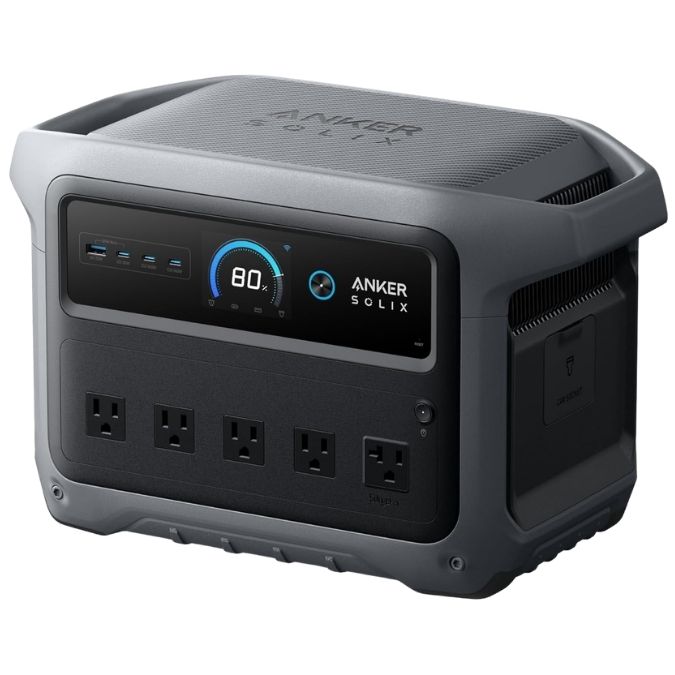
For refrigerator backup, I like the C1000 Gen 2 because it balances capacity, output, and portability. Its 1,024Wh battery and 2,000W continuous output give you enough headroom for many standard refrigerator loads, but you still need to check your refrigerator’s running and startup requirements before relying on it.
The fast charging, solar input support, and app controls make this a practical outage tool. I would choose it when you need a unit that can move between refrigerator backup, camping, networking equipment, and smaller household loads without taking up too much space.
My main reservation is capacity. You get a capable 1kWh-class system, but you should choose a larger model if you expect multi-day outages without recharge options. You should also remember that refrigerator runtime depends on compressor cycles, temperature, and actual energy use.
Pros and Cons
| Pros | Cons |
|---|---|
| High continuous output for its size | Limited capacity for long outages |
| Fast recharge capability | Larger refrigerators may require careful load checking |
| App monitoring and control | |
| Portable design |
Best for: Homeowners who want one portable unit for refrigerator backup and general outage power.
Skip if: You need several days of refrigerator operation without solar or another recharge source.
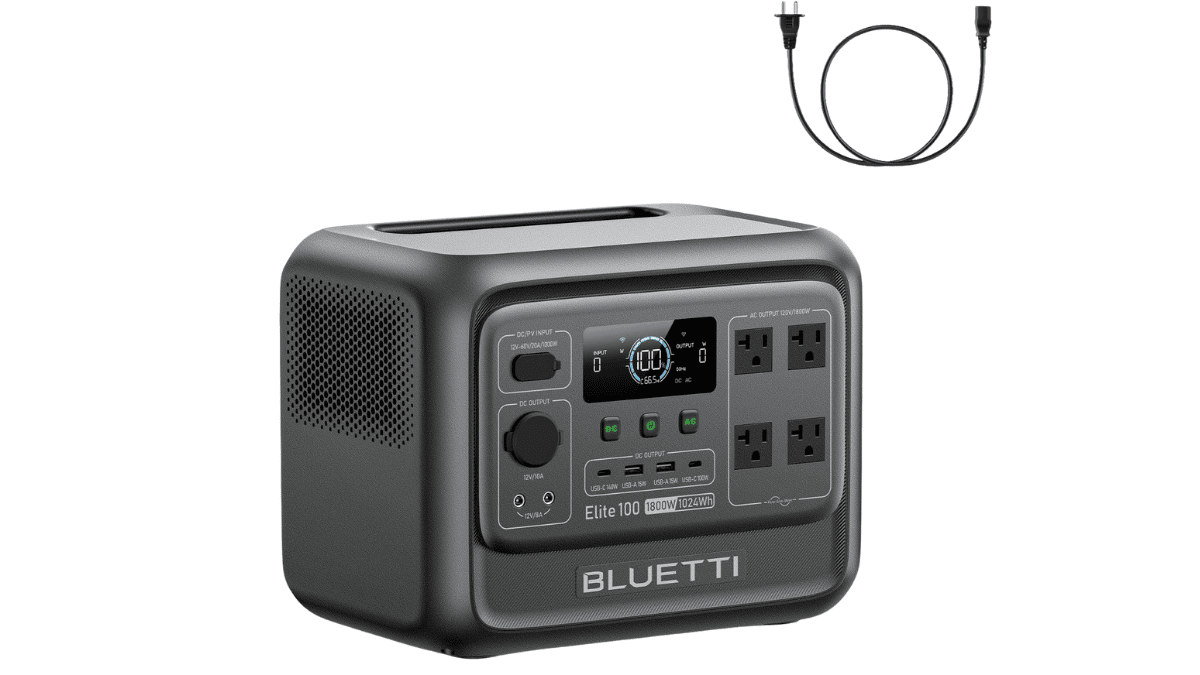
BLUETTI FridgePower Portable Power Station, 2,016Wh
Highlight: Best Refrigerator-Focused Home Backup
Key features: 2,016Wh LFP battery • 1,800W output • refrigerator-focused design • UPS function • app controls
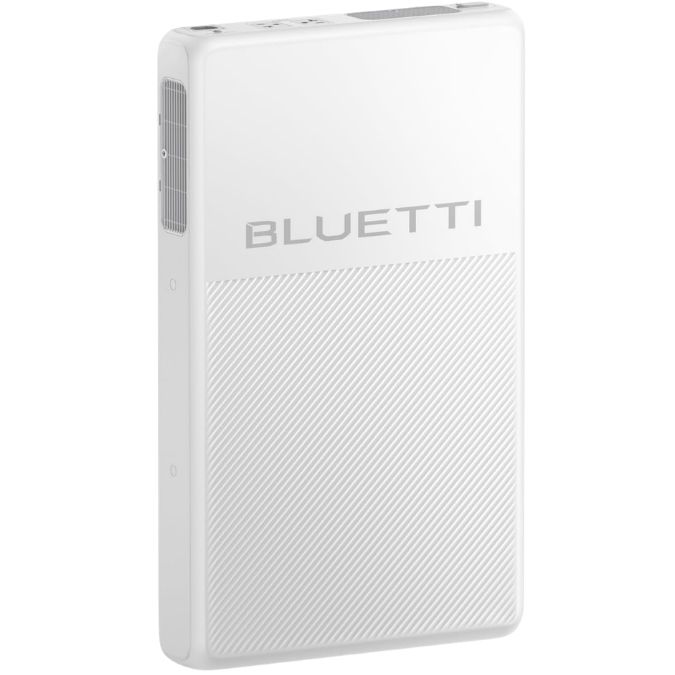
I see the BLUETTI FridgePower as the most purpose-built option in this group. The 2,016Wh capacity gives you a larger energy reserve than many compact power stations, while the refrigerator-focused design makes it easier for you to plan around a single important appliance.
The scheduling features and app controls are useful if you want to manage charging and refrigerator operation around your household routine. I would consider this model when your main goal is keeping food cold rather than carrying one power station for every travel situation.
The trade-off is portability. This is a heavier, more specialized solution, so I would not pick it if you frequently move your power station between campsites, vehicles, and rooms.
Pros and Cons
| Pros | Cons |
|---|---|
| Large capacity for refrigerator backup | Heavier than compact units |
| Designed around fridge use | Less flexible for frequent travel |
| App-based controls | |
| UPS-style backup features |
Best for: Homeowners prioritizing refrigerator protection during outages.
Skip if: You need a lightweight RV-focused power station.
EcoFlow DELTA 2 Max Portable Power Station, 2,048Wh
Highlight: Best for Extended Outages
Key features: 2,048Wh LiFePO4 battery • 2,400W output • expandable capacity • solar charging • multiple AC/DC ports
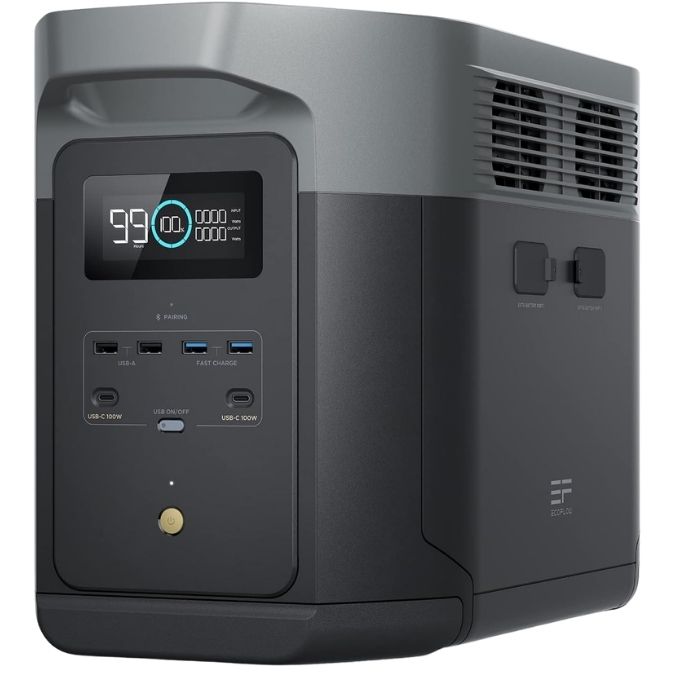
I would look at the DELTA 2 Max when refrigerator backup is part of a broader emergency plan. The 2,048Wh capacity and 2,400W output provide a larger foundation for you to run a refrigerator alongside other moderate loads.
The expandable battery support and high solar input capability make this attractive for longer outages. I like this approach because you can start with a portable system and build more capacity later if your needs grow.
The downside is size and cost. You are buying more capability than a short outage may require, so this makes more sense for homeowners, RV users, or preparedness setups that value extra reserve.
Pros and Cons
| Pros | Cons |
|---|---|
| Large battery capacity | Heavier portable design |
| High continuous output | More expensive than smaller units |
| Expandable storage | |
| Strong charging flexibility |
Best for: Extended outages where refrigerator backup is only one part of your plan.
Skip if: You only need occasional short refrigerator protection.
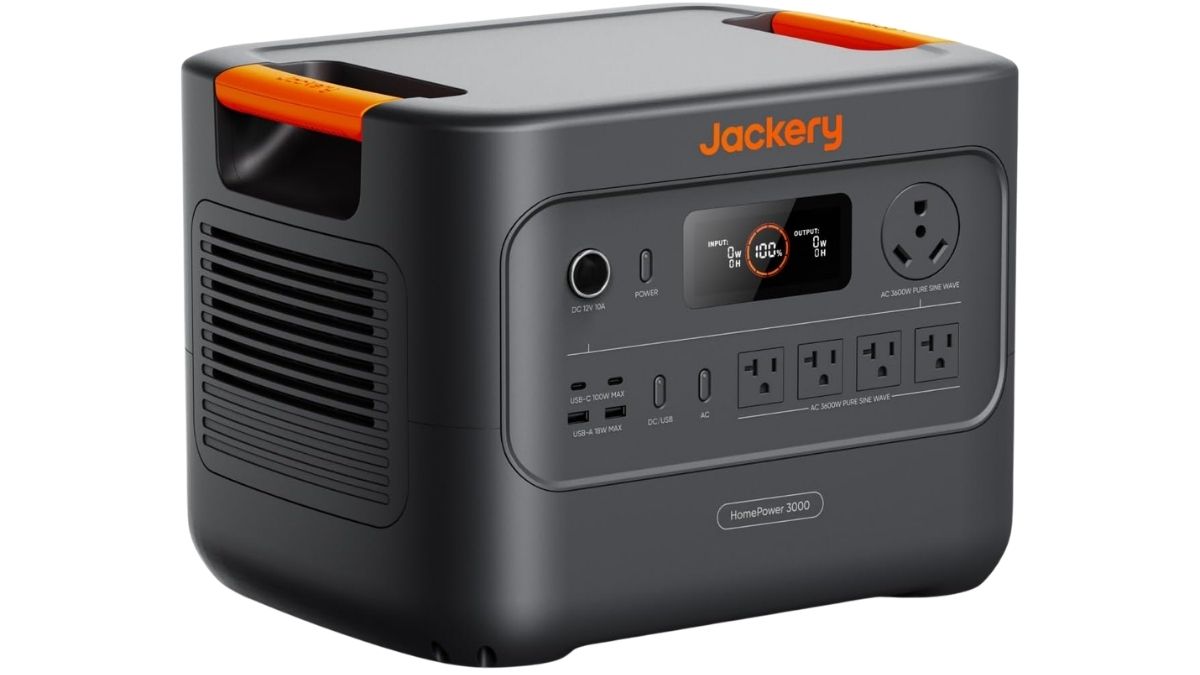
Jackery Explorer 1000 v2 Portable Power Station, 1,070Wh
Highlight: Best Compact Refrigerator Backup
Key features: 1,070Wh LiFePO4 battery • 1,500W output • 3,000W surge • app control • portable design
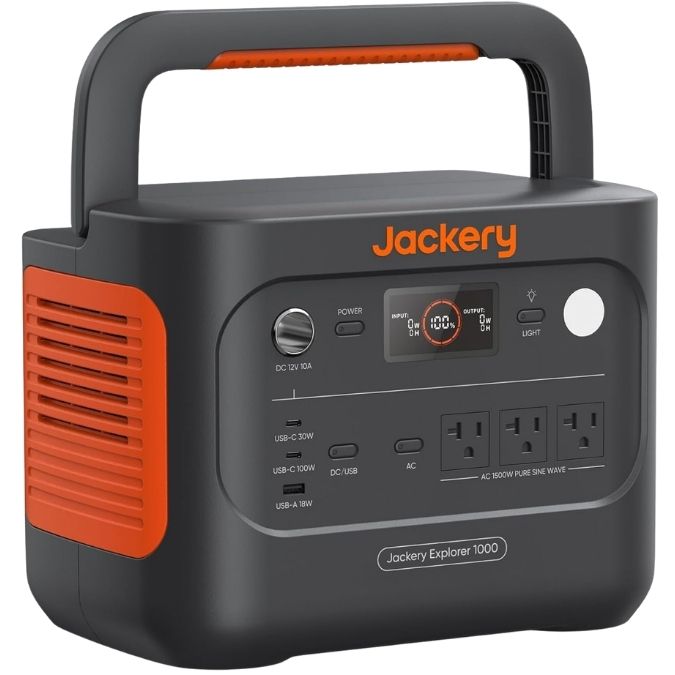
The Explorer 1000 v2 is the compact choice I would consider for smaller refrigerators, RV use, and shorter outages. Its 1,070Wh capacity keeps it in the same general class as other portable units while its 1,500W output gives you useful appliance flexibility.
I like this model when you want something easier to carry and store. You can use it for refrigerator backup, travel, camping, and electronics without moving into a larger power station category.
The drawback is energy reserve. If you need long refrigerator runtime during an extended outage, you should move up to a larger capacity model.
Pros and Cons
| Pros | Cons |
|---|---|
| Lightweight compared with larger units | Smaller energy reserve |
| Strong output for compact size | Not designed for long whole-home backup |
| Portable form factor | |
| App monitoring |
Best for: Renters and RV users who need compact refrigerator backup.
Skip if: You need multi-day refrigerator operation without recharging.
OUPES Exodus 2400 Solar Generator with 2×240W Panels, 2,160Wh
Highlight: Best for RV or Off-Grid Refrigeration
Key features: 2,160Wh battery • 2,400W output • included solar panels • app control • UPS support
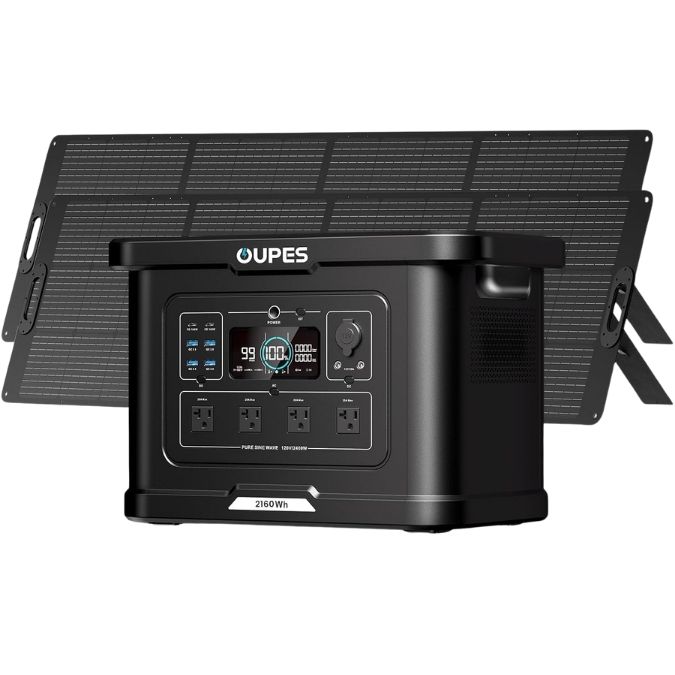
The Exodus 2400 fits the off-grid category because the bundle includes solar panels and a large battery capacity. I would consider it when you want refrigerator support away from the grid and prefer having charging equipment included.
The combination of capacity, output, and solar charging gives you more flexibility for RV trips and emergency preparation. I like the idea of a complete package because you do not need to build the charging setup separately.
My main concern is verification depth. The available product evidence is smaller than the other selections, so I would choose it only after confirming the exact bundle contents and support details that matter to you.
Pros and Cons
| Pros | Cons |
|---|---|
| Large battery capacity | Limited evidence depth |
| Includes solar panels | Bundle details need careful checking |
| High output rating | |
| Designed for off-grid use |
Best for: RV owners who want a solar-ready refrigerator backup package.
Skip if: You want the most established documentation and ecosystem support.
Running Watts vs. Surge Watts: Why Refrigerators Are Different From Other Appliances
Portable power stations list several numbers that are easy to confuse. Watts describe the rate of power use at a moment in time. Watt-hours describe how much energy is stored in the battery.
A refrigerator might only draw a modest amount while running, but the compressor can briefly demand more power when starting. A power station with enough battery capacity but insufficient surge capability may still shut down when the compressor starts.
How Much Power Does a Refrigerator Actually Use?
Refrigerator energy use varies by size, insulation, temperature settings, compressor efficiency, and how often the door opens. A small refrigerator, dorm fridge, or portable fridge usually requires less energy than a full kitchen refrigerator with a freezer section.
The most accurate approach is to measure your refrigerator or use the manufacturer’s specifications. A power station decision should be based on your specific appliance rather than a general refrigerator estimate.
Why Compressor Startup Surge Matters More Than Capacity Alone
Battery capacity determines how long a power station can provide energy. Output capability determines whether it can start and run the appliance.
For refrigerator backup, you should check both:
- Running watt requirement during normal operation.
- Startup surge requirement when the compressor begins.
For additional electrical guidance, the U.S. Department of Energy explains that appliance energy use depends on equipment efficiency and operating conditions, not just rated power. See the official appliance energy guidance from the U.S. Department of Energy.
What Size Portable Power Station Do You Need for a Refrigerator?
The right size depends on refrigerator type, outage length, and whether you can recharge the battery. A larger battery gives you more stored energy, but it also increases cost and weight.
| Refrigerator Type | Main Consideration | Typical Power Station Category |
|---|---|---|
| Mini fridge or dorm fridge | Lower energy demand and portability | Compact power stations |
| Standard kitchen refrigerator | Startup surge and overnight runtime | 1,000Wh to 2,000Wh class |
| Full refrigerator/freezer combination | Longer backup duration | 2,000Wh+ systems |
Mini Fridge or Dorm Fridge (Under 5 cu ft)
Small refrigerators are usually easier for portable power stations because they often require less stored energy. A compact unit can make sense if you need backup for a dorm fridge, garage fridge, or travel refrigerator.
Standard Kitchen Refrigerator (18–22 cu ft)
A full kitchen refrigerator is where capacity and inverter performance become more important. A 1,000Wh-class station may work for shorter interruptions, while larger systems provide more flexibility.
Full-Size Refrigerator + Freezer Combo
If you need to protect a larger refrigerator/freezer combination during extended outages, prioritize battery capacity and recharge options. Solar input or additional charging methods can make a major difference during multi-day events.
How Long Will a Portable Power Station Run a Refrigerator?
Runtime depends on the usable battery energy and the refrigerator’s average power draw over time. A simple estimate is:
Estimated runtime (hours) = usable energy (Wh) ÷ average refrigerator load (W)
Example calculation:
- Power station nominal capacity: 2,000Wh
- Planning efficiency assumption: 80% to 90%
- Estimated usable energy: 1,600Wh to 1,800Wh
- Average refrigerator load assumption: 80W
1,600Wh ÷ 80W = 20 hours
1,800Wh ÷ 80W = 22.5 hours
This is a planning estimate, not a guaranteed runtime. Actual results change with compressor cycling, room temperature, battery reserve settings, inverter overhead, refrigerator condition, and whether other devices share the power station.
You can also use the portable power station calculator to estimate your own setup.
How to Set Up a Portable Power Station to Run Your Refrigerator
A power station works best when you prepare before an outage. Test your refrigerator setup while you still have normal household power so you know how your equipment behaves.
Step 1: Confirm Your Fridge’s Running and Surge Wattage
Check the refrigerator label, manual, or manufacturer information. Confirm both the normal operating requirement and startup demand before connecting it to a battery backup system.
Step 2: Plug In and Test Before an Actual Outage
Run a test cycle. Check whether the refrigerator starts correctly and whether the power station remains within its output limits.
Step 3: Extend Runtime With Solar Recharging
Solar panels can extend backup time when sunlight is available, but output changes with weather, panel angle, temperature, and shading. Treat solar charging as a way to replenish stored energy, not as a constant power source.
For additional setup guidance, see portable power station sizing and runtime guides.
Common Mistakes That Cause a Power Station to Shut Off Mid-Outage
- Choosing a power station only by battery capacity.
- Ignoring refrigerator startup surge requirements.
- Adding too many extra devices during an outage.
- Assuming solar output will always match the panel rating.
- Failing to test the setup before an emergency.
Final Verdict
The best refrigerator backup power station depends on your outage plan. Smaller units are easier to store and carry, while larger systems provide more energy reserve for longer disruptions.
For most homeowners, a balanced mid-size power station is a practical starting point. If you face frequent storms, longer outages, or want backup for several devices, a larger capacity system may better match your needs.
Before buying, compare your refrigerator’s running watts, startup surge, expected outage duration, and recharge options. The right choice is the one that fits your actual load.
FAQs
What size power station do I need to run a refrigerator?
Most standard refrigerators are best matched with a power station that has enough continuous output for startup demands and enough battery capacity for the outage duration you expect. Many users start by comparing 1,000Wh to 2,000Wh-class models.
Will a 1000W portable power station run a refrigerator?
A 1000W-class power station may run some refrigerators if its surge rating supports compressor startup and the battery capacity matches your runtime needs. Check your refrigerator requirements before choosing a model.
How long can a portable power station keep a fridge running during an outage?
Runtime depends on usable energy and average refrigerator consumption. Use the formula: usable Wh divided by average watts. Real results vary because refrigerators cycle and conditions change.
Can I run a refrigerator and freezer on the same power station?
You can if the combined running load and startup demands remain within the power station’s output limits. Check both appliances before connecting them together.
Is it safe to run a refrigerator on a power station overnight?
A refrigerator can be used with a suitable power station designed for the required load. Confirm the appliance requirements, test the setup first, and follow the power station manufacturer’s operating instructions.