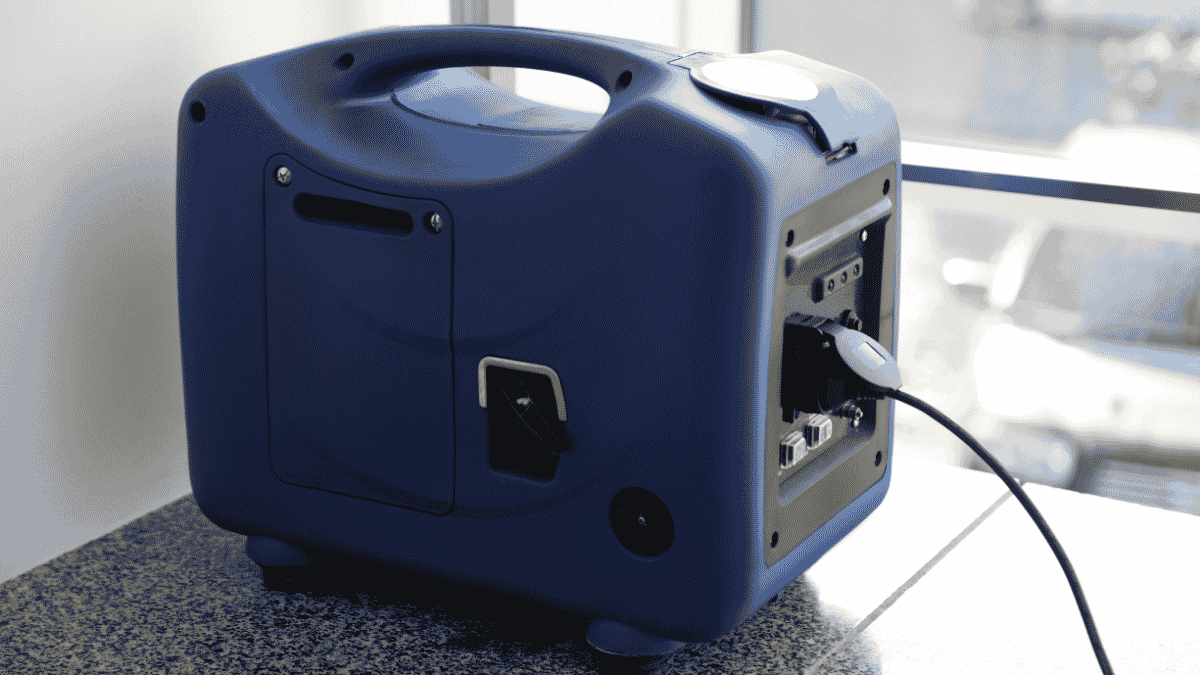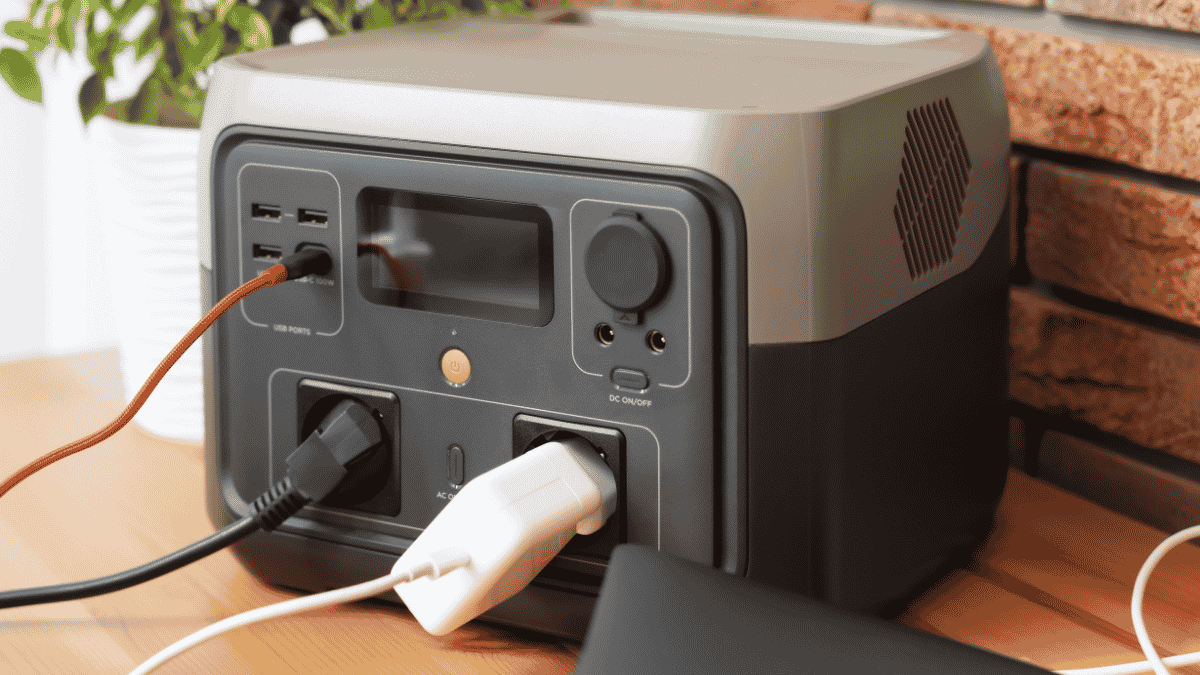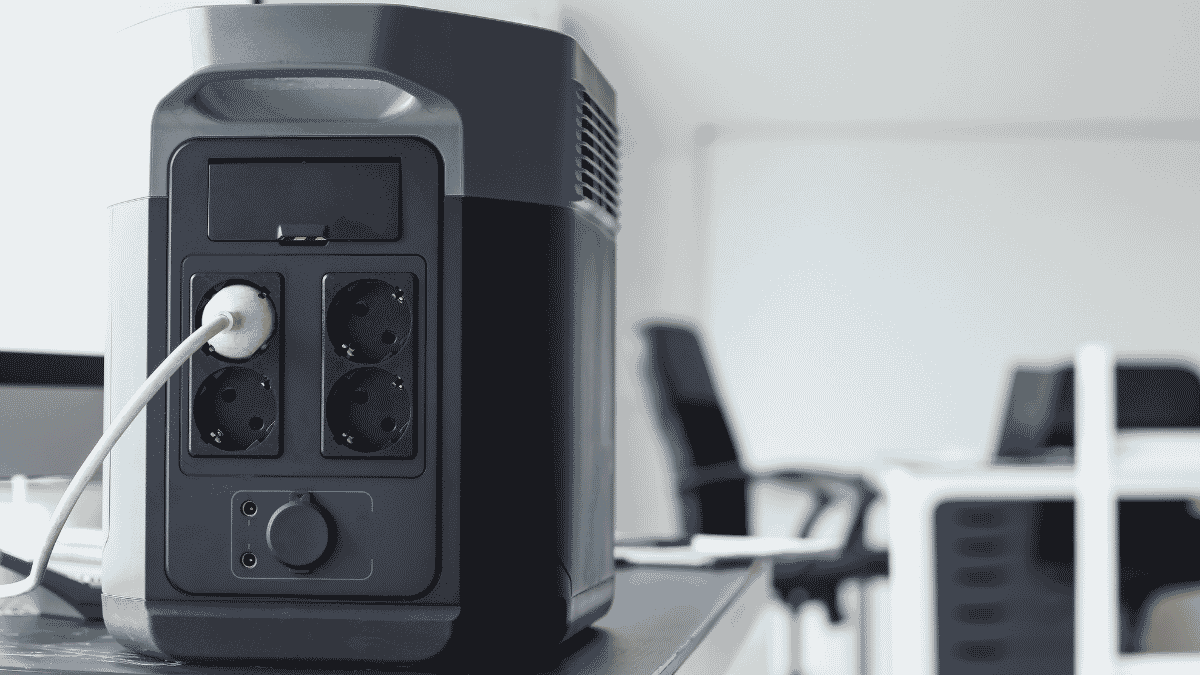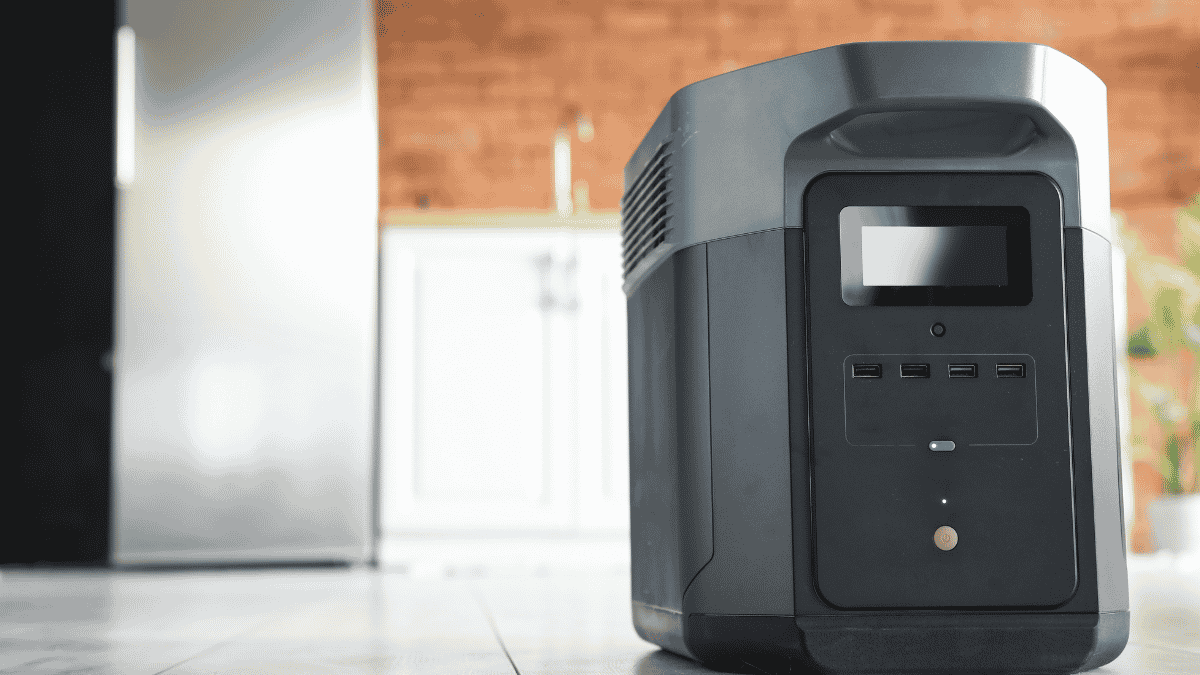
For most standard home refrigerators, you need a portable power station (PPS) with at least 1,000Wh of battery capacity and a surge output of at least 1,500W. The exact size depends on your fridge type, its wattage, and how many hours of backup you need.
If you’re not sure what size portable power station you need for a refrigerator, this post includes the exact formula, fridge-by-fridge size tables, and real runtime estimates along with tips, so you can get it right the first time.
Because with these portable power stations, the size matters more than you think.
The U.S. Energy Information Administration reports that the average American household experiences more than eight hours of power interruption per year, with storm-related outages often stretching multiple days. A refrigerator is one of the first appliances people want to protect, and for good reason: the FDA recommends discarding refrigerated food after just four hours without power.
Choosing the wrong size PPS is a costly mistake. Too small, and the compressor never starts. Too large, and you have spent hundreds of extra dollars for capacity you will never use. Getting this decision right starts with understanding two very different power demands your fridge places on any battery.
The Two Numbers That Determine PP Stations Size
Refrigerators do not draw a flat, steady amount of power. They have two distinct demand levels, and you need a PP Station that handles both.
1. Running Watts (Continuous Load)
This is the power your fridge draws while the compressor is actively running. According to the U.S. Department of Energy, a standard refrigerator uses between 1 and 2 kWh per day, which works out to an average draw of roughly 40 to 200 watts when you account for the compressor cycling on and off. The label inside your fridge door or the yellow EnergyGuide sticker will show you the rated wattage.
2. Surge Watts (Starting/Peak Load)
When the compressor kicks on from a cold start, it pulls 2 to 3 times its running wattage for a few seconds. A fridge running at 150 watts may spike to 300 to 450 watts at startup. If your PPS cannot deliver that burst, the compressor will not start at all, and the unit may trip its own safety shutoff.
The non-negotiable rule: Your PPS peak (surge) output must exceed your fridge’s starting wattage. Check both numbers before you buy.
How to Calculate the Size You Need
Use this straightforward formula to estimate the right PPS capacity for your refrigerator:
Runtime (hours) = (PPS Capacity in Wh × 0.85) ÷ Fridge Running Watts
The 0.85 factor accounts for the 10 to 15 percent energy lost when the PPS inverter converts DC battery power into the AC power your fridge runs on. High-quality inverters typically operate at 90 to 95 percent efficiency; the 0.85 factor builds in a conservative buffer.
Worked example:
- Your fridge is rated at 150W running
- You want at least 8 hours of backup
- Required Wh = (150W × 8 hours) ÷ 0.85 = 1,412 Wh
- Size up and buy a 1,500Wh unit for a safe margin
Important: Refrigerator compressors cycle on and off rather than running nonstop. In a properly insulated fridge, the compressor typically runs about one-third of the time. This means real-world runtime is often 1.5 to 2.5 times longer than a straight calculation would suggest.
PP Station Size Guide by Fridge Type
| Fridge Type | Avg. Running Watts | Surge Watts | Min. PPS Capacity | Recommended PPS |
|---|---|---|---|---|
| Mini fridge (dorm / office) | 50 to 100W | 150 to 300W | 300Wh | 500Wh |
| Compact fridge (1.7 to 4.5 cu ft) | 100 to 150W | 300 to 450W | 500Wh | 800Wh |
| Standard top / bottom freezer (14 to 20 cu ft) | 150 to 250W | 600 to 800W | 1,000Wh | 1,500Wh |
| Large side-by-side / French door (22+ cu ft) | 200 to 400W | 1,500 to 2,000W | 2,000Wh | 2,500Wh+ |
| RV / 12V DC compressor fridge | 40 to 80W (DC) | 120 to 200W | 500Wh | 1,000Wh |
| Standard chest freezer | 100 to 200W | 300 to 500W | 800Wh | 1,200Wh |
RV fridge note: 12V DC compressor fridges connect directly to the PPS via a DC port, bypassing the inverter entirely. This eliminates the 10 to 15 percent conversion loss and delivers noticeably longer runtime from the same battery capacity compared to an AC-connected fridge.
How Long Will a Portable Power Station Actually Run Your Fridge?
The table below uses real-world estimates based on normal compressor cycling (roughly 35 percent on-time) and standard inverter efficiency.
| PPS Capacity | Mini Fridge (75W avg) | Standard Fridge (150W avg) | Large Fridge (300W avg) |
|---|---|---|---|
| 500Wh | 5 to 6 hrs | 2.5 to 3 hrs | Not recommended |
| 1,000Wh | 10 to 12 hrs | 5 to 6 hrs | 2.5 to 3 hrs |
| 1,500Wh | 15 to 18 hrs | 8 to 10 hrs | 4 to 5 hrs |
| 2,000Wh | 20 to 24 hrs | 10 to 13 hrs | 6 to 8 hrs |
| 3,000Wh | 30+ hrs | 16 to 20 hrs | 10 to 12 hrs |
A 1,000Wh unit is widely cited by manufacturers as the practical minimum for running a small to mid-size fridge through a typical overnight outage of 6 to 12 hours.
Check out our complete appliance post for the full picture of what a 1,000W portable power station can run beyond just the fridge.
Battery Comparison: LiFePO4 vs. Lithium-Ion
The two battery types you will encounter in portable power stations behave very differently over time:
Lithium-Ion (NMC)
- Higher energy density (lighter per Wh)
- Typically 500 to 1,000 full charge cycles before capacity degrades
- Less tolerant of extreme temperatures
Lithium Iron Phosphate (LiFePO4)
- Longer cycle life: 3,000 to 4,000+ full charge cycles before significant degradation
- More thermally stable and safer in high-heat environments
- Slightly heavier, but more durable for repeated deep discharge
If you plan to use a PPS regularly for outage protection or off-grid living, a LiFePO4 model pays for itself over time. A unit that survives 3,500 cycles at daily use lasts nearly 10 years, compared to 1.5 to 3 years for many NMC-based units used the same way.
5 Practical Tips to Get More Runtime From Your PPS
Knowing the right size PPS is only half the equation. How you manage the fridge and the battery determines whether your food stays safe through a long outage.
1. Pre-cool before a storm. Drop your fridge to 34 to 36°F the day before a forecasted outage. A colder starting temperature means the compressor cycles less once you switch to battery power, directly extending your runtime.
2. Keep the door closed. Every time the door opens, warm air floods in and forces the compressor to run a longer cycle. An unopened, fully stocked refrigerator holds a food-safe temperature for up to four hours with zero power at all.
3. Use solar panels to recharge during the day. The solar input wattage should be roughly double your fridge’s running watts. For a 150W fridge, a 300W solar panel setup runs the fridge and simultaneously recharges the battery bank, converting a one-day emergency solution into a week-long off-grid setup.
4. Check for UPS (pass-through) mode. Some PPS units support pass-through charging, where the battery charges from a wall outlet while simultaneously powering the fridge. When utility power returns mid-outage, the unit transitions automatically, giving you continuous protection without manual switching.
5. Store the PPS in a shaded, ventilated spot. Both charging speed and discharge capacity drop in extreme heat. Keeping your unit below 95°F during operation ensures you get the full rated capacity out of every charge.
If you also need to keep your internet up during an outage, see our dedicated post on running a portable power station for a refrigerator and Wi-Fi router.
The Bottom Line
Choosing the right size portable power station for a refrigerator comes down to three things: running watts, surge watts, and required runtime. Use the formula (PPS Wh × 0.85) ÷ running watts to calculate your baseline, then size up by at least 20 percent for a real-world buffer.
For most households, a 1,000Wh to 1,500Wh PPS with 1,500W or higher surge output handles a standard refrigerator through overnight outages without breaking a sweat. If you have a large French-door or side-by-side model, or need multi-day coverage, move up to the 2,000Wh to 3,000Wh range and pair it with a solar panel to stay charged indefinitely.
The investment protects far more than your groceries. It protects your peace of mind.
Explore our roundup of the most powerful portable power stations to find options with the surge capacity to match.
For more related pieces and comparisons, keep visiting PP Stations.
FAQs
Can a 500Wh portable power station run a refrigerator?
Yes, but only a small mini or dorm fridge drawing 100W or less. A 500Wh unit will last approximately 5 to 6 hours on a 75W mini fridge. It is not adequate for a standard household refrigerator.
What surge capacity do I need?
Your PPS surge (peak) output should be at least 2 to 3 times your fridge’s running wattage. For a 200W fridge, look for a PPS with a minimum 600W peak output, ideally 1,000W or higher for a comfortable margin.
Is a 1,000Wh portable power station enough for a full-size refrigerator?
For most top-freezer and bottom-freezer refrigerators in the 14 to 20 cubic foot range, yes. A 1,000Wh unit with 1,500W surge output covers 5 to 10 hours depending on the compressor cycle. For overnight coverage, step up to 1,500Wh.
For a full spec-by-spec breakdown, read our post: 1,000W vs. 2,000W portable power station.
How long will a 2,000Wh station run a full-size fridge?
Approximately 10 to 13 hours for a standard 150 to 200W fridge with normal compressor cycling. For a large side-by-side drawing 300W average, expect 6 to 8 hours of real-world runtime.
Does a portable power station work automatically during an outage?
Only if it features a UPS function that switches to battery power in under 30 milliseconds. Without this, there will be a brief interruption that causes the compressor to restart. Always check the spec sheet for “UPS mode” if seamless outage protection is a priority.