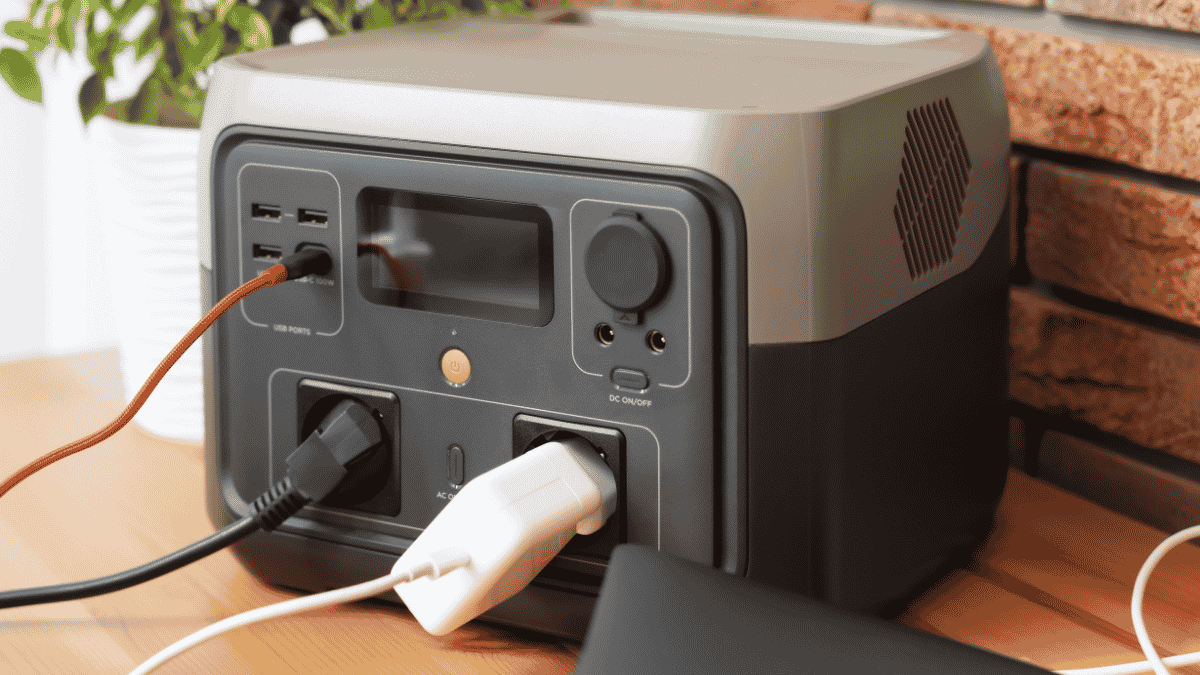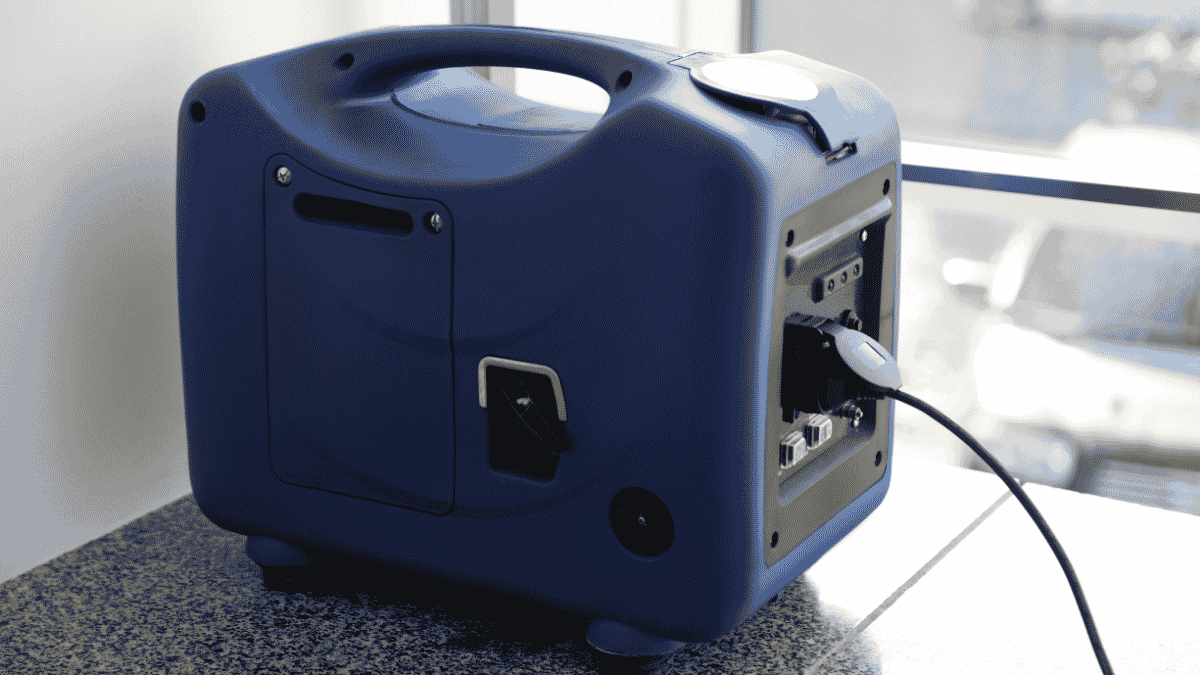
A portable power station calculator helps you estimate the right battery size, runtime, output wattage, and recharge time before buying or using a power station.
The basic idea is simple: add your device wattage, estimate daily usage in hours, adjust for efficiency loss, then choose a power station with enough watt-hours and continuous watt output.
According to the Energy Information Administration (EIA):
U.S. electricity consumption was about 4.20 trillion kWh in 2025.
Portable power stations are useful for homeowners, campers, RV users, remote workers, emergency backup kits, tailgating, and light off-grid use. The mistake many buyers make is choosing by battery size alone. A 1,000Wh power station sounds large, but it may not run a refrigerator, Wi-Fi router, lights, laptop, and fan for a full day unless you calculate the real load first.
Note: This post also includes a bonus sizing calculator, so let’s go.
What Is a Portable Power Station Calculator?
A portable power station calculator is a tool that estimates how long a battery generator can run your devices. It uses watt-hours, device wattage, runtime, inverter efficiency, and charging input to show whether a unit is large enough for your energy needs.
The calculator should answer four questions:
- How many watt-hours do I need?
- What continuous watt output do I need?
- How long will my power station run?
- How long will it take to recharge by wall outlet, car, or solar?
For best results, treat the calculator as a planning tool, not a guaranteed runtime promise. Real runtime changes with temperature, device cycling, battery age, AC inverter losses, and whether your devices pull steady or variable wattage.
PP Station Calculator Formula
The main formula is: usable watt-hours divided by total device watts equals estimated runtime in hours.
For real-world results, multiply the listed battery capacity by 0.80 to 0.90 before dividing by your total load.
Use this simple version first:
Runtime = Battery capacity in Wh x 0.85 / total running watts
Example:
A 1,000Wh power station running a 100W device gives:
1,000 x 0.85 / 100 = 8.5 hours
That 0.85 factor accounts for typical inverter and conversion losses. If you are using DC ports instead of AC outlets, efficiency may be better. If you are using a heater, microwave, or old refrigerator, efficiency and runtime may be worse.
For recharge time, use:
Recharge time = Battery capacity in Wh / charging input watts
Example:
A 1,000Wh unit charging from a 500W wall charger takes about 2 hours before charging slowdown. A 200W solar panel may only deliver 100W to 150W in real conditions, so solar charging can take much longer than the label suggests.
What size do you need?
Pick what you’ll run, tweak the details, and we’ll size the battery for you.
Choose a use case above, then adjust the device list to get a recommendation tailored to you.
Includes a real-world 85% efficiency factor and a 25% safety buffer. Actual runtime varies with temperature, battery age, surge loads, and how many devices run at once.
Wanna skip the math? Check your exact runtime with our Portable Power Station Runtime Calculator.
How Much Power Do I Need for a Portable Power Station?
Most users need 300Wh to 600Wh for phones, laptops, lights, and Wi-Fi, 1,000Wh to 2,000Wh for camping or short outage backup, and 2,000Wh to 5,000Wh for refrigerators, medical devices, RV loads, or longer emergency use.
Use this quick sizing chart as a starting point.
| Use Case | Suggested Capacity | Suggested Output | Best For |
|---|---|---|---|
| Phone, camera, tablet, LED light | 200Wh to 500Wh | 200W to 500W | Day trips, photography, small electronics |
| Laptop, Wi-Fi, lights, fan | 500Wh to 1,000Wh | 500W to 1,200W | Remote work, camping, short outages |
| Mini fridge, CPAP, TV, router | 1,000Wh to 1,500Wh | 1,000W to 1,800W | Overnight backup, van life, tailgating |
| Full-size fridge plus essentials | 1,500Wh to 2,500Wh | 1,500W to 2,400W | Home outage backup |
| RV, tools, microwave, multiple appliances | 3,000Wh to 5,000Wh+ | 2,000W to 4,000W+ | Heavy backup and off-grid use |
This table is not a replacement for checking your actual devices. The safest method is to read each device label or use a plug-in watt meter. Many appliances use less power after startup but need a higher surge wattage for the first few seconds.
Power Station Watt Calculator
A power station watt calculator adds the running watts of each device you plan to use at the same time. It also checks surge wattage, because refrigerators, pumps, blenders, power tools, and air conditioners often need a short startup burst.
| Device | Typical Running Watts | Daily Use Example | Estimated Daily Wh |
|---|---|---|---|
| Smartphone charger | 5W to 20W | 2 hours | 10Wh to 40Wh |
| Laptop | 45W to 100W | 4 hours | 180Wh to 400Wh |
| Wi-Fi router | 8W to 20W | 24 hours | 192Wh to 480Wh |
| LED light | 8W to 15W | 5 hours | 40Wh to 75Wh |
| Box fan | 40W to 100W | 8 hours | 320Wh to 800Wh |
| TV | 60W to 150W | 4 hours | 240Wh to 600Wh |
| CPAP machine | 30W to 90W | 8 hours | 240Wh to 720Wh |
| Mini fridge | 50W to 100W avg | 12 hours cycling | 600Wh to 1,200Wh |
| Full-size refrigerator | 70W to 200W avg | 12 hours cycling | 840Wh to 2,400Wh |
| Microwave | 800W to 1,500W | 10 minutes | 133Wh to 250Wh |
| Coffee maker | 800W to 1,200W | 10 minutes | 133Wh to 200Wh |
| Space heater | 750W to 1,500W | 2 hours | 1,500Wh to 3,000Wh |
Heating devices drain batteries fast. A small space heater can use more energy in two hours than a laptop uses in two full workdays. For emergency backup, prioritize refrigeration, communication, lighting, medical devices, and airflow before heat-producing appliances.
How Do I Calculate Runtime for Multiple Devices?
To calculate runtime for multiple devices, add the running watts of everything you will use at the same time. Then divide usable battery capacity by that total load.
For daily planning, multiply each device wattage by hours used per day.
Example home outage load:
| Device | Watts | Hours | Daily Wh |
|---|---|---|---|
| Refrigerator, cycling average | 100W | 12 | 1,200Wh |
| Wi-Fi router | 12W | 24 | 288Wh |
| Laptop | 65W | 4 | 260Wh |
| Two LED lights | 20W | 5 | 100Wh |
| Phone charging | 20W | 2 | 40Wh |
| Total daily usage | 1,888Wh |
Now adjust for efficiency:
Required capacity = 1,888 / 0.85 = about 2,221Wh
For this setup, a 2,000Wh station may be close, but a 2,500Wh unit gives more breathing room. You should also confirm continuous output and refrigerator surge wattage before relying on the setup during an outage.
What Size Power Station Can Run a Refrigerator?
A 1,000Wh portable power station can run many refrigerators for a few hours, but 1,500Wh to 2,500Wh is a safer target for overnight fridge backup. The exact answer depends on fridge size, compressor cycling, room temperature, door opening, and surge wattage.
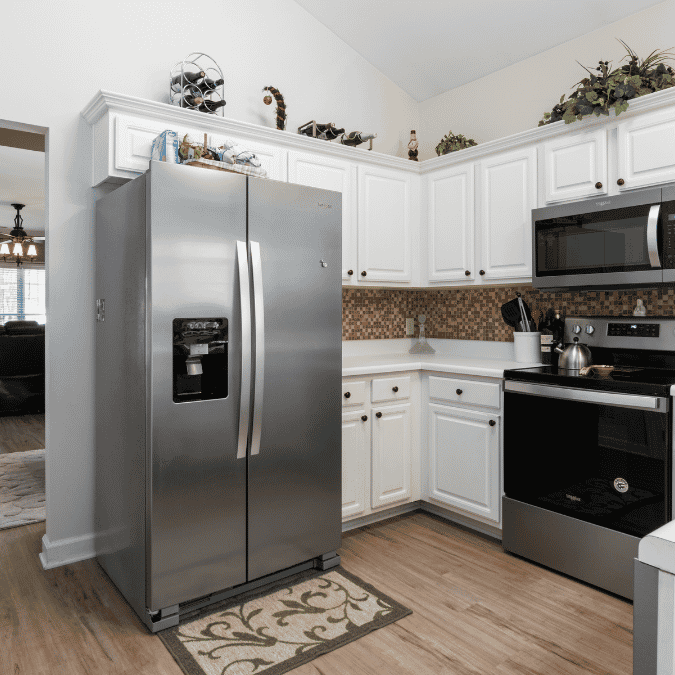
Refrigerators are tricky because they do not pull the same wattage all day. A fridge may run hard after startup, then cycle on and off. That is why a calculator should include a duty cycle option. If your fridge pulls 180W while the compressor is running but runs only half the time, the average may be closer to 90W.
Still, surge wattage matters. A refrigerator that averages 100W may need several times that for startup. Choose a power station with enough continuous output and surge capacity, not just enough watt-hours.
To see how many hours a specific power station will run your fridge, run the numbers through our runtime tool.
How Does Solar Input Change the Calculator?
Solar input extends runtime by reducing net battery drain or recharging the station during the day. The calculator should use realistic solar input, because a 200W panel usually does not deliver 200W all day in real outdoor conditions.
Use this simple estimate:
Net load = device watts minus real solar input watts
| Solar Panel Rating | Practical Input Range | Best Use |
|---|---|---|
| 100W panel | 50W to 75W | Phones, lights, small top-ups |
| 200W panel | 100W to 150W | Laptop, router, small fridge support |
| 400W panel | 200W to 300W | Camping, RV, outage backup |
| 800W panel | 400W to 600W | Larger home backup setups |
Solar performance depends on sun angle, shade, clouds, temperature, panel position, cable loss, and the power station’s max solar input. Always check the station’s voltage range, connector type, and maximum solar wattage before connecting panels.
What Factors Make Runtime Lower Than the Calculator Says?
Runtime drops when the power station loses energy through the inverter, runs in cold or hot conditions, powers high-surge appliances, uses an older battery, or runs devices with variable loads. This is why real runtime is usually lower than perfect math.
The biggest runtime reducers are:
- AC inverter loss
- Battery age
- Cold weather
- High startup surge
- Heat-producing appliances
- Poor solar conditions
- Fridge or freezer door opening
- Running too many devices at once
- Leaving AC outlets on when not needed
A good portable battery capacity calculator should let users adjust efficiency between 80 % and 90 %, add surge load, include solar input, and reduce usable capacity for older batteries.
Portable Battery Capacity Calculator Examples
A portable battery capacity calculator should match the power station size to the job.
Small stations are great for electronics, mid-size units work for camping and outages, and large expandable systems are better for refrigerators, RVs, and longer backup.
| Scenario | Daily Usage | Recommended Capacity |
|---|---|---|
| Weekend phone, camera, light | 250Wh to 500Wh | 300Wh to 700Wh |
| Laptop workday with router | 700Wh to 1,200Wh | 1,000Wh to 1,500Wh |
| CPAP overnight plus phone | 300Wh to 800Wh | 500Wh to 1,000Wh |
| Refrigerator and router backup | 1,500Wh to 2,500Wh | 2,000Wh to 3,000Wh |
| RV with fridge, lights, fan, microwave use | 2,500Wh to 5,000Wh | 3,000Wh to 6,000Wh |
When in doubt, size up by 20 % to 30 %. That buffer helps cover battery loss, unexpected devices, colder weather, and longer-than-planned outages.
What Is the Difference Between Watts and Watt-Hours?
Watts measure how much power a device uses at one moment. Watt-hours measure how much energy a battery stores or a device uses over time. You need both numbers to size a portable power station correctly.
Example:
A 100W device running for 5 hours uses 500Wh.
That means a 500Wh power station may not actually run it for 5 full hours after efficiency loss. With an 85 % usable capacity estimate, a 500Wh battery gives about 425Wh of usable AC energy, or about 4.25 hours for a 100W load.
Is mAh Useful for Power Station Calculations?
mAh is less useful than watt-hours for portable power stations because it depends on voltage. Watt-hours are better because they show total stored energy in a way that works across laptops, fridges, lights, routers, and other devices.
If you only have amp-hours, convert it like this:
Watt-hours = amp-hours x volts
Example:
A 50Ah battery at 12V stores about 600Wh.
For power stations, always look for Wh, continuous W, surge W, battery chemistry, solar input, and recharge time. Those specs tell you much more than a large mAh number.
Final Takeaway
A portable power station calculator helps you avoid buying too small, overspending on unused capacity, or expecting unrealistic runtime during an outage. Start with watt-hours, add your device loads, adjust for 80 % to 90 % usable capacity, check surge wattage, and include solar input only at real-world charging levels.
For most U.S. users, the best calculator result is not the smallest station that barely works. It is the station that covers your essential daily usage with a 20 % to 30 % safety buffer.
FAQs
How many watt-hours do I need for a portable power station?
Most people need at least 500Wh for small electronics, 1,000Wh for camping or light backup, and 2,000Wh or more for refrigerators and longer outages. Add your device wattage, multiply by daily hours, then divide by 0.85 for a realistic capacity target.
Can a 1,000Wh power station run a refrigerator?
A 1,000Wh power station can run many refrigerators for a few hours, but it may not cover a full overnight or full-day outage. For refrigerator backup, 1,500Wh to 2,500Wh is usually safer, especially if you also need Wi-Fi, lights, fans, and phone charging.
How do I calculate recharge time?
Divide the battery capacity in watt-hours by the charging input in watts. A 1,000Wh unit with 500W AC charging may take around 2 hours before slowdown. Solar charging usually takes longer because real solar input is often lower than the panel’s rated output.
What is the best efficiency number for a calculator?
Use 85 % as a practical default for AC-powered devices. Use 80 % for conservative estimates and 90 % for efficient setups or DC-powered devices. This gives more realistic runtime than assuming the full battery capacity is usable.
What should a portable power station calculator include?
A good calculator should include battery capacity, device wattage, quantity, hours of use, inverter efficiency, surge watts, solar input, battery age, and recharge method. It should output runtime, daily watt-hours, recommended capacity, output requirement, and solar recharge estimate.