The best portable power stations for tent camping under 30 lbs balance watt-hour capacity, LiFePO4 battery chemistry, and solar charging support without tipping past the 30 lb threshold. . For most 1-3 night tent camping trips, a unit between 300-700 Wh and under 20 lbs covers all basics including phone charging, lighting, a portable fan, and a CPAP machine.
Lugging a 40-lbs power station to a campsite defeats the purpose of lightweight camping. If you have ever left a power station in the car because it was too heavy to carry to the tent, you already know the problem.
The good news: today’s best portable power stations for tent camping under 30 pounds deliver 500-800 Wh of clean energy in packages you can carry in one hand. The challenge is knowing which specs actually matter versus which ones are marketing noise.
This guide covers the top picks, explains what to look for, and gives you a straight answer on what to buy based on your actual camping needs.
Top Picks at a Glance
| Model | Weight | Capacity | AC Output | Best For | Price |
|---|---|---|---|---|---|
| EcoFlow RIVER 2 Pro | 17 lbs | 768 Wh | 800W | Best Overall | $299-$349 |
| Jackery Explorer 600 Plus | 13.9 lbs | 632 Wh | 800W | Best Value | $449-$499 |
| Jackery Explorer 600 v2 | 14.1 lbs | 640 Wh | 500W | Lightest 640 Wh LFP | $399-$449 |
| Goal Zero Yeti 500X | 12.9 lbs | 505 Wh | 600W | Best Ecosystem | $449-$499 |
| Anker SOLIX C300 | ~8 lbs | 288 Wh | 300W | Ultra-Light Weekender | $199-$249 |
What to Look for in a Camping Power Station Under 30 lbs
Battery Capacity: How Many Watt Hours Do You Need?
Watt hours (Wh) is the single most important spec. It tells you how much total energy the station holds, separate from how fast it can deliver that power.
Here is a realistic runtime breakdown for common camping devices:
| Device | Typical Draw | Runtime from 300 Wh | Runtime from 600 Wh |
|---|---|---|---|
| Smartphone charge | 5-18W | 6-8 full charges | 12-15 full charges |
| LED camp lantern | 5-10W | 30-60 hours | 60-120 hours |
| Portable fan | 15-30W | 10-20 hours | 20-40 hours |
| Laptop | 45-65W | 4-6 hours | 9-12 hours |
| CPAP (no heat) | 30-60W | 5-10 hours | 10-20 hours |
| 12V mini cooler | 40-60W | 5-7 hours | 10-15 hours |
For a solo or duo weekend trip with basics (phone, lights, fan), a 300-500 Wh unit is plenty. Add a CPAP or mini cooler and you want 600-800 Wh. Anything over 800 Wh in this weight class becomes difficult to find without exceeding 30 pounds.
Battery Chemistry: LFP vs NMC
LiFePO4 (LFP): Now the standard for quality camping power stations. Rated for 3,000+ charge cycles versus 500-800 for older NMC cells, better thermal stability, and safer chemistry inside a tent. Jackery, EcoFlow, and Anker have all transitioned their flagship camping models to LFP.
NMC (Nickel Manganese Cobalt): Still found in older models like the Goal Zero Yeti 500X. Packs slightly more energy per pound but degrades faster and handles heat less gracefully. If you see a station without LFP listed, verify the chemistry before purchasing.
Pure Sine Wave Inverter: Why It Matters
A pure sine wave inverter produces clean AC power equivalent to a wall outlet. This matters for sensitive electronics like CPAP machines, camera battery chargers, and laptops. Modified sine wave units can damage or underperform with these devices. Every pick in this guide uses a pure sine wave inverter.
MPPT Solar Charging
MPPT (Maximum Power Point Tracking) controllers are significantly more efficient than older PWM controllers, especially in partial shade or on cloudy days. When you are off grid without shore power, MPPT can mean the difference between a full recharge and getting stranded at 40%. Pay attention to the maximum solar input wattage: a station accepting 200W of solar input charges roughly twice as fast as one capped at 100W under the same conditions.
Weight vs Capacity: The Practical Breakdown
- Under 15 lbs: Ultralight. Ideal for 1-night solo trips. Expect 200-400 Wh.
- 15-20 lbs: The sweet spot for tent camping. Most 500-800 Wh units land here.
- 20-30 lbs: Higher capacity (800-1,000 Wh), still manageable with a handle.
- Over 30 lbs: Car camping only. Do not attempt to carry to a tent site.
Best Portable Power Stations for Tent Camping Under 30 Pounds: Full Reviews
1. EcoFlow RIVER 2 Pro – Best Overall
| Spec | Detail |
|---|---|
| Weight | 17 lbs (7.7 kg) |
| Capacity | 768 Wh |
| AC Output | 800W continuous, 1600W surge |
| Battery | LiFePO4, 3,000+ cycles |
| Wall Charge Time | ~70 minutes |
| Max Solar Input | 220W (MPPT) |
| Ports | 4x AC, 3x USB-A, 1x USB-C PD, DC |
| Price | ~$299-$349 |
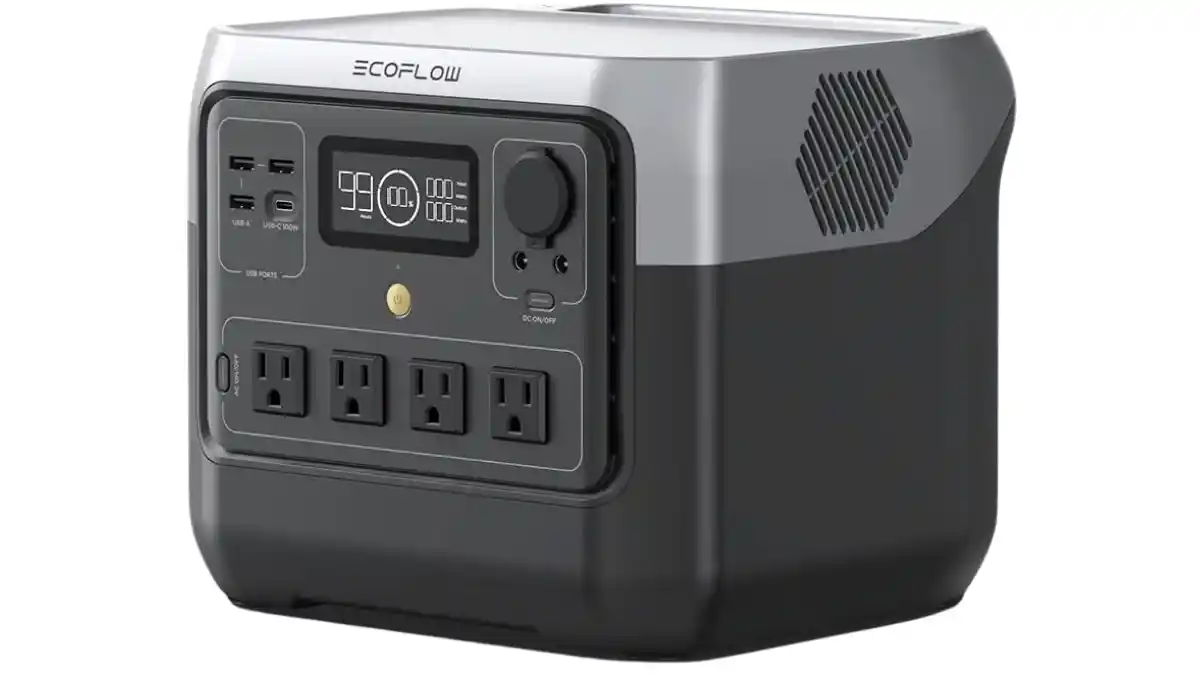
The RIVER 2 Pro is the easiest recommendation for most tent campers. At 17 lbs and 768 Wh, it sits in that rare overlap of genuinely portable and genuinely capable. The 70-minute wall charge time means you can top it off while loading the car.
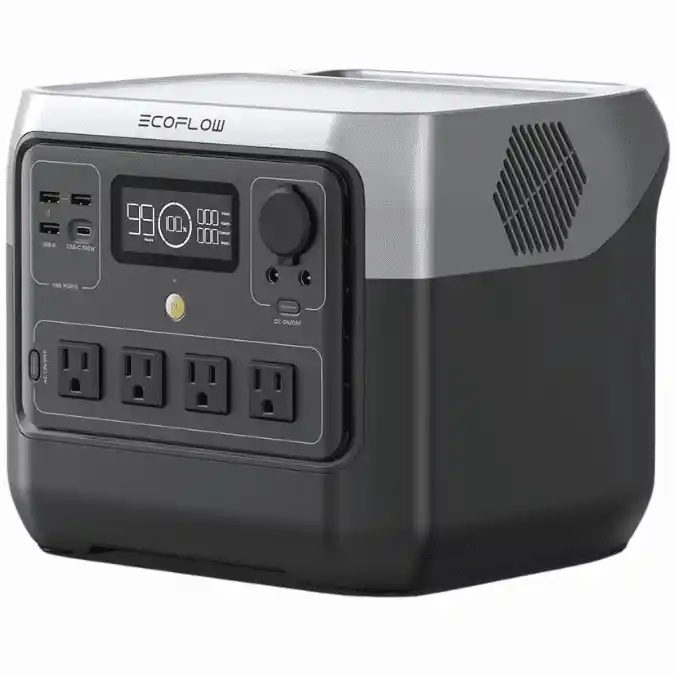
Four AC outlets in this weight class is unusual. Most competitors give you two. For a campsite shared by two or three people, that extra outlet matters more than you expect.
The LFP battery means you are not babying charge levels to preserve longevity. Drain it regularly without concern for long-term damage.
One honest limitation: The handle design is slightly awkward for one-handed carrying over longer distances compared to Jackery’s wraparound handle.
2. Jackery Explorer 600 Plus – Best Value
| Spec | Detail |
|---|---|
| Weight | 13.9 lbs |
| Capacity | 632 Wh |
| AC Output | 800W continuous |
| Battery | LiFePO4, 3,000+ cycles |
| Wall Charge Time | ~1 hour |
| Max Solar Input | 200W (MPPT) |
| Ports | 2x AC, 2x USB-A, 2x USB-C, DC |
| Price | ~$449-$499 |
At 13.9 lbs with 632 Wh, the Explorer 600 Plus has one of the best weight-to-capacity ratios in this class. You can carry it one-handed from car to campsite, and 632 Wh covers a full weekend of moderate use without a recharge.
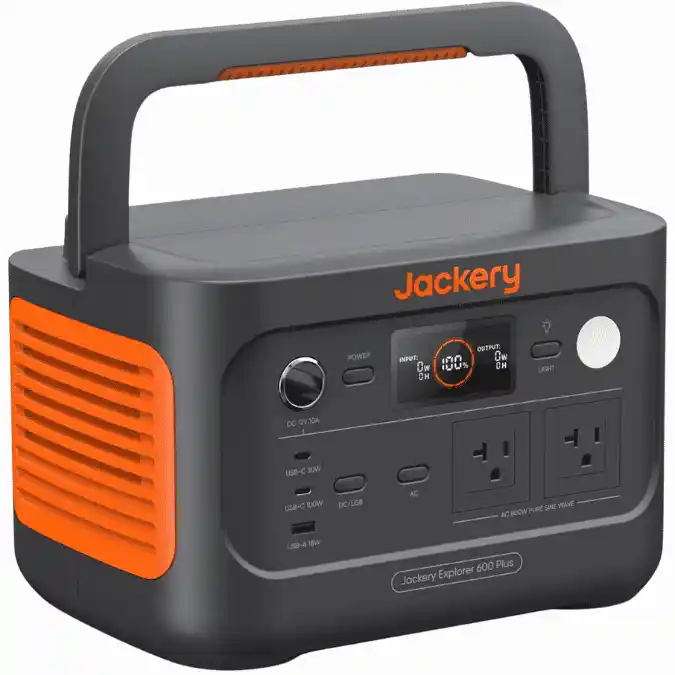
Jackery’s solar ecosystem is one of the strongest available. Their SolarSaga 200W panel pairs directly with this unit and charges it in around 4-5 hours under good sunlight, making it a strong choice for multi-day off-grid trips.
Worth noting: Two AC outlets versus the RIVER 2 Pro’s four. For solo or duo camping, that is enough. If sharing power across a larger group, the EcoFlow has the edge.
3. Jackery Explorer 600 v2 – Lightest 640 Wh LFP
| Spec | Detail |
|---|---|
| Weight | 14.1 lbs |
| Capacity | 640 Wh |
| AC Output | 500W continuous, 1000W surge |
| Battery | LiFePO4 |
| Wall Charge Time | ~70 min (hybrid AC) |
| Max Solar Input | 200W |
| Price | ~$399-$449 |
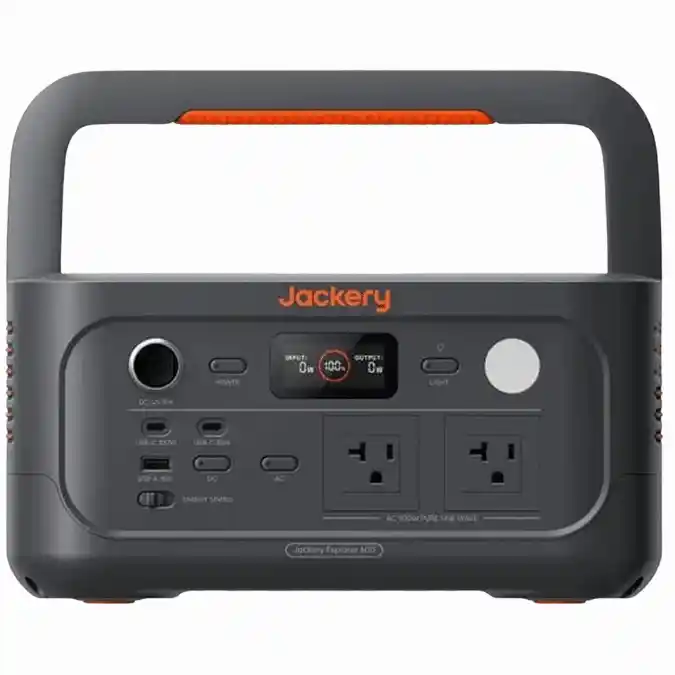
The Explorer 600 v2 is Jackery’s most refined lightweight camping unit. At 14.1 lbs with a 70-minute hybrid AC charge time, it is fast to prep and easy to carry. The 500W continuous output is lower than the 600 Plus but sufficient for phones, laptops, and CPAP use without the heated humidifier.
4. Goal Zero Yeti 500X – Best Ecosystem
| Spec | Detail |
|---|---|
| Weight | 12.9 lbs |
| Capacity | 505 Wh |
| AC Output | 600W continuous |
| Battery | Li-ion (NMC) |
| Wall Charge Time | ~8.5 hours (60W adapter) |
| Max Solar Input | 150W (MPPT, 8mm port) |
| Price | ~$449-$499 |
The lightest option at 12.9 lbs and widely available at retail across REI, Home Depot, and Best Buy. Goal Zero’s accessory ecosystem is one of the strongest in the US market, with compatible solar panels, cables, and expansion batteries readily available.
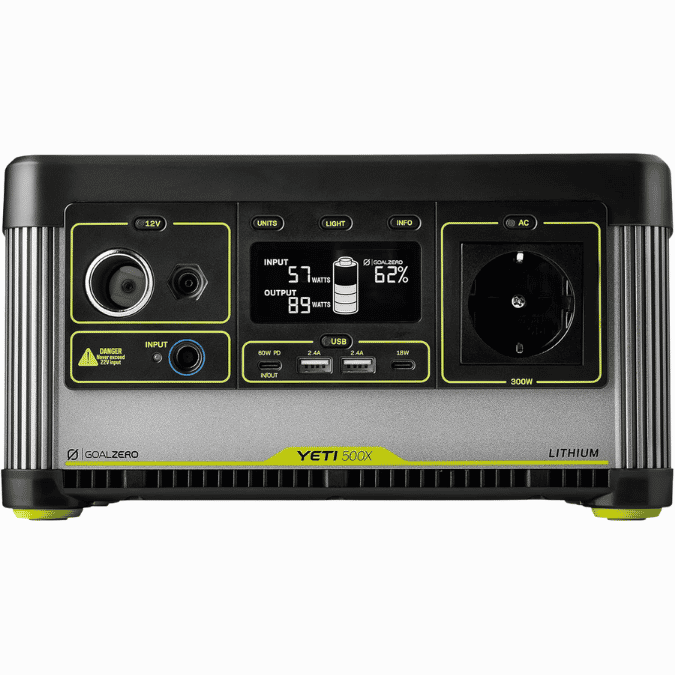
Key caveat: The 500X uses NMC chemistry, which has lower cycle life than LFP. The wall charge time of 8.5 hours is also significantly slower than competitors. Plan to charge overnight before any trip.
5. Anker SOLIX C300 – Best Ultra-Light Option
| Spec | Detail |
|---|---|
| Weight | ~8 lbs |
| Capacity | 288 Wh |
| AC Output | 300W continuous |
| Battery | LiFePO4, 3,000+ cycles |
| Wall Charge Time | ~1 hour |
| Max Solar Input | 100W |
| Price | ~$199-$249 |
At 8 lbs, the SOLIX C300 is in a different weight class entirely. This is the pick for solo campers, hammock setups, or anyone who hikes a short distance to their site. For device charging, a light, and a small fan, it is more than enough.
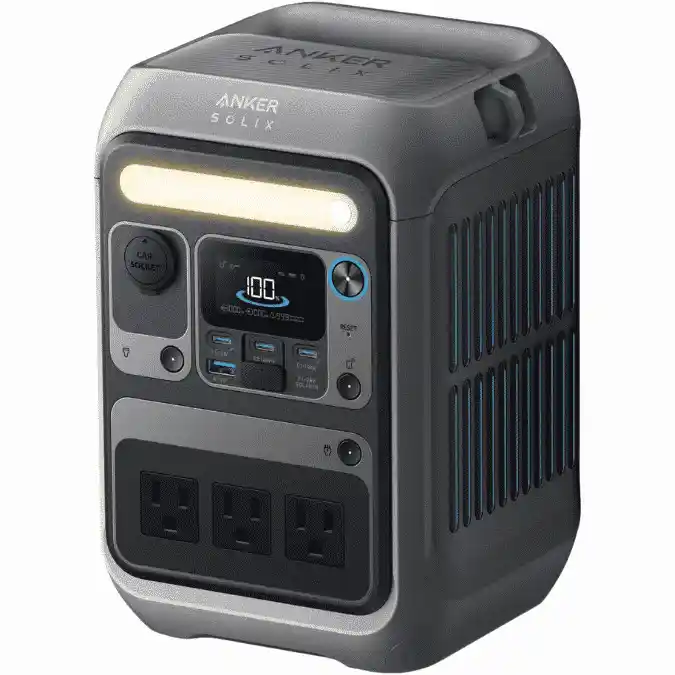
It will not power a CPAP for a full night or run a mini cooler meaningfully. For basic device needs at $199, it is the most accessible option in this guide.
Side-by-Side Comparison Table
| Model | Weight | Wh | AC Out | Solar In | Battery | Price |
|---|---|---|---|---|---|---|
| EcoFlow RIVER 2 Pro | 17 lbs | 768 | 800W | 220W | LFP | $299-$349 |
| Jackery 600 Plus | 13.9 lbs | 632 | 800W | 200W | LFP | $449-$499 |
| Jackery 600 v2 | 14.1 lbs | 640 | 500W | 200W | LFP | $399-$449 |
| Goal Zero Yeti 500X | 12.9 lbs | 505 | 600W | 150W | NMC | $449-$499 |
| Anker SOLIX C300 | ~8 lbs | 288 | 300W | 100W | LFP | $199-$249 |
How Much Power Do You Actually Need for Tent Camping?
The most common mistake is buying too much capacity and carrying unnecessary weight, or too little and running out on night two.
A simple way to calculate your needs:
Step 1: List every device you plan to use and its wattage (check the label or the manufacturer website).
Step 2: Estimate how many hours per day you will run each device.
Step 3: Multiply watts x hours = Wh used per day. Add 20% for inefficiency losses.
Step 4: Multiply by trip length. If solar charging, reduce total needed by 30-50% depending on sun availability.
Real-world example: 2-night trip, solo camper with phone, LED light, fan, and CPAP (no heated humidifier):
- Smartphone: 10W x 2 hrs/day = 20 Wh
- LED lantern: 8W x 5 hrs/day = 40 Wh
- Portable fan: 25W x 8 hrs/day = 200 Wh
- CPAP (no heat): 40W x 8 hrs/night = 320 Wh
- Daily total: ~580 Wh. Two nights = ~1,160 Wh needed.
With a 768 Wh station and a 200W solar panel getting 4-5 hours of sun per day, you would finish this trip with comfortable margin. Without solar, you would need a mid-trip recharge or accept running the CPAP on reduced settings.
Mistakes to Avoid When Buying a Camping Power Station
| Mistake | Why It Matters | What to Do Instead |
|---|---|---|
| Buying by output watts alone | High watt output does not mean high capacity. A 2000W unit can hold only 500 Wh. | Check watt-hours (Wh), not just output watts. |
| Ignoring battery chemistry | NMC batteries degrade faster and handle heat worse outdoors. | Choose LFP for any unit used regularly in the field. |
| Skipping solar input specs | A 100W solar cap means very slow recharge on multi-day trips. | Verify max solar input wattage before buying. |
| Overbuying capacity | More capacity means more weight. A 30 lb station kills portability. | Match capacity to your actual load, not your worst-case scenario. |
| Using in a sealed tent | Power stations generate heat during charging. Not a carbon monoxide risk, but ventilation is still good practice. | Place near tent entrance or just outside in calm weather. |
Which One Should You Buy?
For most tent campers (1-3 nights, moderate use): EcoFlow RIVER 2 Pro. Best balance of capacity, charge speed, and port count in this weight class.
For budget-conscious solo campers: Anker SOLIX C300. At $199 and 8 lbs, it is hard to beat for basic device charging on short trips.
For multi-day off-grid camping with solar: Jackery Explorer 600 Plus. Strong solar ecosystem, excellent weight-to-capacity ratio, and a 3,000-cycle LFP battery.
For CPAP users: EcoFlow RIVER 2 Pro. The 768 Wh capacity covers one full night of CPAP use (no heated humidifier) with solid margin. Confirm your machine’s specific watt draw before relying on a single charge.
Frequently Asked Questions
Is a 300 Wh power station enough for tent camping?
Yes, for a solo 1-2 night trip with phone, LED light, and a small fan. If you need a CPAP or mini cooler, go with at least 500-600 Wh.
Can I use a portable power station inside a tent?
Yes. They produce no exhaust or carbon monoxide. Keep them near the tent entrance during charging since they generate some heat.
What is the lightest power station that can charge a laptop?
The Anker SOLIX C300 at around 8 lbs handles laptop charging fine. For all-day use with other devices running too, step up to the Jackery 600 Plus.
How do I charge a power station while camping without shore power?
Use a compatible solar panel. A 200W panel with MPPT charging fully recharges a 600-700 Wh station in 4-6 hours of good sunlight. Car charging via the 12V port also works during the drive.
Are portable power stations allowed at campgrounds?
Yes, in most US campgrounds. They produce no noise or exhaust and are allowed where gas generators are prohibited. Always check the specific rules for your site.
How long will a portable power station last before needing replacement?
LFP models are rated for 3,000+ cycles at 80% capacity retention. With regular camping use, expect 10+ years before any noticeable degradation.