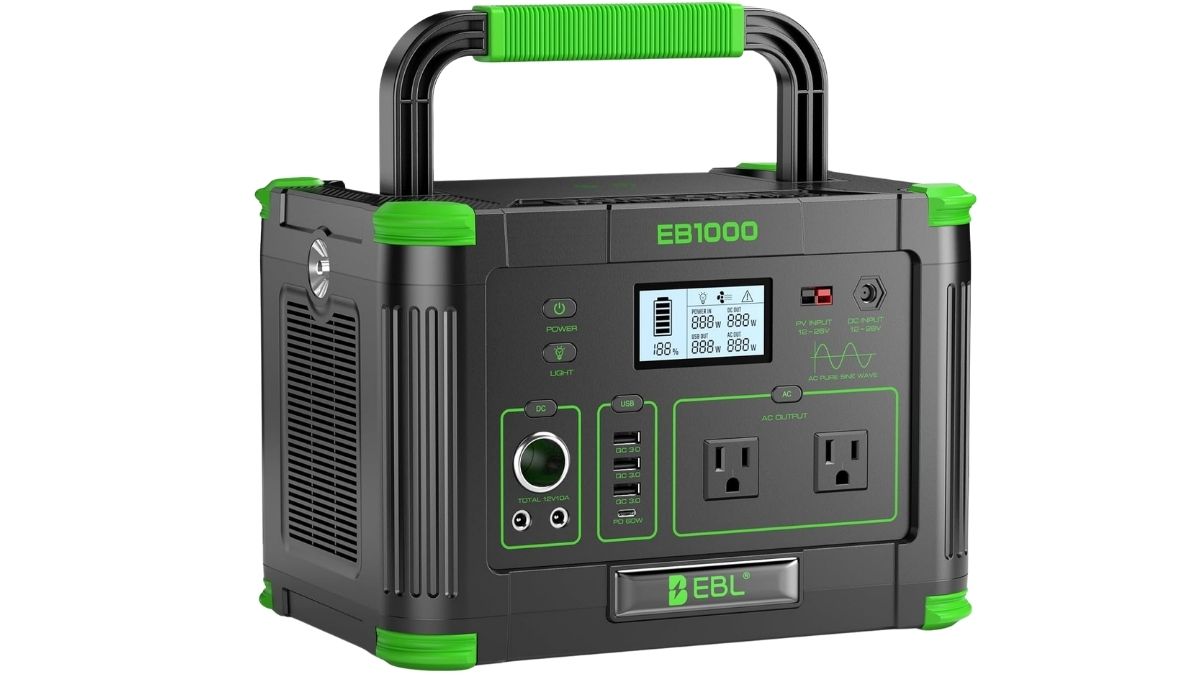
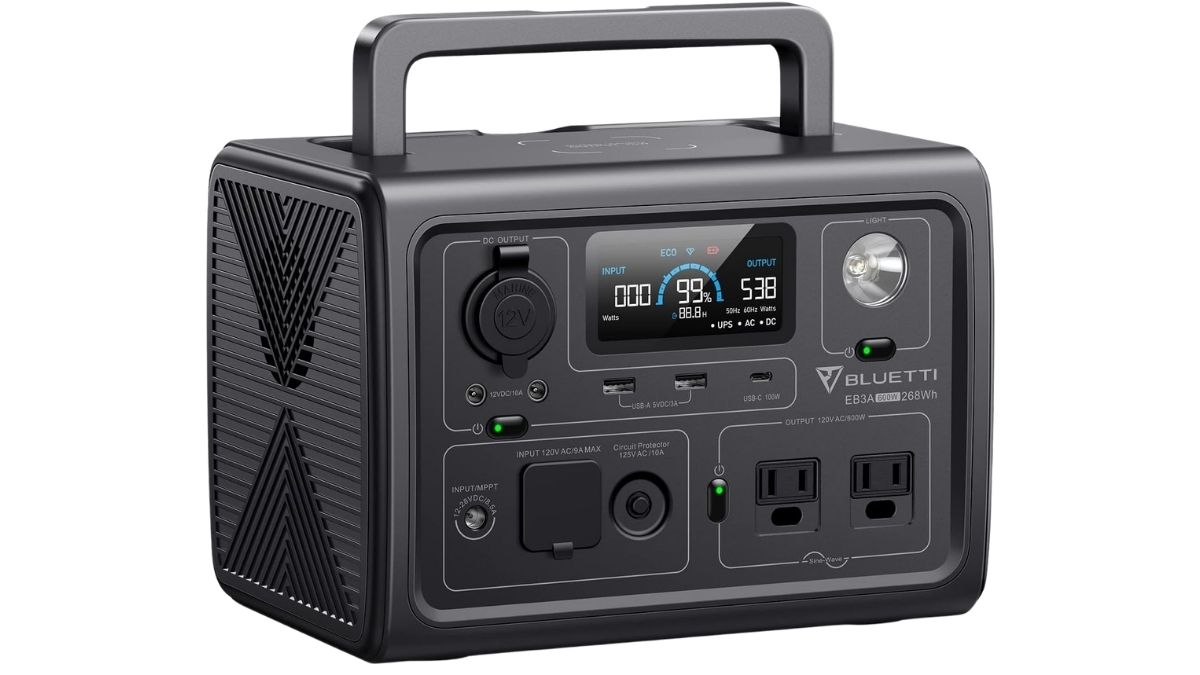
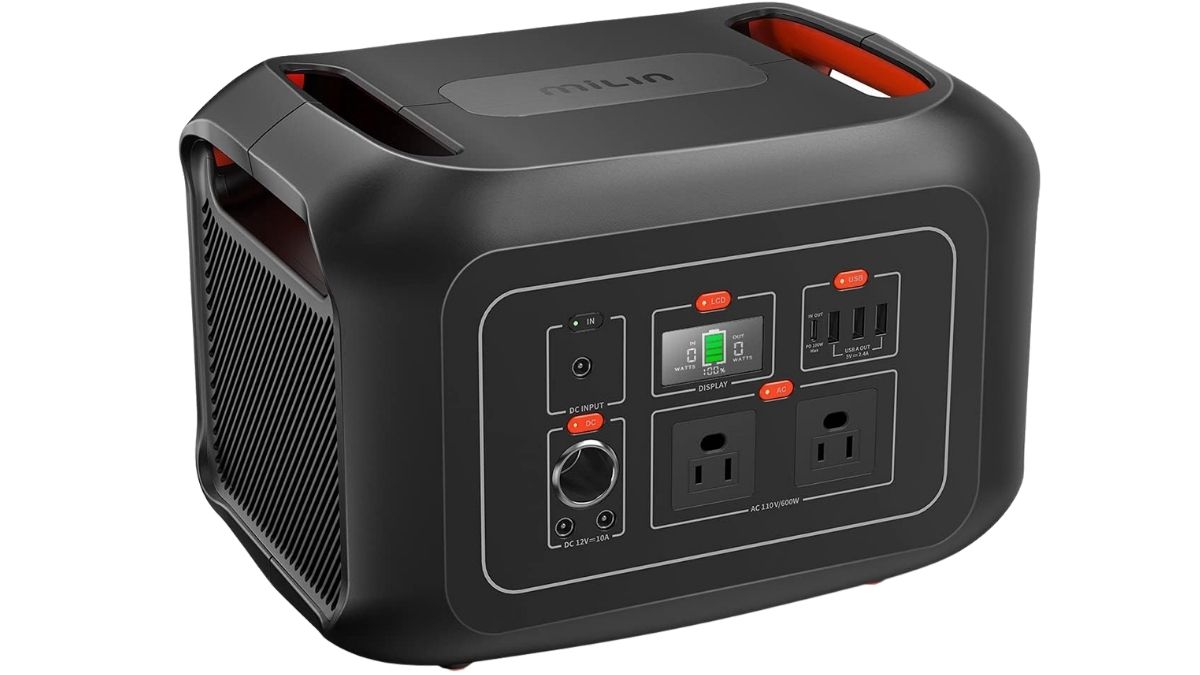
The best portable power station for overnight outage backup is the EcoFlow Delta Pro 3 for serious home use, and the Jackery 2000 v2 for most households. You need at least 1,000Wh of capacity to keep a fridge, router, and lights running through an 8 to 10 hour night. Anything smaller is a phone charger at best.
| Use Case | Recommended Model | Min. Capacity Needed |
|---|---|---|
| Whole-home overnight backup | EcoFlow Delta Pro 3 | 3,600Wh+ |
| Most households (fridge + lights + router) | Jackery 2000 v2 | 2,000Wh |
| Compact overnight backup | EcoFlow Delta 3 Plus | 1,024Wh |
| CPAP + phone + lights only | Anker SOLIX F3000 | 1,024Wh |
| Budget overnight option | Pecron E3800LFP | 3,840Wh |
| Expandable long-term backup | BLUETTI Apex 300 | 3,072Wh+ |
Why Most Power Station Guides Miss the Point
Most “best portable power station” articles are written for campers. They rank units by portability, solar speed, and port count. That is fine for camping but wrong for overnight outage backup, where the only thing that matters is: can this thing keep my essentials running for 8 to 10 hours straight?
If the power goes out at 10 PM, you need your fridge cold by morning. You need your router on. If someone in your home uses a CPAP machine, that is non-negotiable. And you need lights.
This guide is written specifically for that scenario. Not camping. Not job sites. Overnight blackouts.
How Much Power Do You Actually Need for an Overnight Outage?
Before picking a model, you need to know your overnight power load. Here is a simple way to calculate it.
Formula: Device Wattage x Hours of Use = Watt-Hours (Wh) Needed
| Device | Avg. Wattage | Hours Overnight | Wh Used |
|---|---|---|---|
| Refrigerator | 150W | 10 hrs | 1,500Wh |
| WiFi Router | 10W | 10 hrs | 100Wh |
| LED Lights (3 rooms) | 30W | 6 hrs | 180Wh |
| CPAP Machine (no heat) | 30-60W | 8 hrs | 240-480Wh |
| Phone Charging (2 phones) | 20W | 2 hrs | 40Wh |
| Laptop | 50W | 3 hrs | 150Wh |
| Total Estimate | ~2,210Wh |
Real-world output is roughly 80 to 85% of a unit’s rated capacity. A power station’s inverter, screen, and fan all draw power while running. So if your overnight load is 2,200Wh, you need a unit rated at around 2,600Wh or more to get through safely.
Bottom line: Do not buy a 500Wh unit and expect it to last the night. You will wake up to a warm fridge and a dead router.
Best Portable Power Stations for Overnight Outage Backup
1. EcoFlow Delta Pro 3 – Best Overall for Home Overnight Backup
Capacity: 4,096Wh (expandable) | Output: 4,000W continuous | Battery: LFP | Weight: 114 lbs
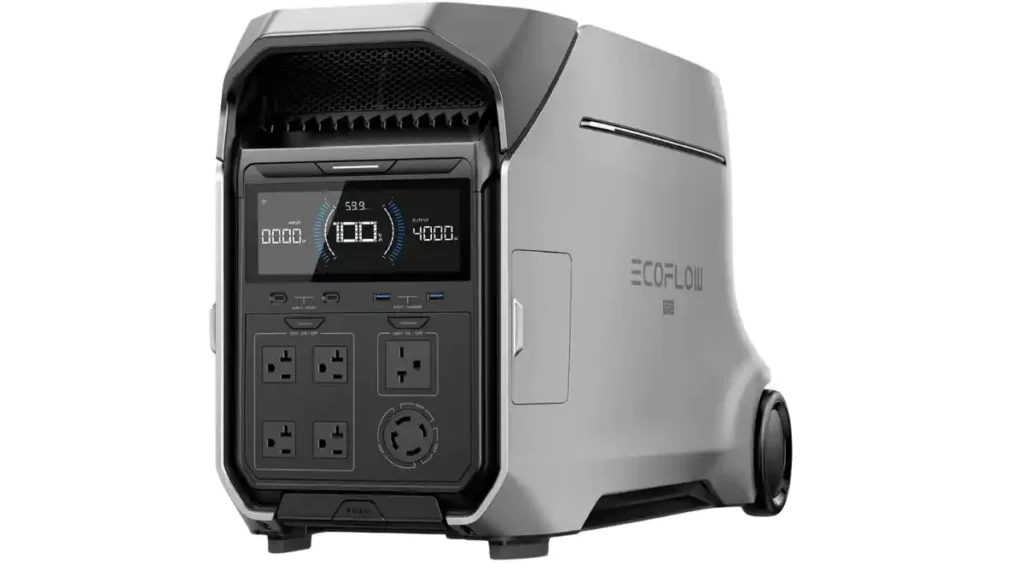
If you want the most capable overnight backup for a full household, the EcoFlow Delta Pro 3 is the clear top pick. It can run a refrigerator for up to 19 hours on its own. That alone tells you what this thing can do.
It connects to your home circuits through an optional Transfer Switch kit, letting you select which circuits stay on during a blackout including the fridge, designated outlets, and lights. You do not need an electrician for most setups. The unit is safe to run indoors, produces zero fumes, and runs quietly.
The weight is significant at 114 lbs, but it has wheels and a handle. It is not something you grab and go, but it is designed to sit in your garage and do its job every time the grid fails.
Pros:
- Longest overnight runtime of any unit in this guide
- Expandable with Smart Extra Battery for multi-day outages
- Works with EcoFlow’s Home Smart Panel for circuit-level control
- LFP battery chemistry means longer lifespan and safer indoor use
Cons:
- High upfront cost
- Not portable in the traditional sense at 114 lbs
- Overkill for small apartments or minimal overnight needs
Best for: Homeowners who want serious, whole-home overnight protection without a gas generator.
2. Jackery 2000 v2 – Best Balance of Power and Portability
Capacity: 2,042Wh | Output: 2,200W continuous | Battery: LFP | Weight: 39 lbs
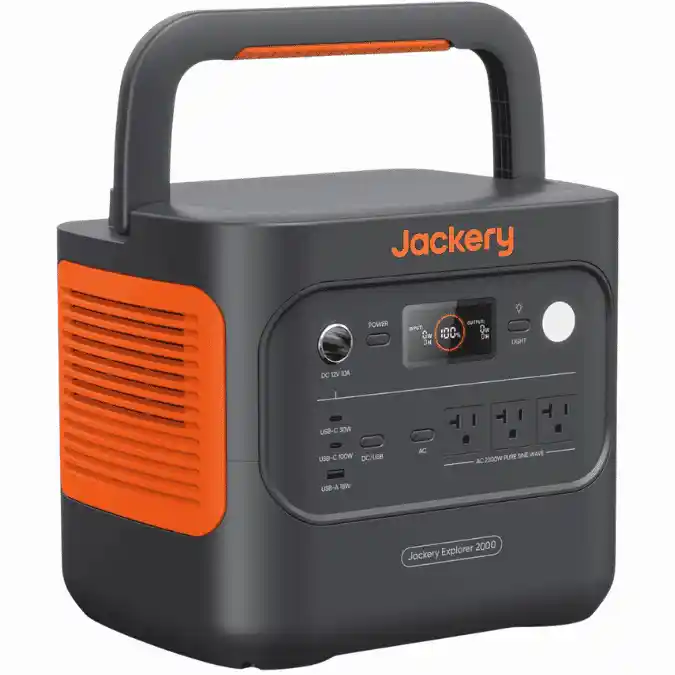
The Jackery 2000 v2 hits the sweet spot most households need. At 39 lbs, it is manageable to move around. At 2,042Wh, it can cover a fridge, router, lights, and two CPAP machines through the night without breaking a sweat.
Jackery does not offer an official battery expansion option for this model, but the workaround is straightforward: buy a second unit. Two Jackery 2000 v2 units will cost you less than Jackery’s own battery expansion on their comparable Plus model, and you end up with over 4,000Wh of backup.
You can also pair it with up to two 200W solar panels, so if the outage stretches into the next day, you have a recharge path.
Pros:
- Strong overnight capacity for most homes
- Manageable weight and size
- Solid solar compatibility for extended outages
- LFP chemistry for safety and long cycle life
Cons:
- No official battery expansion
- Heavier than mid-range units
- Not ideal if you need to power large appliances like electric dryers or AC units
Best for: Families who need reliable overnight backup without spending on a heavy-duty unit.
3. EcoFlow Delta 3 Plus – Best Mid-Range Overnight Option
Capacity: 1,024Wh | Output: 1,500W continuous | Battery: LFP | Weight: ~28 lbs
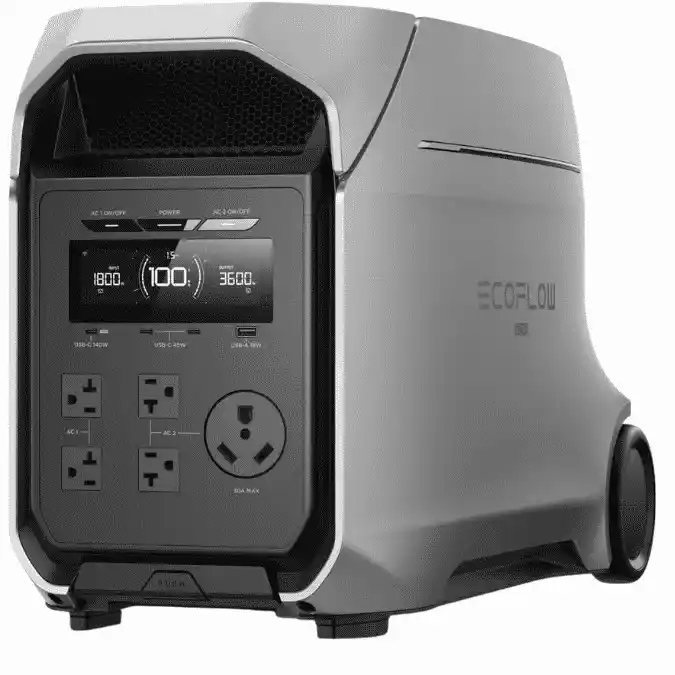
The EcoFlow Delta 3 Plus is the best mid-range pick for smaller households or apartments. It will not run your fridge all night, but it covers the essentials: router, lights, phone charging, and laptop use comfortably.
The standout feature for outage use is its 10ms UPS switchover. When power cuts out, this unit takes over in 10 milliseconds, which means your router, laptop, and any connected devices do not even blink. Most competitors are slower.
It charges fast, has a solid port selection, and is one of the lightest options in this guide.
Pros:
- Best-in-class UPS switchover speed (10ms)
- Fast recharge from wall or solar
- Portable and easy to store
- Solid all-around port selection
Cons:
- 1,024Wh is not enough to run a fridge all night
- Best for lighter overnight loads only
Best for: Renters, apartment dwellers, or anyone who mostly needs to keep communication devices, lights, and a CPAP running overnight.
4. Anker SOLIX F3000 – Best Premium All-Rounder
Capacity: 3,072Wh (expandable to 6,144Wh) | Output: 6,000W continuous | Battery: LFP | Weight: ~152 lbs
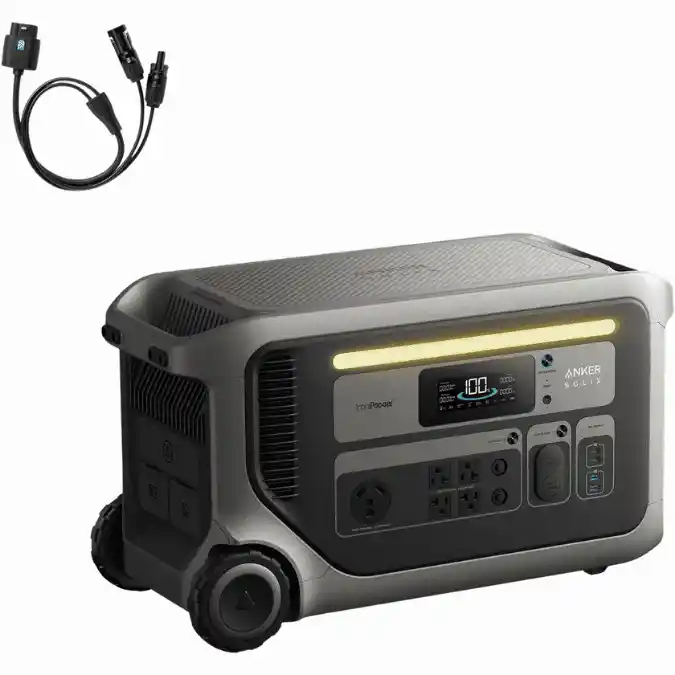
The Anker SOLIX F3000 is built for people who want premium home backup capability and plan to run higher loads more often. At 6,000W continuous output, it can handle appliances the Jackery and EcoFlow Delta 3 Plus cannot touch.
Anker’s app integration is one of the strongest in the industry. You can monitor power levels, schedule charging, and track usage history. After 4,000 charge cycles, the battery still retains 80% of its original capacity, making this a very long-term investment.
Pros:
- Massive output headroom for large appliances
- Expandable capacity up to 6,144Wh
- Excellent app with scheduling and monitoring
- 4,000 cycle battery lifespan
Cons:
- Heavy and not portable
- Premium price point
- More than most single-family homes need for one night
Best for: Tech-forward homeowners who want maximum control, expandability, and output.
5. BLUETTI Apex 300 – Best for Expandable Long-Term Backup
Capacity: 3,072Wh base (expandable) | Output: 3,000W continuous | Battery: LFP
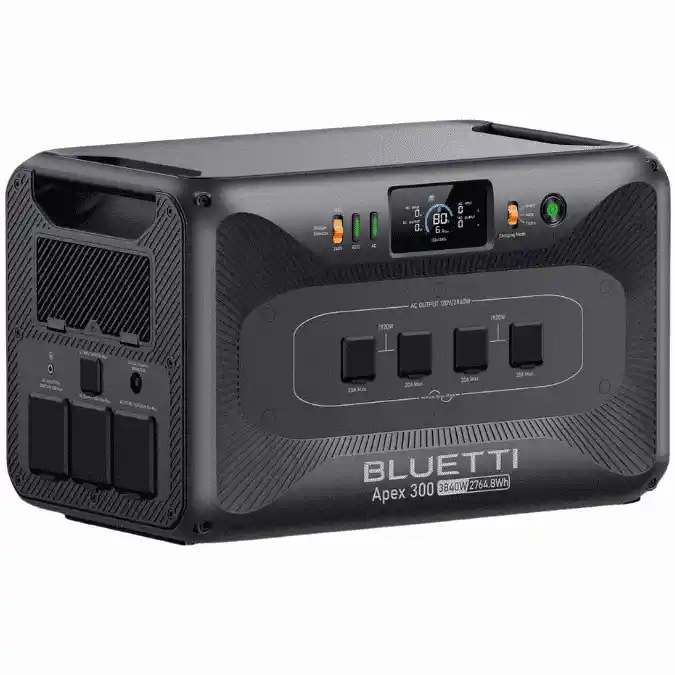
The BLUETTI Apex 300 is the right pick if you are building a system rather than buying a single unit. It is designed to grow with your needs, adding battery modules as your backup demands increase.
If you are thinking about pairing your power station with a solar panel array for multi-day or seasonal outages, BLUETTI’s ecosystem is one of the most mature in the market. Their units are also consistently well-reviewed for build quality and long-term reliability.
Pros:
- Designed for modular expansion
- Strong solar charging integration
- Solid LFP battery longevity
Cons:
- Higher learning curve for first-time buyers
- Better suited to users already familiar with off-grid power setups
Best for: Users who want to build a scalable home energy system over time.
6. Pecron E3800LFP – Best Value for Overnight Backup
Capacity: 3,840Wh | Output: 3,800W continuous | Battery: LFP
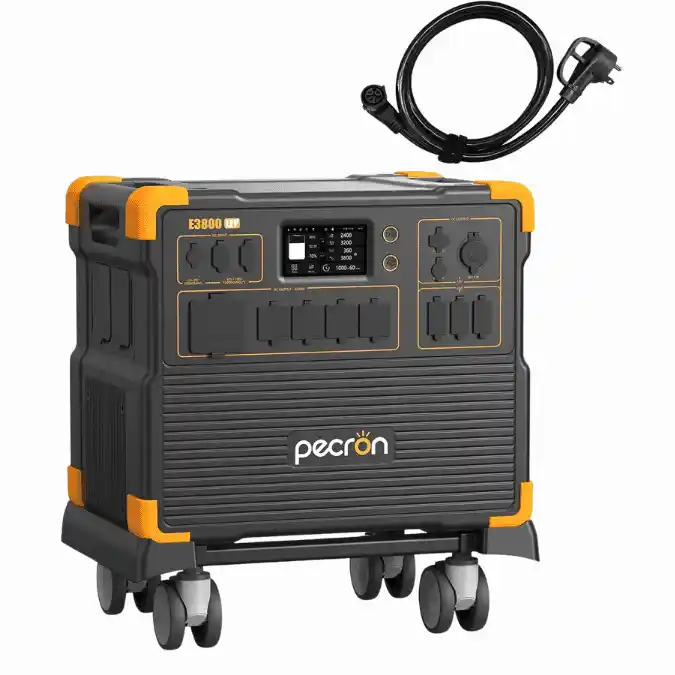
If the EcoFlow and Anker premium prices are more than you want to spend, the Pecron E3800LFP delivers serious capacity at a lower price point. You still get enough power to run overnight essentials with headroom to spare, in a unit that does not carry a flagship price tag.
Pros:
- High capacity at a competitive price
- Strong continuous output
- LFP battery for safety and longevity
Cons:
- Brand recognition is lower than EcoFlow or Jackery
- Fewer ecosystem accessories
Best for: Budget-conscious buyers who need real overnight capacity without paying a premium brand markup.
Power Station vs Generator: Which Is Better for Overnight Outages?
A lot of homeowners still default to gas generators when they think about outage backup. Here is how the two compare specifically for overnight use.
| Factor | Portable Power Station | Gas Generator |
|---|---|---|
| Indoor use | Yes, safe | No, deadly fumes |
| Noise | Silent or near-silent | Loud, often above 65 dB |
| Startup | Instant | Requires manual start |
| Fumes | Zero | Carbon monoxide risk |
| Maintenance | None | Regular oil/fuel upkeep |
| Runtime | Limited by battery | Limited only by fuel supply |
| UPS functionality | Yes (fast models) | No |
| Best for | 1-night outages | Multi-day, high-load outages |
For one-night outages, a portable power station wins in almost every category. It is safer, quieter, requires no maintenance, and is ready the moment the grid fails. If you regularly face multi-day outages with very high power loads (like whole-home heating), a generator may still be part of the answer, but a power station handles the overnight gap better than any generator can.
What Is LFP vs NMC Battery Chemistry?
If you are shopping for a power station for overnight backup, you will see two battery types: LFP (Lithium Iron Phosphate) and NMC (Nickel Manganese Cobalt).
LFP batteries are safer for indoor use, handle more charge cycles (2,000 to 4,000+), and perform better in varied temperatures. They are the right choice for home backup use.
NMC batteries offer higher energy density, meaning you get more power in a smaller, lighter package. They are better suited for camping where portability matters more than longevity.
For overnight outage backup at home, always choose LFP.
How to Choose the Right Power Station for Overnight Backup
Step 1: Add up your overnight load
Use the table in the calculation section above. Include everything you need running from 10 PM to 7 AM.
Step 2: Add a 20-25% buffer
Real-world output is lower than rated capacity. A unit pulls power for its own operation, so always buy more than your calculation suggests.
Step 3: Decide if you need a UPS function
If you work from home, have sensitive equipment, or use a CPAP machine, look for a unit with a 10ms or faster UPS switchover. EcoFlow models are strong here.
Step 4: Consider expandability
If you live in an area with frequent or prolonged outages, look for units that support battery expansion or solar panel integration.
Step 5: Check weight vs. your setup
Will the unit live permanently in a utility room or garage? Weight does not matter much. If you need to move it around, keep it under 50 lbs.
Common Mistakes to Avoid
Buying too small. A 500Wh unit sounds capable until you realize your fridge alone will drain it in 3 hours. If overnight backup is the goal, start at 1,000Wh minimum and go up from there based on your actual load.
Ignoring battery chemistry. NMC batteries degrade faster and carry more risk when stored indoors for long periods. For a unit that will sit in your home waiting for outages, LFP is the safer, longer-lasting choice.
Forgetting about recharge time. If you face back-to-back outage nights, how quickly can your unit recharge from solar or a wall outlet? Fast-charging units with solar input give you a practical recovery window.
Not testing it before you need it. Run your power station through a dry run on a clear evening. Plug in your actual devices and see how long it lasts under your real load. You want to know this before midnight during a storm.
Expert Recommendation
For most US households facing a typical overnight outage, the Jackery 2000 v2 is the practical answer. It covers the most important overnight loads, uses a safe LFP battery, and does not require a dedicated parking space in your utility room.
If you have a larger home, run medical equipment, or live in an area where outages regularly last more than one night, step up to the EcoFlow Delta Pro 3. Pair it with solar panels and you have a system that can sustain you through multi-day grid failures without a generator in the driveway.
Frequently Asked Questions
What size power station do I need for an overnight outage?
For most households, a 2,000Wh power station covers a fridge, router, lights, and a CPAP machine through an 8 to 10 hour night. Smaller homes or apartments with minimal overnight loads can manage with 1,000Wh. Always calculate your actual device load first and add a 20-25% buffer.
How long does a 1,000Wh power station last overnight?
A 1,000Wh unit will power a WiFi router (10W) for about 80 hours, a CPAP machine (30-60W) for 12 to 20 hours, and LED lights (30W) for about 25 hours. However, it can only run a fridge (150-300W) for 3 to 6 hours. For full overnight fridge backup, you need at least 2,000Wh.
Can a portable power station run a refrigerator overnight?
Yes, but you need adequate capacity. A standard refrigerator draws 150 to 300W. Running it for 10 hours requires 1,500 to 3,000Wh. The EcoFlow Delta Pro 3 can run a fridge for up to 19 hours. The Jackery 2000 v2 can handle it through a standard overnight window.
Is it safe to use a portable power station indoors?
Yes. Unlike gas generators, portable power stations produce no fumes or carbon monoxide. They are completely safe for indoor use. Units with LFP batteries are especially stable and run cool under sustained loads.
Do power stations work as a UPS during a sudden blackout?
Many modern power stations include UPS functionality. The best models, like the EcoFlow Delta 3 Plus, switch over in as little as 10 milliseconds. At that speed, your router, computer, and medical devices stay on without interruption.
How long does it take to recharge a power station after an outage?
Recharge time varies by unit and method. Most large units (2,000Wh+) take 2 to 4 hours from a wall outlet on fast-charge mode. From solar panels alone, plan for 6 to 12 hours depending on sunlight and panel wattage.
Can I use a power station with solar panels to extend overnight backup?
Yes. Solar panels do not help overnight since there is no sun, but they are critical for recharging the unit the following day. If your outage stretches into a second or third night, solar recharging is what keeps you covered.