
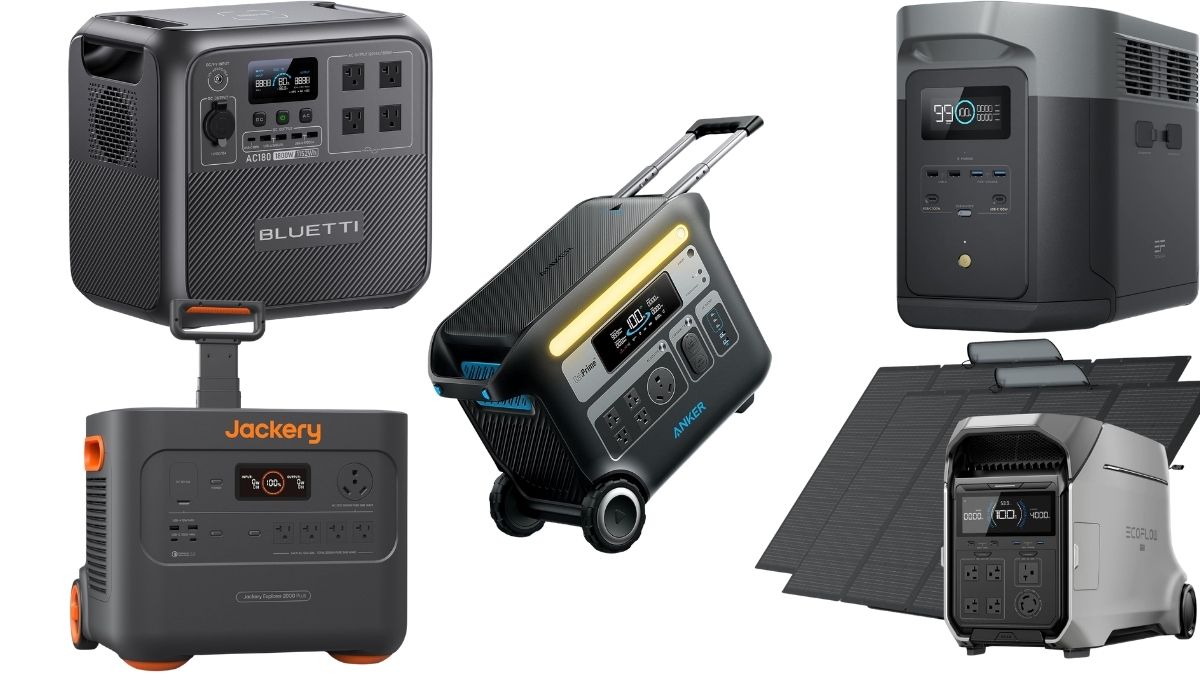
If you need a solar generator for camper use, the right choice depends on what you plan to power. A small camping setup may only need phone charging, lights, and a cooler, while an RV setup may require more battery capacity, higher output, and faster recharge options. The picks below cover lightweight camping, van life, RV travel, and light home backup needs.
A good camper solar generator should balance watt-hours, output watts, charging options, and portability. A larger battery does not automatically mean a better fit because you still need enough output for your devices and a practical way to move and recharge the unit.
Comparison of the Best Solar Generators for Campers and RVs
| Product | Best for | Battery capacity | Continuous output | Charging highlights | Main Drawback |
|---|---|---|---|---|---|
| Anker SOLIX F2000 PowerHouse 767 | RV users wanting easier movement with higher capacity | 2048Wh | 2400W | AC and solar charging support | Heavy compared with smaller camping units |
| BLUETTI AC180 | Camping and light backup | 1152Wh | 1800W | AC, vehicle, and solar charging options | Less capacity for extended RV loads |
| EcoFlow DELTA 2 Max | Expandable RV and off-grid setups | 2048Wh | 2400W | Fast charging and solar input support | Larger investment and footprint |
| Jackery Explorer 2000 Plus | Van life and expandable travel power | 2042Wh | 3000W | Solar charging and expansion options | Heavy for frequent carrying |
| EcoFlow DELTA Pro 3 | Long trips and higher-demand backup | 4096Wh | 4000W | Large solar generator system | Too large for casual camping |
Best Solar Generators for Campers and RVs
The products below are selected for different camper and RV situations. Instead of choosing only the largest battery, this review focuses on matching each solar generator to a practical role.
Anker SOLIX F2000 PowerHouse 767, 2048Wh Portable Power Station | Best Overall for RV Use
Highlight: Best for RV users who want a large battery with easier movement.
Key features: 2048Wh capacity • LiFePO4 battery • 2400W AC output • solar charging support • RV-focused portability design
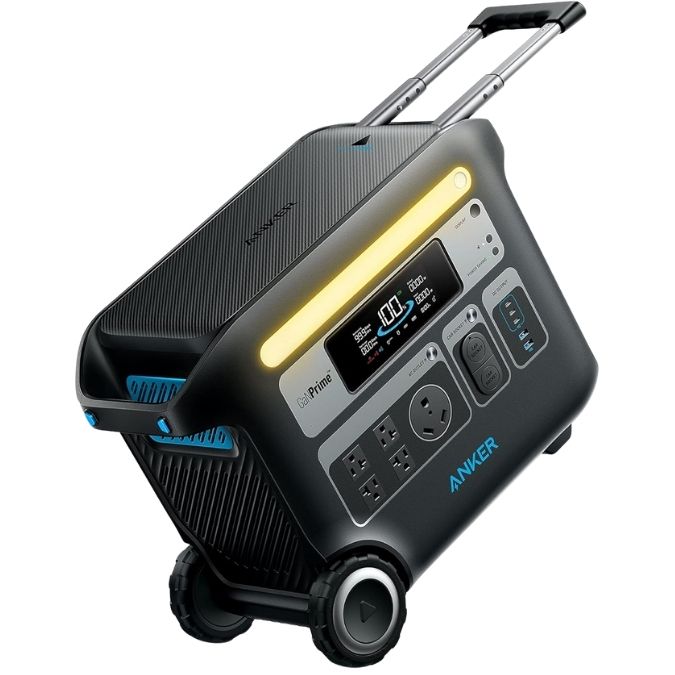
The Anker SOLIX F2000 PowerHouse 767 is built for campers who need more than a small weekend battery. Its 2048Wh capacity and 2400W AC output put it in the range for running several travel devices, refrigeration loads, and selected RV equipment when the power demand stays within the unit limits. I would look at this model if you want stored power that still has a practical way to move around your campsite.
What stands out to me is the combination of capacity and portability features. You get a large battery without relying only on lifting, because the built-in handle and wheels make relocation easier. If you are moving between a garage, RV, and campsite, you will appreciate that design choice. The app monitoring and charging options add convenience when you want to check status without standing beside the unit.
My main reservation is the size. You should not expect a 2048Wh power station to feel like a small camping accessory. I would choose it for RV trips, backup needs, and longer stays, but you should consider a smaller unit if your priority is frequent carrying over uneven ground.
Pros and Cons
| Pros | Cons |
|---|---|
| Large 2048Wh battery capacity | Heavy compared with smaller camping units |
| 2400W continuous AC output | Not ideal for lightweight travel |
| Wheels and handle improve movement | |
| Solar charging support |
Best for: RV campers needing higher-capacity portable backup power.
Skip if: You need a lightweight power station for backpacking-style trips.
BLUETTI AC180 Portable Power Station, 1152Wh | Best Budget Option for Camping
Highlight: Best budget-friendly balance for camping and light backup.
Key features: 1152Wh capacity • LiFePO4 battery • 1800W AC output • solar charging support • portable design
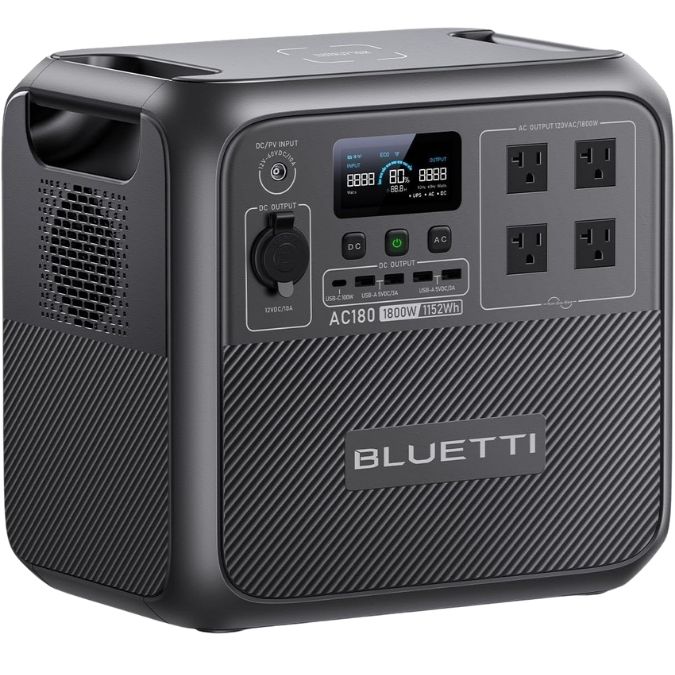
The BLUETTI AC180 is a practical middle-size option for campers who want more capability than a small battery pack without moving into heavy RV equipment. Its 1152Wh capacity and 1800W output make it suitable for electronics, small appliances, and selected camping loads. I would consider it a strong fit when you want one unit that works for both trips and occasional home backup.
I like the balance here because you get useful output without moving into the largest class of portable power stations. You can recharge through AC, vehicle, or solar inputs, giving you more flexibility on longer trips. For you, that means easier planning because you have multiple ways to refill the battery when you are away from a campground hookup.
The trade-off is capacity. I would not select the AC180 if you need several days of high-demand RV loads without recharge options. You should match the unit to your actual devices and remember that battery capacity is limited by the load you connect.
Pros and Cons
| Pros | Cons |
|---|---|
| Good balance of size and output | Limited capacity for larger RV loads |
| LiFePO4 battery chemistry | Still heavy for frequent carrying |
| Multiple charging methods | |
| Useful camping and backup role |
Best for: Campers needing versatile backup power without a large RV unit.
Skip if: You need extended high-wattage appliance operation.
EcoFlow DELTA 2 Max Portable Power Station, 2048Wh | Best for Expandable RV Setups
Highlight: Best for campers who want expansion flexibility.
Key features: 2048Wh capacity • LiFePO4 battery • 2400W output • expandable capacity • solar input support
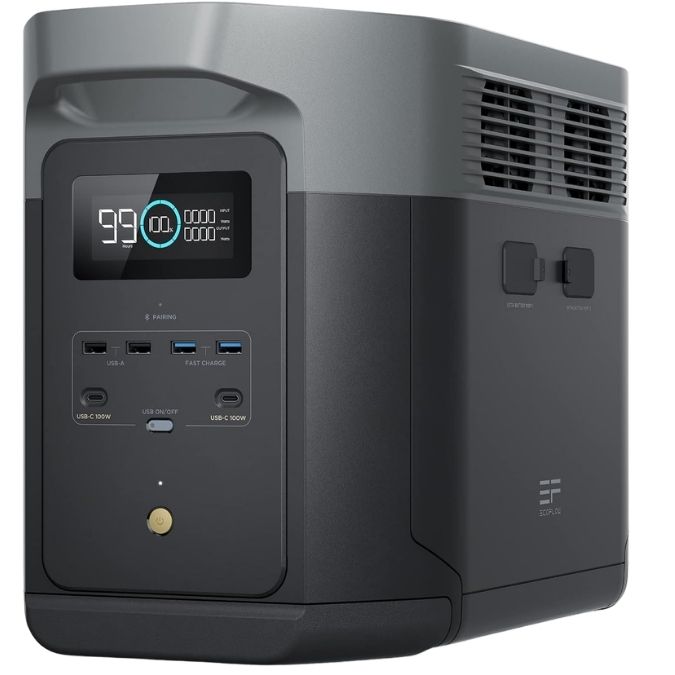
The EcoFlow DELTA 2 Max targets campers and RV users who want a system that can grow. With 2048Wh capacity and 2400W AC output, it provides a strong base for travel power while leaving room for expanded capacity. I would consider it when you want one purchase that can support both camping and future backup needs.
The feature I value most is flexibility. You can recharge through multiple methods, use app controls, and expand the system when your needs increase. If you are building a more serious off-grid setup, those options can matter more than simply buying the largest battery immediately.
My caution is that larger expandable systems require more planning. You should think about storage space, charging setup, and actual loads before choosing this size. I would recommend it for dedicated campers and RV owners rather than casual users who only need occasional phone charging.
Pros and Cons
| Pros | Cons |
|---|---|
| Expandable battery ecosystem | Larger investment |
| High 2400W output | Heavy for simple trips |
| Strong solar charging support | |
| Multiple charging options |
Best for: RV owners building a flexible solar power setup.
Skip if: You only need basic low-power camping charging.
Jackery Explorer 2000 Plus Portable Power Station, 2042Wh | Best for Van Life and Expandable Travel Power
Highlight: Best for van life users wanting expandable power.
Key features: 2042Wh capacity • LiFePO4 battery • 3000W output • expandable system • app control
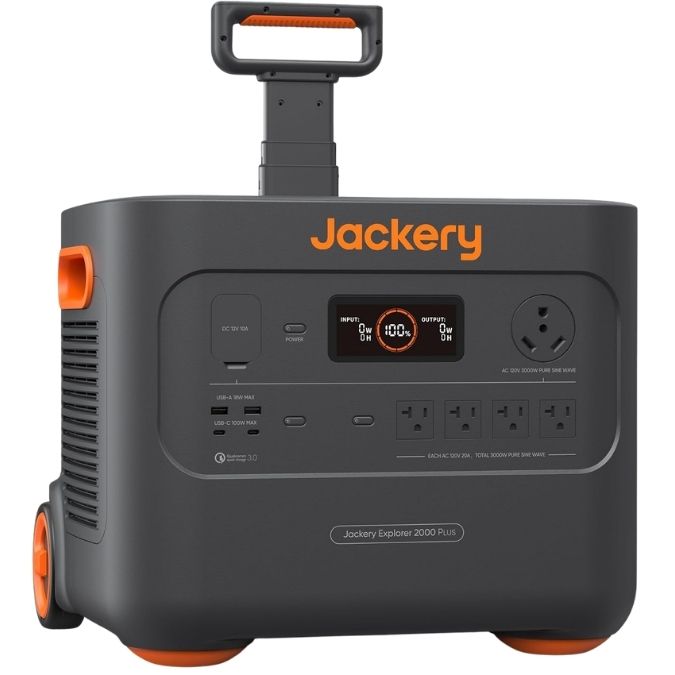
The Jackery Explorer 2000 Plus is aimed at travelers who need a serious portable power base. Its 2042Wh battery and 3000W AC output give you more headroom for demanding camping setups. I would look at this model if you are spending more time off-grid and want room to expand later.
I like that Jackery focuses on a complete ecosystem here. You can monitor the unit through the app, add capacity, and build a larger setup over time. For you, that makes sense if your van or RV power needs are likely to grow.
The drawback is weight. A larger LiFePO4 system gives you more energy storage, but it is not something you casually move like a small camping battery. I would choose it for vehicle-based travel where the unit can stay close to your campsite.
Pros and Cons
| Pros | Cons |
|---|---|
| High 3000W output | Heavy unit |
| Expandable capacity | Less convenient for frequent lifting |
| LiFePO4 battery | |
| RV-friendly feature set |
Best for: Van-lifers and RV users building expandable power systems.
Skip if: You need maximum portability with minimum weight.
EcoFlow DELTA Pro 3 Solar Generator, 4096Wh with 2x400W Solar Panels | Best High-Capacity Option for Long Trips
Highlight: Best high-capacity option for long trips and heavier backup needs.
Key features: 4096Wh capacity • LiFePO4 battery • 4000W output • 120/240V capability • included solar panels
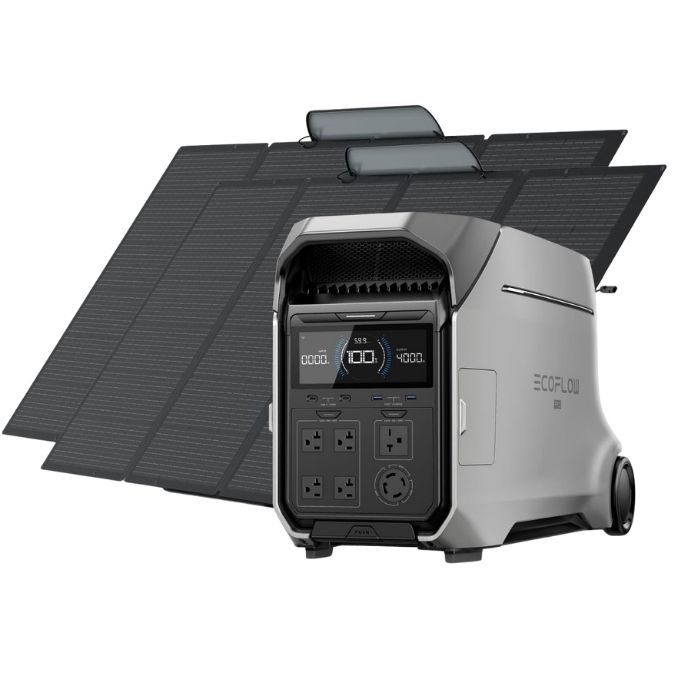
The EcoFlow DELTA Pro 3 is designed for users who need a much larger energy reserve. Its 4096Wh capacity and high output make it better suited to extended RV travel and backup situations where smaller units may run out sooner. I would consider this class only when your power needs justify the size.
What appeals to me is the system approach. You get a larger battery, solar charging capability, and a platform designed around bigger energy demands. If you are preparing for longer trips or want a stronger home backup option, those features can be valuable.
The biggest drawback is portability. You should expect a heavy system that works best when transported by vehicle rather than carried regularly. I would skip it for simple weekend camping and choose it only when the extra capacity solves a real problem.
Pros and Cons
| Pros | Cons |
|---|---|
| Very large 4096Wh capacity | Heavy and bulky |
| High output capability | Overkill for casual camping |
| Solar panel bundle included | |
| RV and backup flexibility |
Best for: Long-distance RV travel and higher-demand backup.
Skip if: You need a compact camping power station.
How to Choose a Solar Generator for Your Camper or RV
It all starts with your actual power needs.
The biggest mistake is focusing only on battery size while ignoring the devices you want to run, their starting demand, and how often you can recharge.
How Much Power Does Your RV Actually Need?
Start by listing every device you may use and separating power into two measurements: watts (W) and watt-hours (Wh). Watts describe the power needed while a device is running. Watt-hours describe how much stored energy the battery contains.
For example, a small RV setup might include:
- RV refrigerator: 40W average running load
- Wi-Fi router: 15W
- LED lights: 20W total
- Laptop charging: 60W
If those devices run together at an estimated average load of 135W, a 1000Wh battery would have a basic runtime estimate:
Estimated runtime = usable energy (Wh) ÷ average load (W)
Example:
1000Wh × 0.85 efficiency assumption = 850Wh usable energy
850Wh ÷ 135W = approximately 6.3 hours
This is only a planning estimate. Actual runtime changes with inverter overhead, temperature, battery reserve settings, device cycling, charging losses, and whether the load uses AC or DC output.
Before choosing a unit, use the power requirement calculator to estimate your expected load and compare that with the power station specifications.
Do You Need 30 Amp or 50 Amp Capability?
Many RV owners assume a larger portable power station automatically replaces campground electrical hookups. That is not always the case. RV electrical systems vary, and you need to match the power station output, adapters, and connected loads carefully.
A portable solar generator may work well for selected RV appliances, electronics, refrigeration, lighting, and charging needs. Larger loads such as rooftop air conditioners require checking both running watts and startup surge requirements before connecting them.
If you use a 30 amp or 50 amp RV connection, check the power station’s supported output and connection options rather than assuming compatibility from the product name alone.
Solar Generator vs. Your RV’s Built-In Battery System
Your RV’s built-in battery system is usually designed around the vehicle’s electrical setup. A portable solar generator gives you a separate battery system that you can move between your RV, campsite, vehicle, and home.
The advantage of a portable unit is flexibility. You can charge it from AC power, solar panels, or vehicle charging depending on the model. The trade-off is that you still need to manage capacity, recharge time, and the limits of the connected loads.
For readers comparing broader backup options, a portable power station for home backup may have different priorities than a dedicated camping setup.
How to Charge a Solar Generator While RVing
A solar generator is only as useful as your ability to recharge it. The best charging method depends on where you are traveling, how much sunlight you have available, and whether you have access to campground power or a vehicle connection.
Solar Panel Charging on the Road
Solar panels are the main reason many campers choose a solar generator instead of a traditional fuel generator. They allow you to replenish stored energy without carrying gasoline, but actual charging speed depends on panel wattage, sunlight conditions, orientation, temperature, and the power station’s solar input limits.
A 400W solar panel setup does not always produce 400W continuously. Cloud cover, shade, heat, and panel angle can reduce the available input. Plan your charging around realistic conditions rather than the maximum number printed on the panel.
Charging From Your Tow Vehicle or Generator
Vehicle charging can be useful when driving between locations, especially when solar conditions are poor. It is usually a supplement rather than the fastest way to refill a large battery.
Some RV travelers also combine a portable power station with an existing generator. In that setup, the generator can recharge the battery during limited operating hours while the stored energy runs quieter loads overnight.
Shore Power Charging at Campgrounds
When campground hookups are available, AC charging is often the fastest way to refill a portable power station. This makes a larger battery easier to manage because you can arrive, recharge, and leave with stored energy for the next leg of your trip.
How Long Will a Solar Generator Run RV Appliances?
Runtime depends on the battery’s usable energy and the average load connected to it. The basic estimate is:
Estimated runtime (hours) = usable energy (Wh) ÷ average device load (W)
Because portable power stations lose some energy during conversion, a planning estimate should account for efficiency rather than assuming the full rated capacity is available.
Example: Refrigerator and Internet Backup
Assume a portable power station has a 2048Wh battery:
- Nominal battery capacity: 2048Wh
- Planning efficiency assumption: 80% to 90%
- Estimated usable energy range: 1638Wh to 1843Wh
- Average combined load: 80W
Calculation range:
1638Wh ÷ 80W = approximately 20.5 hours
1843Wh ÷ 80W = approximately 23 hours
Again, this is an estimate, not a guarantee. A refrigerator cycles on and off, startup demand can be higher than running demand, and temperatures affect performance.
Example: Small Camping Loads
Assume:
- Lights: 20W
- Phone and laptop charging: 40W
- Small fan: 30W
- Total average load: 90W
Using the same 2048Wh battery and 80% to 90% efficiency assumption:
1638Wh ÷ 90W = approximately 18 hours
1843Wh ÷ 90W = approximately 20 hours
Your actual runtime may be shorter or longer depending on device behavior, battery reserve settings, temperature, and whether the power comes from AC or DC outputs.
Solar Generator for Camper vs. Traditional Gas Generator
| Factor | Solar Generator | Gas Generator |
|---|---|---|
| Noise | Usually quieter during use | Engine noise during operation |
| Fuel | Recharge through AC, solar, or vehicle depending on model | Requires fuel storage and refilling |
| Maintenance | Battery management and charging upkeep | Engine maintenance and fuel management |
| Camping restrictions | Often easier to use in noise-sensitive locations | Some campgrounds restrict generator hours |
A solar generator is not a direct replacement for every gas generator scenario. High-demand loads, long continuous operation, and fast refueling needs may require a different approach. For many campers, however, a portable battery system provides quiet stored power for electronics, refrigeration, lighting, and selected appliances.
Final Recommendation
The Anker SOLIX F2000 PowerHouse 767 is a strong fit for RV users who want higher capacity with easier movement, while the BLUETTI AC180 makes more sense for campers who want a smaller and more flexible setup.
If you are building a longer-term off-grid system, the EcoFlow DELTA 2 Max and Jackery Explorer 2000 Plus provide expansion paths. For users with larger energy needs and enough storage space, the EcoFlow DELTA Pro 3 offers a much larger battery platform.
For most RV and camper users, the best solar generator is the one that matches your actual loads instead of the one with the biggest battery.
Before buying, calculate your expected loads, check starting requirements for appliances, and confirm that the power station’s output matches your equipment. A correctly sized solar generator can make camping trips more comfortable and provide useful backup during smaller outages.
Explore more portable power stations for camping if you want to compare additional camping-focused options.
FAQs
What size solar generator do I need for an RV?
The right size depends on your devices and how long you need power. Smaller camping setups may work with around 1000Wh, while larger RV setups often benefit from 2000Wh or more. Calculate your expected watt usage and compare it with usable battery energy rather than choosing by capacity alone.
Can a solar generator run my RV air conditioner?
Some larger solar generators may support certain RV air conditioners, but you need to check both running watts and startup surge requirements. Air conditioners can create much higher startup demand than their normal running load, so confirm compatibility with the exact equipment before connecting it.
Do I need a 50 amp solar generator for my RV?
Not every RV needs a 50 amp setup. Many campers use portable power stations for selected devices such as refrigeration, lighting, electronics, and charging. Larger RV electrical systems require careful matching between the RV connection, inverter output, and connected loads.
How long will a solar generator run RV appliances?
Runtime depends on battery capacity and the connected load. Use the formula usable watt-hours divided by average watts to estimate runtime, then adjust for efficiency losses, temperature, cycling appliances, and inverter overhead.
Is a solar generator better than a built-in RV battery?
A solar generator and an RV battery system serve different purposes. A portable unit gives you a separate movable power source for camping and backup, while a built-in battery is integrated with the RV electrical system. The better option depends on how you travel and what loads you need to support.


