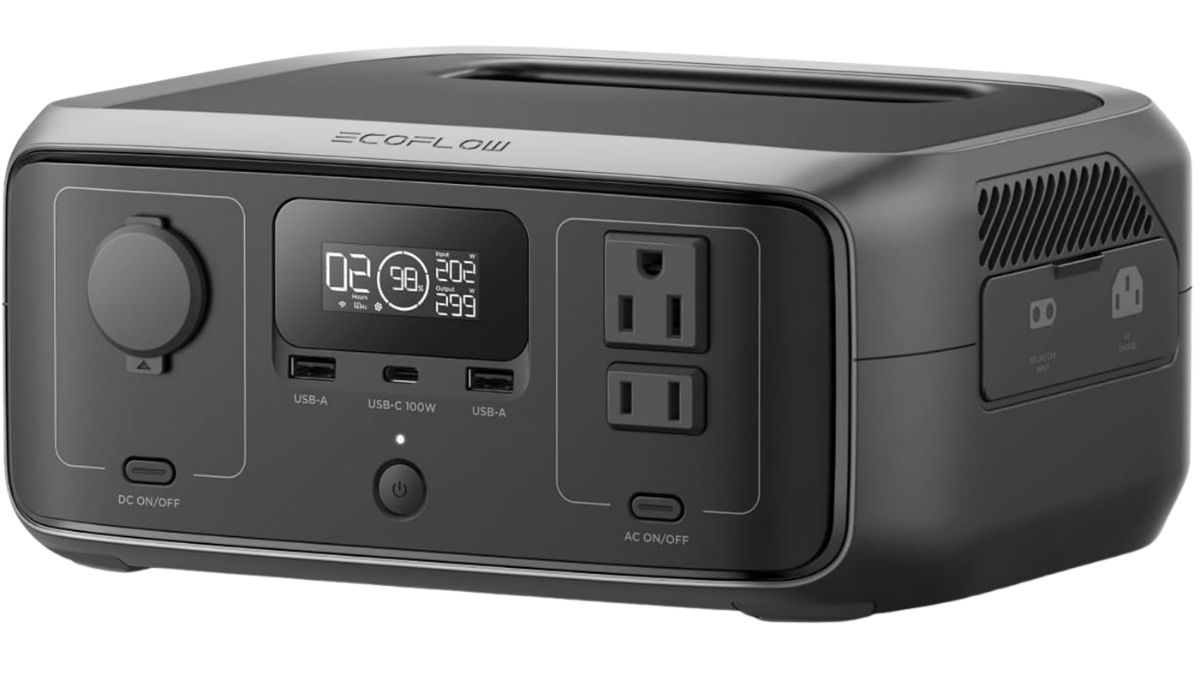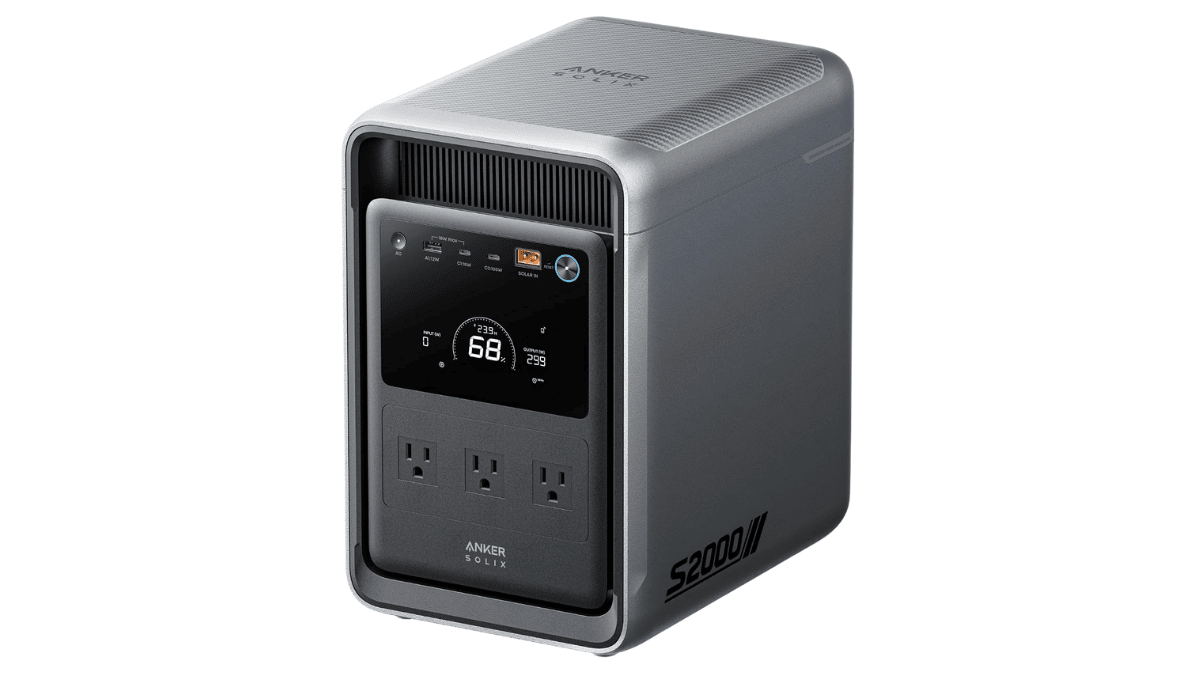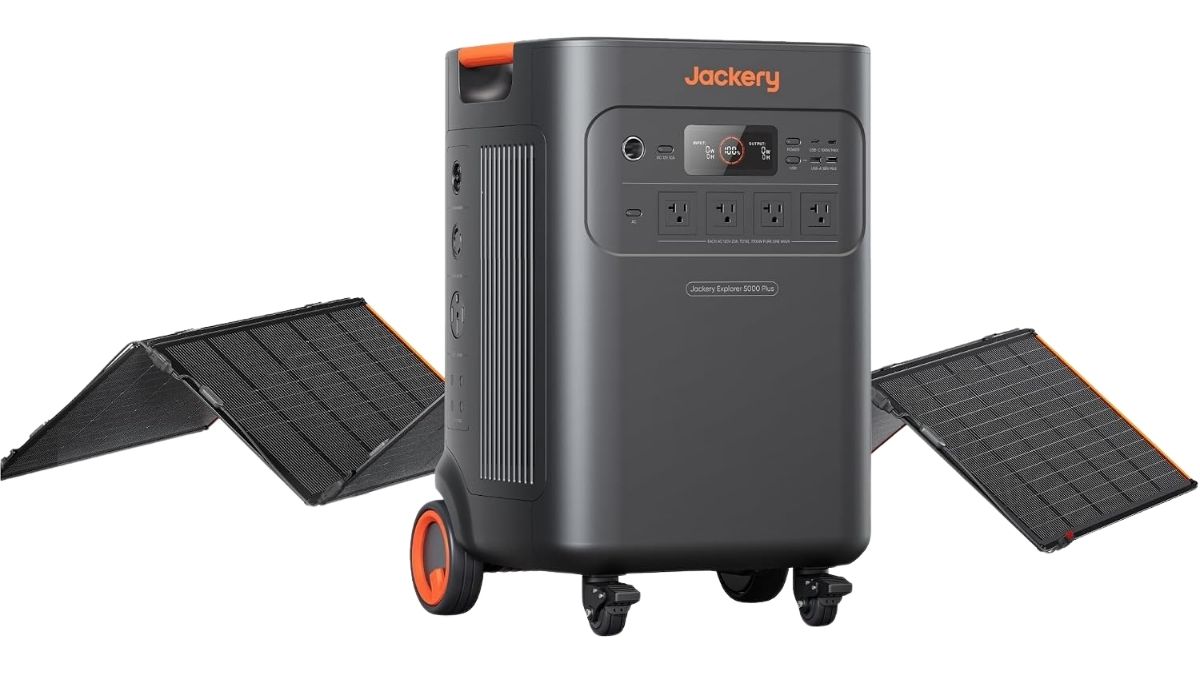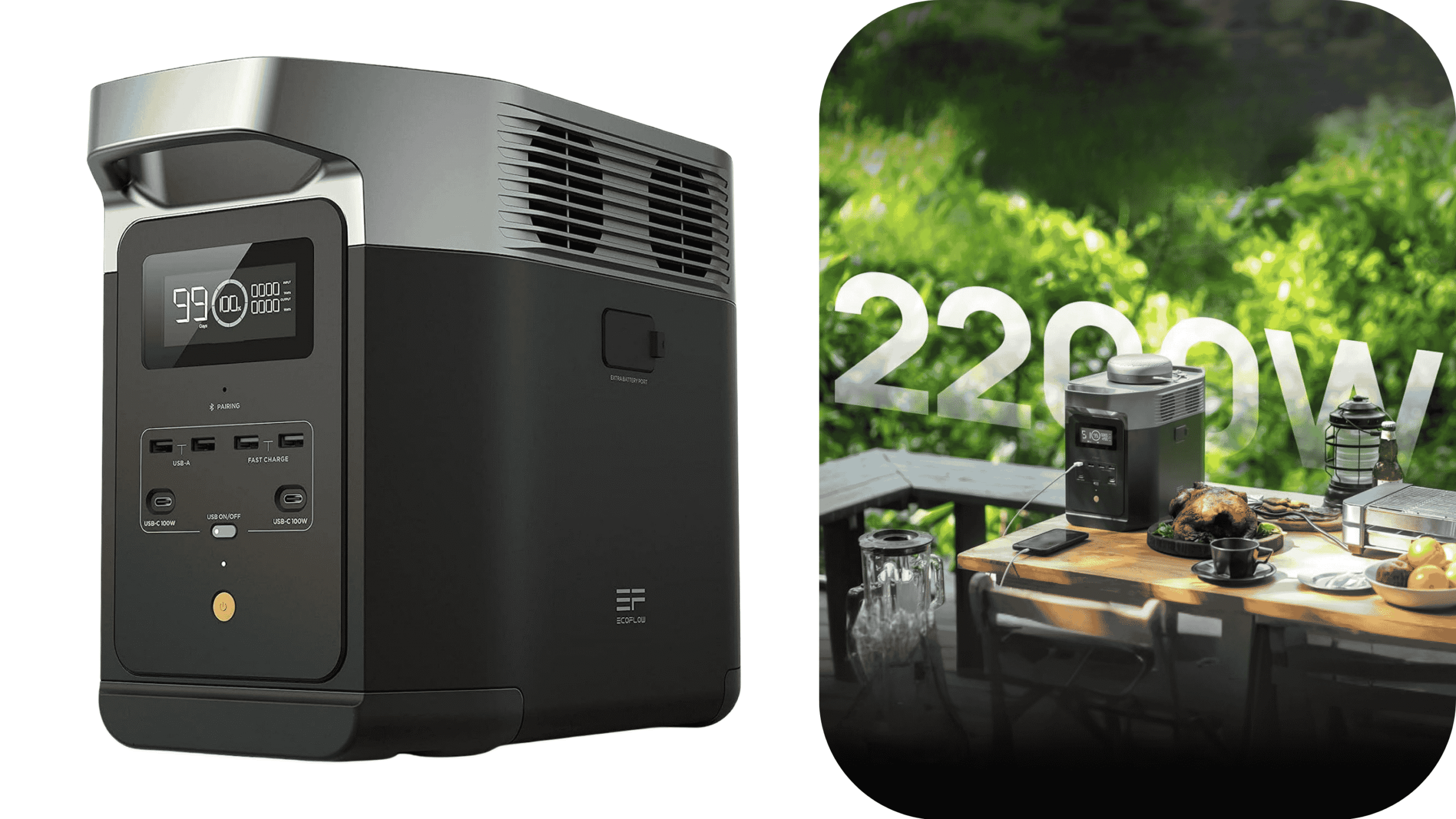
Having a portable power station at home is not a luxury anymore; these are considered essential tools for homeowners. Since now a days in the U.S., power outages have become increasingly common due to severe weather, grid instability, and peak demand stresses, the need for a reliable portable power station for backup at home is now more than ever.
As of March 3-5, 2026, power outages across the United States have increased, particularly in California, Texas, Michigan and Florida, with 64,572 total U.S. customers out.
Not every outage lasts hours, but many can. This makes having a reliable portable power station part of a smart home preparation plan.
This post presents five of the best portable power stations for home backup available today, so you can back up your fridge, devices, medical gear, and lights when the power goes out and keep things running until the grid returns.
We’ll also give you clear guidance on capacity, recharge speed, long‑term durability, UPS performance, and how each station fits real life use cases.
Comparison of Top Picks
This simple comparison table should help when you’re going to scan power and suitability:
| Product | Capacity | Output power | Best for | Notable strength | Price |
|---|---|---|---|---|---|
| EF ECOFLOW Portable Power Station DELTA 2 | 1,024 Wh | 1,800 W continuous | All‑around home backup | Huge ratings, fast charge | See Price Here |
| BLUETTI Elite 200 V2 Portable Power Station | 2,073.6 Wh | 2,600 W continuous | High‑capacity compact | Highly praised balance | See Price Here |
| Anker SOLIX C800 Portable Power Station | 768 Wh | 1,200-1,600 W peak | Mid‑size, fast recharge | Innovative, practical design | See Price Here |
| Jackery Explorer 1000 v2 Portable Power Station | ~1,070 Wh | 1,500 W | Balanced everyday use | Strong third‑party test results | See Price Here |
| Pecron Portable Power Station F3000LFP | ≥1,000 Wh | Typically high | Value or larger alternatives | Good value per dollar | See Price Here |
👉 If you want backup power for your weekends outdoors, see our review on the lighter travel focused options and smaller capacities: best portable power stations for camping [2026 update].
Our Top 5 Best Portable Power Stations for Home Backup
Here are five of the top picks that cover a variety of home backup needs – from balanced everyday power to heavy duty large capacity solutions.
EF ECOFLOW Portable Power Station DELTA 2 | Best Overall Home Backup Station
Category: Best Overall Home Backup Power Station – Powerful, Fast Charging, and Expandable
Key Features: 1,024 Wh capacity, Lithium Iron Phosphate (LFP) battery, 1,800 W continuous AC output, 6 AC outlets plus other USB ports, AC X‑Stream fast charge, Up to 500 W max solar input, Portable with handles, Supports extra batteries.
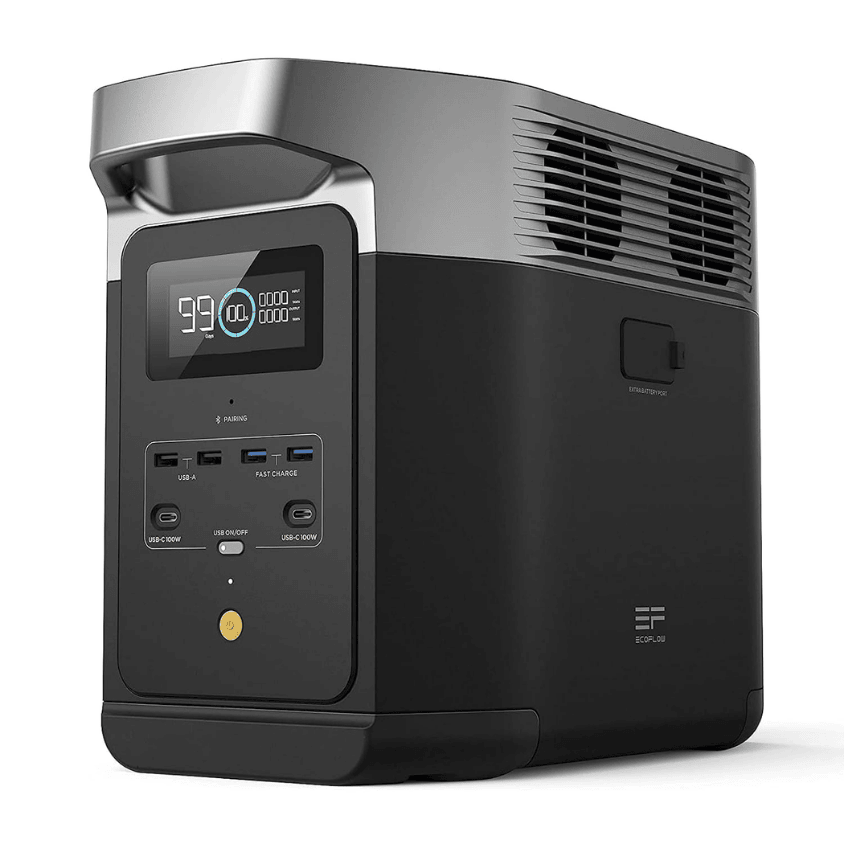
When you need a home backup solution that doesn’t feel like a compromise between power and practicality, the EF ECOFLOW DELTA 2 sits near the top of the list. With a 1,024 Wh LFP battery built to last thousands of cycles and a 1,800 W AC output, it’s ready to handle real household demands – from refrigerators and microwave ovens to lights and communications gear during power outages. Unlike smaller units that fizzle out when you demand heavy loads, the DELTA 2’s inverter performance and X‑Boost technology allow it to run appliances drawing up to roughly 2,200 W without shutting down.
What really sets the DELTA 2 apart in the home backup category is its charging speed. Using EcoFlow’s X‑Stream AC charging, this unit can go from empty to about 80 % charge in around 50 minutes and finish to 100 % in roughly 80 minutes, a pace that’s exceptional for its capacity class. That’s a practical advantage when you lose grid power unpredictably and need the station ready quickly. Combined with solar recharge capabilities up to 500 W, you get flexibility for both home and off‑grid scenarios.
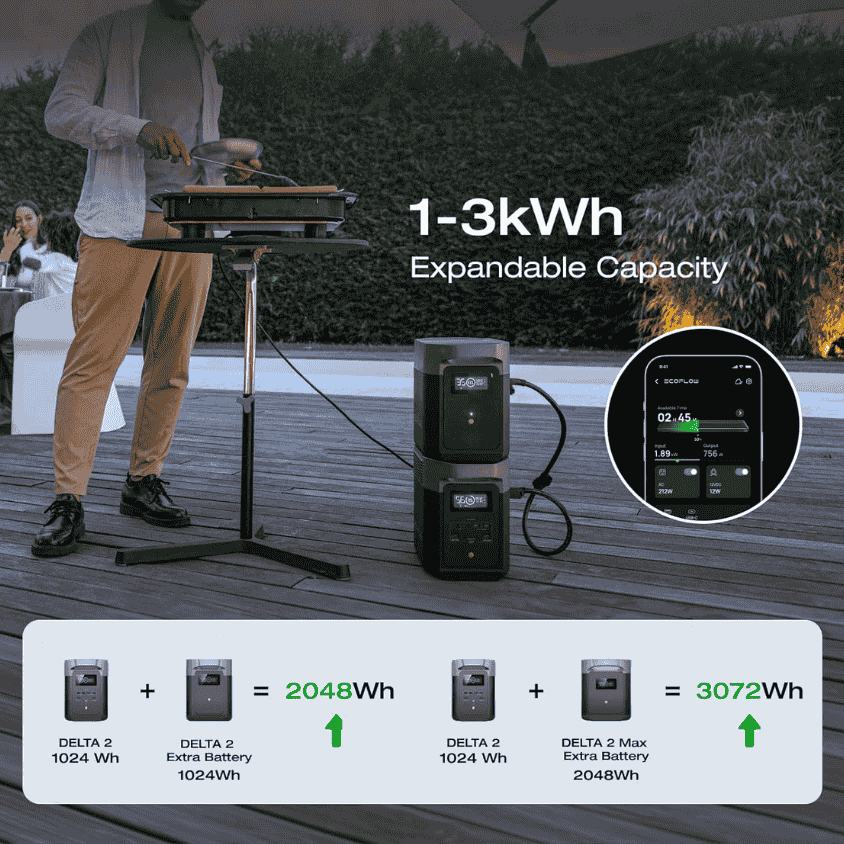
Connectivity and expandability are significant too, with this one. The DELTA 2 offers a generous mix of AC outlets, USB‑A and USB‑C ports, plus DC and car outputs, all managed through a clear LCD screen and remote app control. If your home backup needs grow over time, EcoFlow’s ecosystem supports extra battery modules, letting you scale to multiple kilowatt‑hours of stored energy – ideal for multi‑day outages or larger power draws.
Pros and Cons
| Pros | Cons |
|---|---|
| High continuous output (1,800 W) and X‑Boost for heavier loads | Relatively heavy (~27 lbs) compared to smaller models |
| Fast recharge (0-80 % ~50 min) makes it ready quickly after outages | Extra battery sold separately, increasing total system cost |
| Expandable capacity up to ~3 kWh for extended backup | |
| Long cycle life (LFP battery) for years of daily use |
BLUETTI Elite 200 V2 Portable Power Station | High‑Capacity Compact, Top Tested Value
Category: High‑Capacity Compact, Top Tested Value for Home Backup and Heavy Load Use
Key Features: 2,073.6 Wh LiFePO4 battery, Up to 2,600 W continuous output, Up to ~3,900 W peak output in Hercules mode, Multiple AC outlets (also supports up to ~9 devices at once), TurboBoost AC charging, Supports solar charging via MPPT (up to ~1,000 W depending on panel), Compact for 2 kWh class.
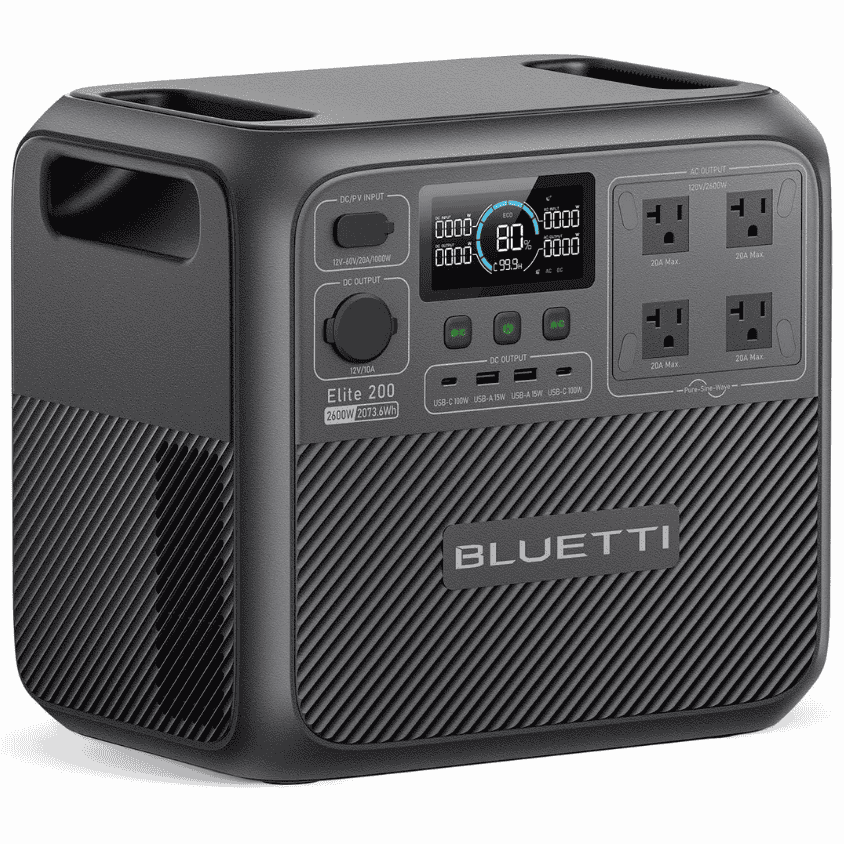
The BLUETTI Elite 200 V2 Portable Power Station stands near the top of the performance class for high‑capacity, compact backup systems. With over 2,000 Wh of usable energy tucked into a surprisingly manageable footprint, it hits the sweet spot for homeowners who want real power without oversized bulk. Its LiFePO4 battery chemistry is rated for over 6,000 charge cycles, meaning it can deliver reliable backup power for more than a decade of regular use – far beyond what most competitors offer at this capacity level.
A defining strength of the Elite 200 V2 is its strong continuous output of 2,600 W and peak bursts of nearly 3,900 W, allowing it to run demanding appliances like microwaves, power tools, heaters, refrigerators, and even some heavier household gear simultaneously. This capacity makes it far more capable than smaller 1,000-1,500 Wh stations, giving you peace of mind during outages or high‑load needs. Furthermore, it consistently powers multiple devices without dropping performance, and its relatively fast AC TurboBoost charging gets it back online quickly – from empty to around 80 % in under an hour (under typical conditions.)
Beyond raw power, the Elite 200 V2 has matured into a well‑rounded unit with ample connectivity. Multiple AC outlets, USB‑C and USB‑A ports, and DC outputs let you keep smartphones, laptops, routers, lights, medical devices, and more running through an outage. While heavier than ultra‑compact gear, its balance of size and output still earns it praise from users all around for portability relative to power. Solar recharge support further boosts its flexibility, letting you top up from panels during prolonged disruptions or outdoor use.

Pros and Cons
| Pros | Cons |
|---|---|
| Huge capacity (2,073.6 Wh) for extended backup needs | Heavy (~53 lbs) compared with smaller units |
| High continuous output (2,600 W) handles multiple heavy loads | No modular expansion to add extra battery modules |
| Rapid charging (~0-80 % in ~45-60 min) with TurboBoost | |
| LiFePO4 battery with ~6,000+ cycles for long life and reliability |
Anker SOLIX C800 Portable Power Station | Best Mid‑size with Clever Design
Category: Best Mid‑Size with Clever Design and Quick Recharge for Home Backup
Key Features: 768 Wh LiFePO₄ battery capacity, 1,200 W continuous output with SurgePad technology, Up to 10 outlets/ports – multiple AC outlets, Fast charging via UltraFast/HyperFlash AC mode, Solar input up to 300 W, 5‑year limited manufacturer warranty.
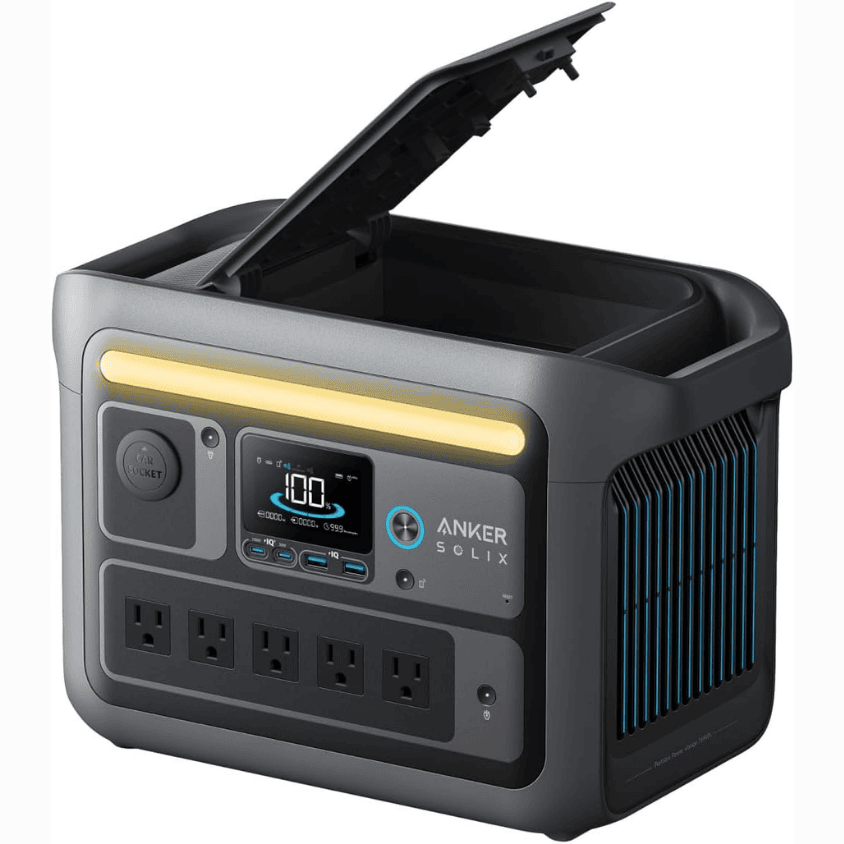
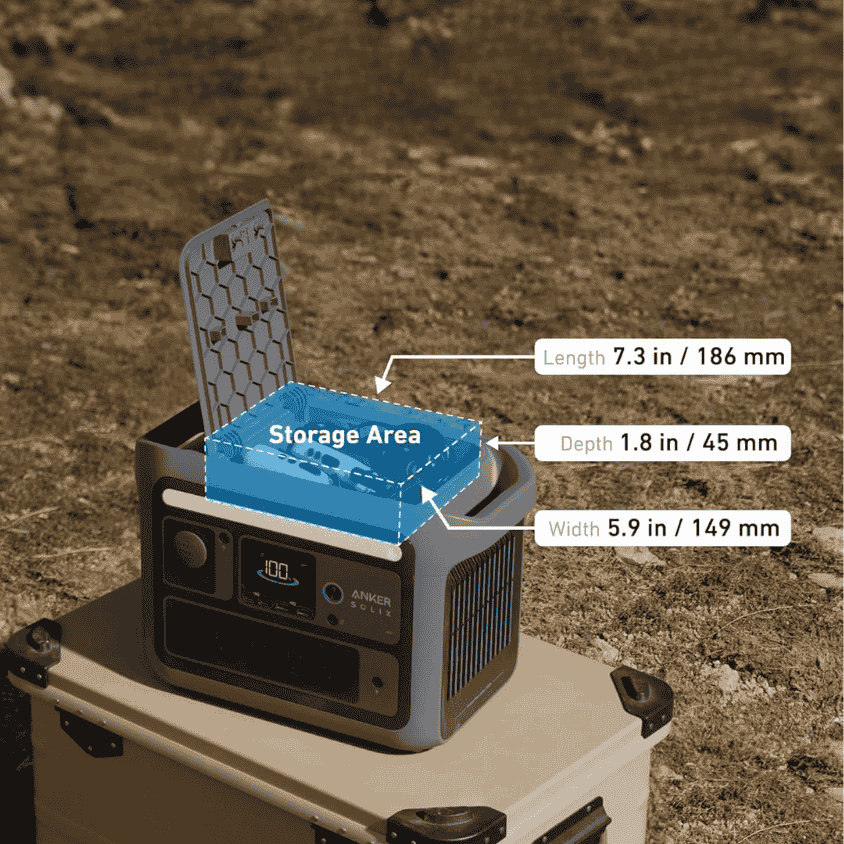
For many home backup scenarios, the Anker SOLIX C800 hits a compelling balance between size, speed, and real‑world performance. Its 768 Wh LiFePO₄ battery provides dependable energy for essential devices – laptops, medical gear, lighting, routers, and small appliances – while the 1,200 W continuous output handles heavier loads that smaller, cheaper units can’t. With built‑in SurgePad technology, the inverter can briefly manage surges as high as 1,600 W, giving it the muscle to start motor‑driven appliances like small refrigerators, power tools, and other mid‑wattage gadgets without shutting down. It’s also a lot reliable, with stable inverter voltage and quiet operation even under moderate loads.
Where the C800 really stands out in a crowded mid‑size class is recharge speed and long‑term durability. Thanks to UltraFast/HyperFlash charging technology, it can go from empty to 100 % in about 58 minutes via AC power – a dramatic improvement over many other power stations that require hours to recharge. This makes it much more practical for home backup use, where downtime between outages can be short and unpredictable.
The solar recharge performance also impresses: with an optimal 300 W panel, you can get back to around 80 % in roughly 2.3 hours of strong sunlight. Combined with robust construction, smart app monitoring, and a thoughtful array of outlets, the C800 delivers a complete, future‑proof platform for everyday backup and emergency power needs.
Pros and Cons
| Pros | Cons |
|---|---|
| Industry‑leading recharge (~58 min) – much faster than typical stations in this class | Requires app for fastest charging mode (may be inconvenient for some) |
| Long‑life LiFePO₄ battery (~3,000+ cycles) for years of use | No IP weather‑proofing – keep sheltered outdoors |
| High output (1,200 W continuous, 1,600 W surge) handles heavier devices well | |
| Great port variety (10 total) for powering many devices at once |
Jackery Explorer 1000 v2 Portable Power Station | Balanced Everyday Pick
Category: Balanced Everyday Pick – Reliable Mid‑Range Home Backup with Strong Output and Longevity
Key Features: ~1,070 Wh LiFePO₄ battery capacity, 1,500 W rated continuous AC output [3,000 W surge peak for appliance startup], Multiple AC outlets (3), USB‑C (up to 100 W), USB‑A, car port; supports charging many devices at once, Fast AC recharge, Typical 3 + 2 years warranty (confirm from Jackery/retailer.)
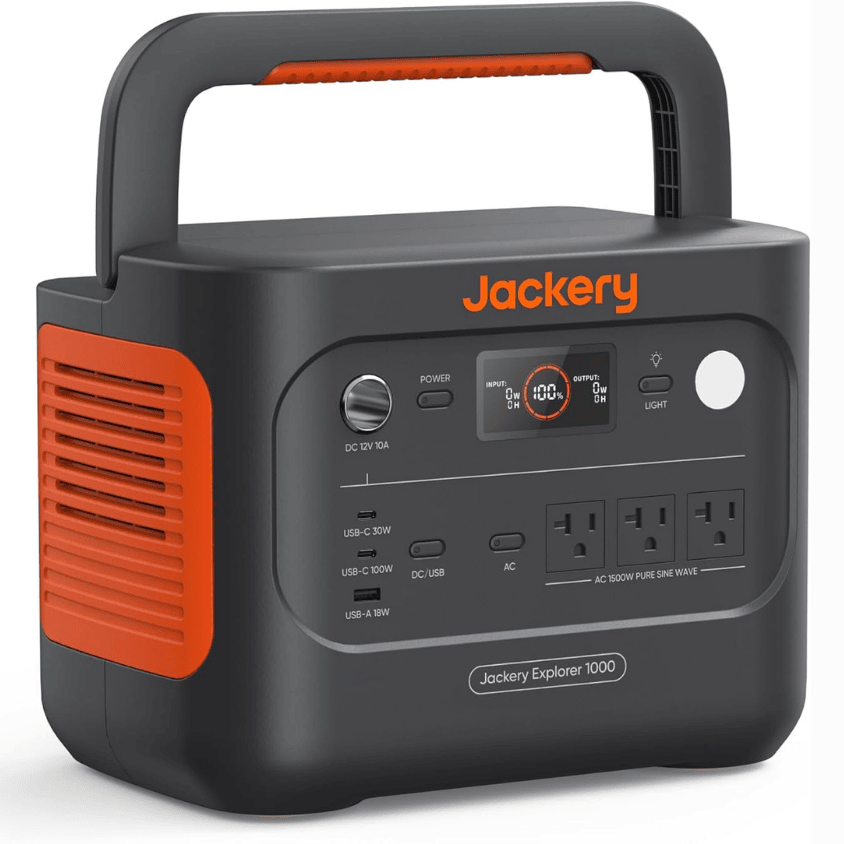
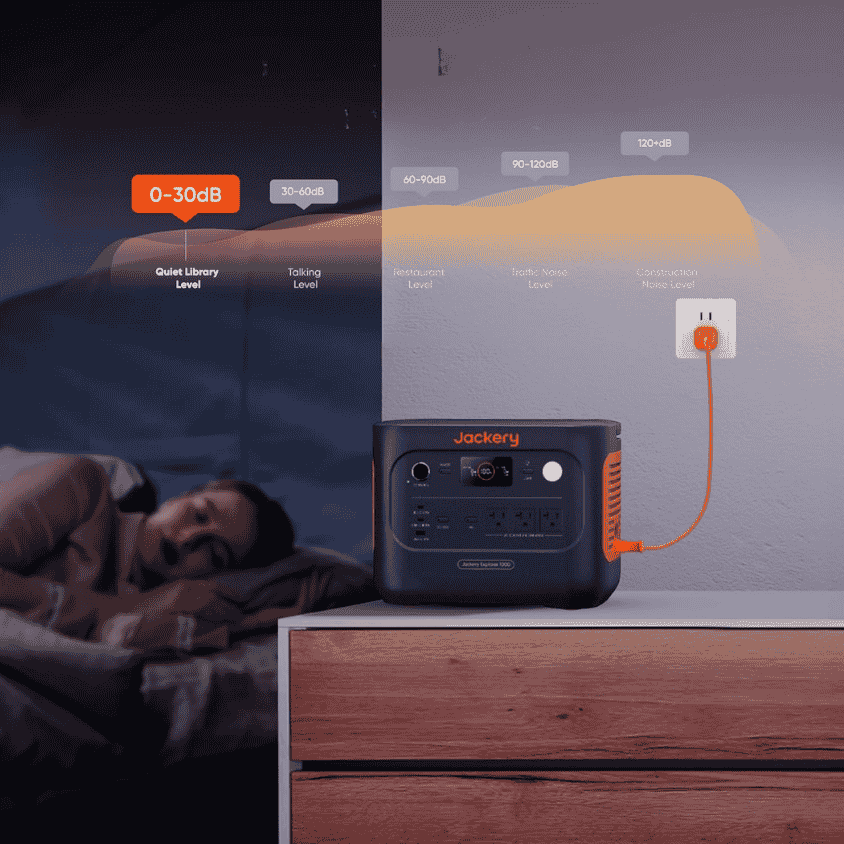
If you wanna build a home backup setup with a real practical feeling, the Jackery Explorer 1000 v2 is your standout choice in the mid‑range category. With about 1,070 Wh of usable capacity and a 1,500 W continuous output, it’s capable of powering essential household devices – think refrigerators, lights, routers, laptops, and even mid‑wattage equipment during outages – without overcomplicating your setup. The high surge capacity of 3,000 W provides crucial headroom for appliance startups, so things like compressors and power tools start without tripping the inverter.
One of the key reasons this model is rated well for everyday use is its LiFePO₄ battery chemistry, which gives you both safety and longevity. This chemistry is known for superior thermal stability and a longer cycle life compared with traditional lithium‑ion cells, translating to a decade or more of reliable service under typical household conditions. Charging performance is also solid: on AC power, this power station can easily replenish from near zero to full in roughly 1.5 hours or less, and there are emergency charging modes accessible, too, via the Jackery app to speed up charging when needed.
At around 23.8 lbs, it strikes a comfortable balance between portability and performance. The mix of three AC outlets, multiple USB‑C and USB‑A outputs, and a 12 V car port makes it a flexible hub for everyday backup tasks – from keeping phones and medical devices charged overnight to sustaining essential appliances through brief power outages. Its users have also been noticing the clean power the pure sine wave inverter here delivers, which is suitable for sensitive electronics like laptops and CPAP machines without issues.
Pros and Cons
| Pros | Cons |
|---|---|
| Strong continuous output (1,500 W) with high surge capacity (3,000 W) – great for appliances and tools | Recharge time on standard AC (~1.5 h) is decent but not the fastest in class |
| LiFePO₄ battery with long cycle life (4,000+ cycles) ensures a long usable lifespan | Solar charging slower compared with some competitors, depending on panels |
| Good range of ports for diverse devices (AC, USB‑C, USB‑A, car) | |
| Pure sine wave output is safe for sensitive electronics (laptops, CPAPs) |
👉 If you want a smaller, grab and go Jackery station for lights, phones, and Wi Fi basics, check out our Jackery Explorer 300 review.
👉 If you want a bit more runtime without jumping to a 1,000Wh class unit, see this Jackery Explorer 500 review instead.
Pecron Portable Power Station F3000LFP | Great Value or Larger Alternative
Category: Great Value or Larger Alternative – Massive Capacity and Power for Serious Home Backup
Key Features: 3,072 Wh LiFePO₄ battery capacity – designed for years of regular use, Continuous AC output of 3,600 W pure sine wave, Peak output up to ~4,500 W surge, Multiple AC outlets, USB‑C (100 W), USB‑A, car port, DC outputs – total of 11+ outputs, Fast recharging via AC, solar (up to 1,600 W), or hybrid AC+solar inputs, Expandable, UPS function.
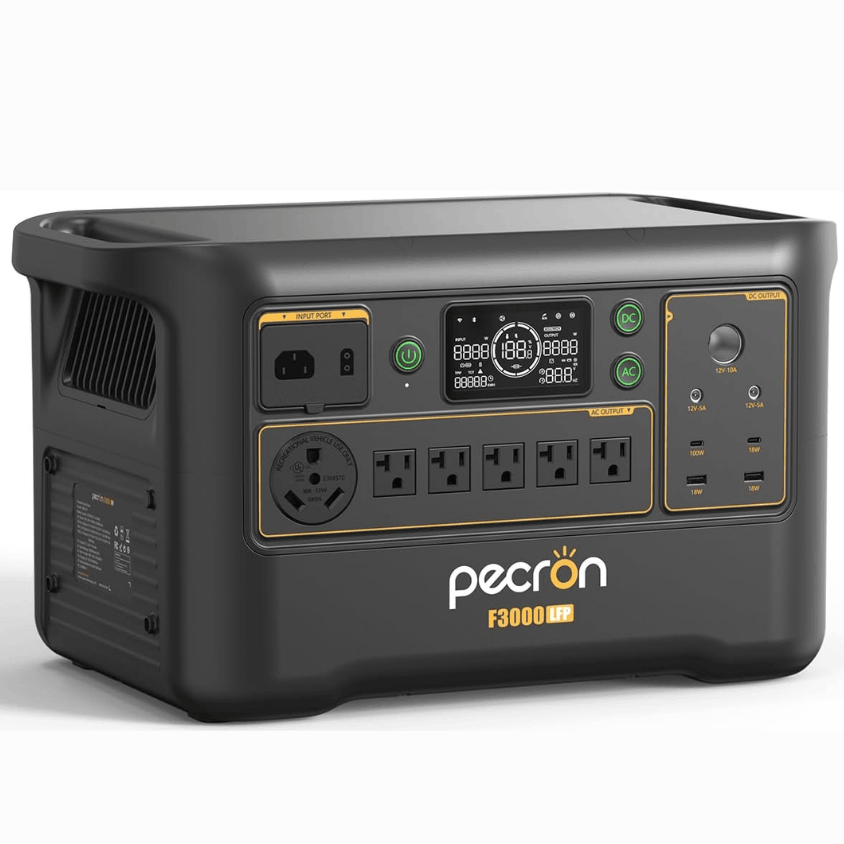
If your priority is maximum capacity and pure output power for home backup, the Pecron F3000LFP stands out as a true workhorse. With a 3,072 Wh LiFePO₄ battery, this unit can supply days of emergency energy for essentials such as refrigerators, medical devices, lights, and communication gear during extended outages. Its 3,600 W continuous inverter provides strength typically reserved for larger, more expensive generators – enabling simultaneous operation of heavy loads like air conditioners and power tools without tripping the system. This level of performance makes it ideal for larger homes or situations where multiple devices need back‑to‑back energy without compromise.
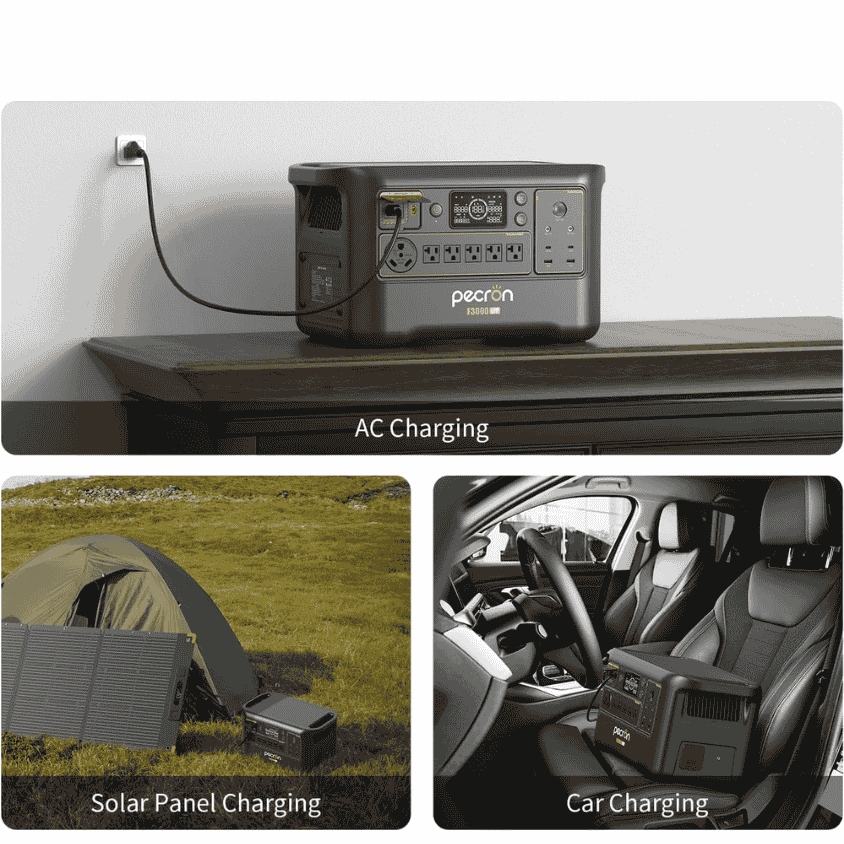
Beyond raw power, the F3000LFP offers fast recharge options that keep it ready when you need it most. With up to 1,800 W AC charging and solar input up to 1,600 W, this station can recharge from near empty to full in roughly 2 hours under ideal conditions – a huge advantage in emergency scenarios when grid power returns and you need to replenish quickly. The ability to combine AC and solar charging simultaneously pushes effective recharge rates even higher, making it more flexible than many competitive alternatives. Remote monitoring and control via Wi‑Fi or Bluetooth add to the convenience, letting you see real‑time power use and adjust settings without being next to the unit.
For larger installations, the F3000LFP’s expandability is a key differentiator. You can attach additional battery packs to increase total stored energy beyond 9 kWh – turning this station from a backup for a few essentials into the heart of a broader home energy resilience system. The extended UPS support ensures minimal interruption to sensitive electronics during outages, which is critical if you depend on tech like CPAP machines or home office equipment.
Pros and Cons
| Pros | Cons |
|---|---|
| High continuous output (1,800 W) and X‑Boost for heavier loads | Relatively heavy (~27 lbs) compared to smaller models |
| Fast recharge (0-80 % ~50 min) makes it ready quickly after outages | Extra battery sold separately, increasing total system cost |
| Expandable capacity up to ~3 kWh for extended backup | |
| Long cycle life (LFP battery) for years of daily use |
Notes on Portable Power Stations for Home Backup
Home backup needs are different from camping or everyday charging.
For reliable backup you need real capacity, strong continuous output, a dependable battery type, and ofc, faster recharging.
Why Battery Chemistry Matters
The safest and longest‑lasting portable power stations on the market now use LiFePO₄ (lithium iron phosphate) chemistry. This type is more stable, longer lived, and safer for indoor use than older lithium‑ion cells. Many user note these LiFePO₄ batteries last thousands of cycles and retain performance over years of frequent use, which is ideal for home backup scenarios where reliability matters most.
Capacity and Output Explained
Capacity is measured in watt‑hours (Wh), and it tells you how much energy the station can store. Higher Wh means more runtime for appliances.
Output is measured in watts (W). Continuous output determines what devices you can power without tripping the inverter. UPS timing (milliseconds to switch from grid to battery) matters for sensitive electronics and medical devices.
Charging Speed, and Recharging
Fast recharge is one of the biggest differentiators in real emergencies.
A unit that takes six hours to recharge is unlikely to be ready when the grid returns. Many top models now recharge most of their battery in around one hour via AC wall power or quickly via solar input, making them far more practical for rapid restores.
How Long Will a Portable Power Station Run Your Essentials?
Runtime depends on how much load you draw from the station.
A 2,000 Wh station powering a 150 W fridge, lights, and Wi‑Fi could keep you going for roughly nine hours under typical combined load conditions. U.S. grid outages average between several hours to a day in most areas, so stations in the 1,000 Wh to 2,000 Wh range cover most scenarios.
Bigger units like Pecron’s 3 kWh model extend that coverage significantly. Real‑world outage tests show that around 2,000 Wh often powers major loads for upwards of 8 to 12 hours depending on setup.
Can Portable Power Stations Be Used Indoors?
Yes, modern portable power stations are designed for indoor use with no toxic emissions. Unlike gas generators, they are quiet, clean, and safe to place in living areas. The key is to ensure proper ventilation and avoid blocking heat vents during operation.
LiFePO₄ chemistry further improves safety because it is thermally stable and less prone to thermal runaway. Use them near but not beneath flammable materials and keep devices away from direct moisture.
Safety and Best Practices for Home Backup
Safety is paramount when storing and using high‑capacity batteries indoors.
- Keep stations on a stable surface, away from water.
- Avoid charging under pillows or blankets.
- Follow manufacturer guidance on battery cycling.
- Check UPS mode performance for sensitive electronics to ensure minimal interruption.
These practices extend both safety and the usable lifespan of the backup station.
Final Thoughts and Recommendation
Portable power stations are now among the most effective tools for homeowners wanting reliable backup during blackouts, storms, or emergencies.
If you need balanced all around home backup, the EF ECOFLOW DELTA 2 and Jackery Explorer 1000 v2 are excellent everyday choices. For extended outages or running heavy loads, the BLUETTI Elite 200 V2 and Pecron F3000LFP offer strong capability. Mid‑size solutions like the Anker SOLIX C800 balance usability and fast recharge.
Whatever situation you’re in, remember to always pick the unit that matches your average outage duration and power requirements.
Check the latest prices and deals on these home backup power stations and go for the unit that fits your exact needs.
And keep following PP Stations for more reviews like this!
FAQs
What size station do I need for home backup?
Station size depends on your power needs. For essentials like fridge, lights, and phones, 1,000 Wh to 2,000 Wh is often sufficient. For longer outages or heavier use, aim for 2,000 Wh+.
How fast can these stations recharge?
Many modern units can recharge to 80 % in under one hour via AC. Solar charging varies based on panel wattage.
Are portable power stations better than gas generators?
For indoor use and quiet backup, portable stations are safer and cleaner. Gas generators still offer higher raw output but require outdoor ventilation.