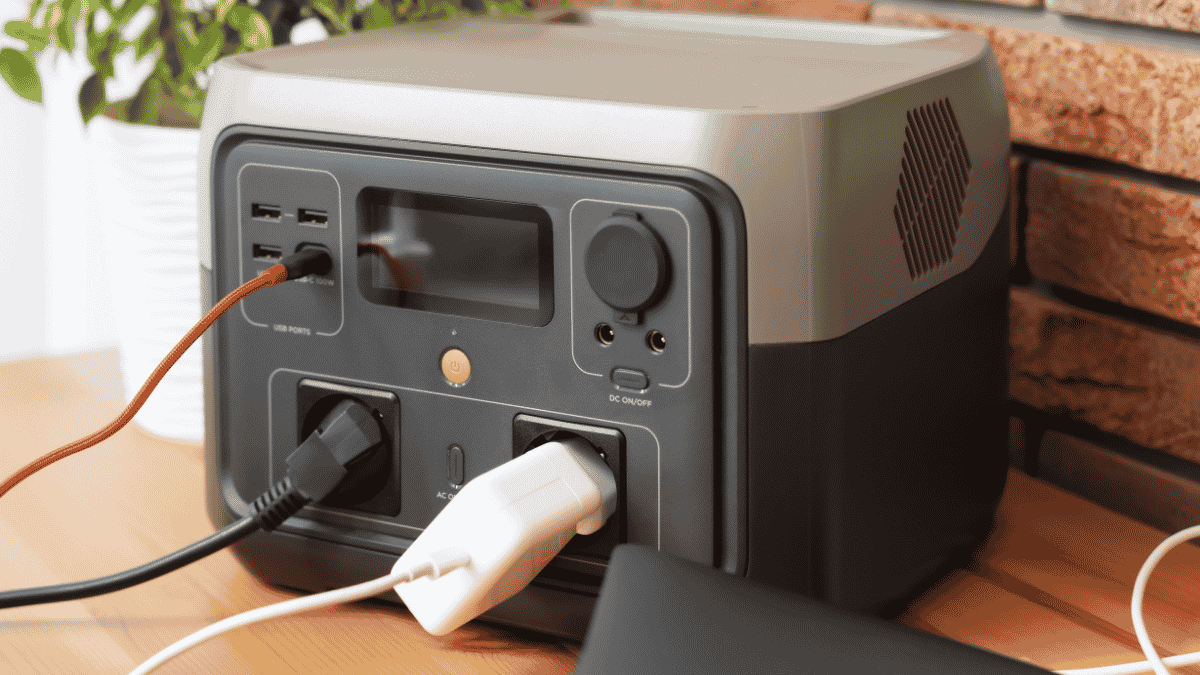
If you have ever looked at a portable power station and noticed the row of ports along the front, you may have wondered what that 12V slot actually does and whether it even matters. The answer is: it matters a lot.
The portable power station 12V output is one of the most practical features on any unit, especially for campers, van-lifers, RV owners, and anyone who relies on car-compatible accessories. This post breaks it all down, plain and simple.
What Is the 12V DC Output on a Portable Power Station?
A portable power station stores energy in a lithium battery as direct current (DC). Most of your home appliances run on alternating current (AC), so the station uses an internal inverter to convert DC to AC before sending power through the standard wall-style outlets. The 12V output skips that conversion entirely. It delivers DC power directly at 12 volts, the same voltage your car’s electrical system runs on.
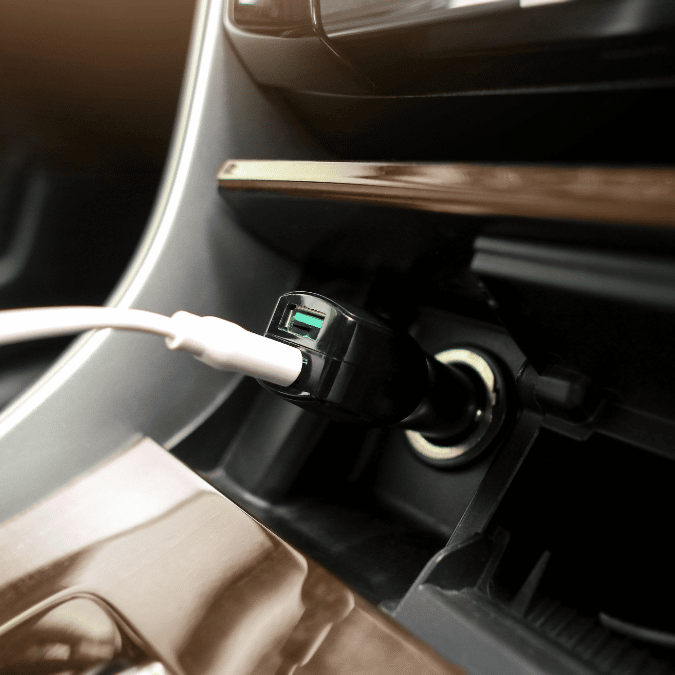
This is important for one key reason: any device engineered to run from a vehicle’s cigarette lighter socket or a 12V DC input will work natively off this port. No conversion, no inverter losses, just a clean and direct connection. That group of compatible devices is much larger than most buyers realize, and it covers some of the most popular use cases for portable power stations.
The Three Types of 12V Output Ports
Not all 12V ports look the same or deliver the same current. Understanding the differences helps you pick the right cable and avoid damage.
1. The Cigarette Lighter / Car Port
This is the round socket that looks exactly like the power outlet in your vehicle’s dashboard. It is the most common 12V output on mid-range portable power stations. Most cigarette lighter ports are fused at 10 to 15 amps, which means the maximum continuous wattage tops out at roughly 120 to 180 watts (calculated as Watts = Volts x Amps, so 12V x 10A = 120W). It is ideal for tire inflators, cooler boxes, car vacuums, and GPS units, but it is not built for sustained high-draw applications.
2. The DC Barrel Connector (DC5521 / DC5525)
These are circular plug-style ports that look like the charging jack on a laptop. EcoFlow refers to them as “DC5521 outlets,” and they are rated for devices that accept DC input directly, such as mini-fridges, mobile Wi-Fi routers, and some CPAP machines. If your device uses a DC barrel cable, plugging into this port instead of an AC outlet avoids the efficiency loss from DC-to-AC-to-DC conversion.
3. The Anderson Port
The Anderson connector is a heavy-duty DC output found on premium and high-capacity power stations. Unlike a cigarette lighter socket that maxes out around 10 to 12 amps before running warm, an SB50 Anderson connector can handle up to 50 amps, delivering approximately 600 watts of stable DC power. Anderson ports are popular in RV builds, off-grid solar setups, and emergency response use cases. They are genderless (both sides are identical), vibration-proof, and self-cleaning on every insertion, making them far more reliable than a standard car socket under sustained load.
How Much Power Does the 12V Output Actually Deliver?
The formula is simple: Watts = Volts x Amps.
At 12 volts, the maximum wattage depends entirely on how many amps the port can supply.
Here is a quick reference table for the three most common 12V port types:
| Port Type | Typical Amp Rating | Max Wattage Output |
|---|---|---|
| Cigarette Lighter (Car Port) | 10A to 15A | 120W to 180W |
| DC Barrel (DC5521 / DC5525) | Up to 10A | Up to 120W |
| Anderson Port (SB50) | Up to 50A | Up to 600W |
| Anderson Port (SB175) | Up to 175A | Up to 2,100W |
Keep in mind that most portable power stations cap their total DC output section independently from the AC output. For example, a common mid-size station might allow 120W through the car port and another 120W across the barrel connectors, but the two sections do not share a combined 240W pool. Always read your unit’s spec sheet for this detail.
What Can You Actually Run on the 12V Output?
The list of devices compatible with 12V DC power is longer than most people expect.
Here is a practical reference chart covering everyday use cases:
| Device | Typical Power Draw | Runs on 12V Port? |
|---|---|---|
| 12V Portable Fridge (compressor) | 40W to 60W average | Yes (Barrel or Anderson) |
| Tire Inflator / Air Pump | 70W to 120W | Yes (Cigarette Lighter) |
| CPAP Machine (without humidifier) | 30W to 60W | Yes (Barrel or DC cable) |
| LED Camping Lights | 10W to 30W | Yes (any 12V port) |
| 12V Fan | 15W to 36W | Yes (any 12V port) |
| GPS / Dash Cam | 5W to 15W | Yes (Cigarette Lighter) |
| Car Vacuum | 60W to 100W | Yes (Cigarette Lighter) |
| Diesel / Propane Heater Controller | 10W to 25W | Yes (Barrel or Cigarette) |
| Water Pump (RV style) | 60W to 100W | Yes (Anderson preferred) |
| 12V Coffee Maker | 80W to 120W | Yes (Cigarette Lighter) |
A 1,000Wh portable power station running a 50W compressor fridge through the 12V port can sustain that fridge for roughly 16 to 18 hours, after accounting for typical efficiency. That kind of runtime is one of the biggest reasons van-lifers and overlanders prioritize 12V-capable stations over models with only AC outlets.
If you also plan to keep a Wi-Fi router running alongside that fridge during a power outage, check out our post on what size power station you need for a refrigerator and Wi-Fi router.
12V DC vs. AC Output: Which One Should You Use?
When a device has a 12V DC cable option, always use the 12V port instead of the AC outlet. Here is why. The portable power station’s battery stores energy as DC. When you plug a 12V device into the AC outlet, the station first converts DC to AC through the inverter, and then the device’s own internal adapter converts AC back to DC. That double conversion wastes energy as heat.
By connecting a 12V-compatible device directly to the 12V DC port, you cut out both conversion steps entirely. Inverters on most portable power stations operate at 85 to 92 percent efficiency. Skipping the inverter means you recover that 8 to 15 percent efficiency loss on every watt-hour drawn. Over the course of a camping weekend, that difference can add hours of runtime to your portable fridge or lighting setup.
Efficiency Advantage
Consider a 12V compressor fridge rated at 50 watts. Through the AC outlet (with inverter running), the station might draw 55 to 58 watts from the battery to deliver those 50 watts to the appliance. Through the 12V DC port, the station draws closer to 52 watts for the same 50-watt delivery. On a 1,000Wh battery, that difference extends your fridge runtime from about 17 hours on AC to closer to 19 hours on DC. With a LiFePO4 battery rated for 3,000 to 5,000 charge cycles, that efficiency gain compounds significantly over the life of the unit.
The math reinforces a straightforward rule: match the port type to the device’s native power source whenever possible.
Tips for Getting the Most from Your 12V Output
Knowing the port types and wattage limits is just the start. A few practical habits will help you stay within safe operating ranges and get the maximum runtime out of every charge cycle.
First, always check the amperage rating of your specific 12V port before plugging in high-draw devices. A 10A cigarette lighter port is not designed to run a 150W device continuously, even if the device’s plug fits the socket. Second, use cables and adapters rated for the actual amperage you intend to draw. Undersized wire creates heat and can damage the port or the device. Third, if you plan to run a 12V fridge, a diesel heater, or a water pump simultaneously, add up their wattages and confirm the total falls within the station’s DC output budget, not just the AC budget. Finally, if your power station includes an Anderson port, prioritize it for any sustained high-current 12V load over a standard cigarette lighter socket.
If you are still figuring out whether the station you own or are considering can handle your load, our post on what a 1,000W portable power station can actually run walks through real device wattages and runtime numbers in detail.
Final Thoughts
The portable power station 12V output is not just a bonus feature or a convenient extra. For campers, RV users, overlanders, and anyone powering compressor fridges, fans, or CPAP machines off-grid, it is often the most efficient and most used output on the entire unit. Understanding the difference between a cigarette lighter port, a barrel connector, and an Anderson port, and knowing how many watts each can safely deliver, puts you in a much stronger position when buying or using any portable power station.
If you are shopping for a unit with serious 12V capability, the most powerful portable power stations available today tend to be the ones that include high-amp Anderson ports, multiple barrel DC outputs, and expandable battery capacity alongside the standard car socket. That combination gives you flexibility for everything from a weekend campout to an extended off-grid stay.
Keep coming back to PP Stations, your guide to reliable off-grid energy in the U.S.
FAQs
Can I run a 12V device and charge the power station at the same time?
Yes. Most modern portable power stations support pass-through charging, meaning you can plug the unit into solar or a wall outlet while simultaneously powering devices through the 12V port. Efficiency during pass-through varies by model, so check your manufacturer’s specs.
Does using the 12V output drain the battery faster than using USB ports?
It depends on the wattage of what you are running. A 50W 12V fridge drains faster than a 10W phone charge. The port type itself does not add overhead; the device’s power draw is what determines runtime.
Can I charge a car battery from the 12V output of a power station?
You should not attempt this unless your power station is explicitly rated for battery charging. Standard 12V output ports are not designed to push current back into a vehicle’s lead-acid battery and may cause damage or trigger the station’s overload protection.
What is the difference between a 12V input and a 12V output?
The 12V input is how you charge the power station using your car’s cigarette lighter socket. The 12V output is how the power station powers your 12V devices. They are separate circuits and cannot be used interchangeably.