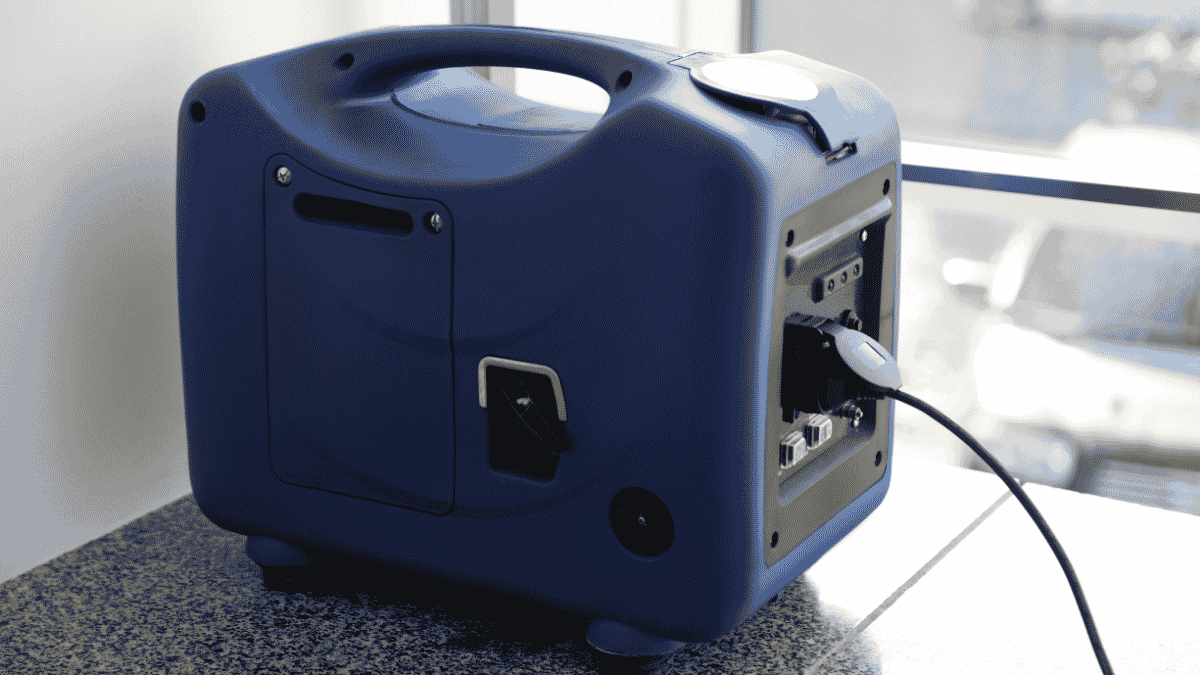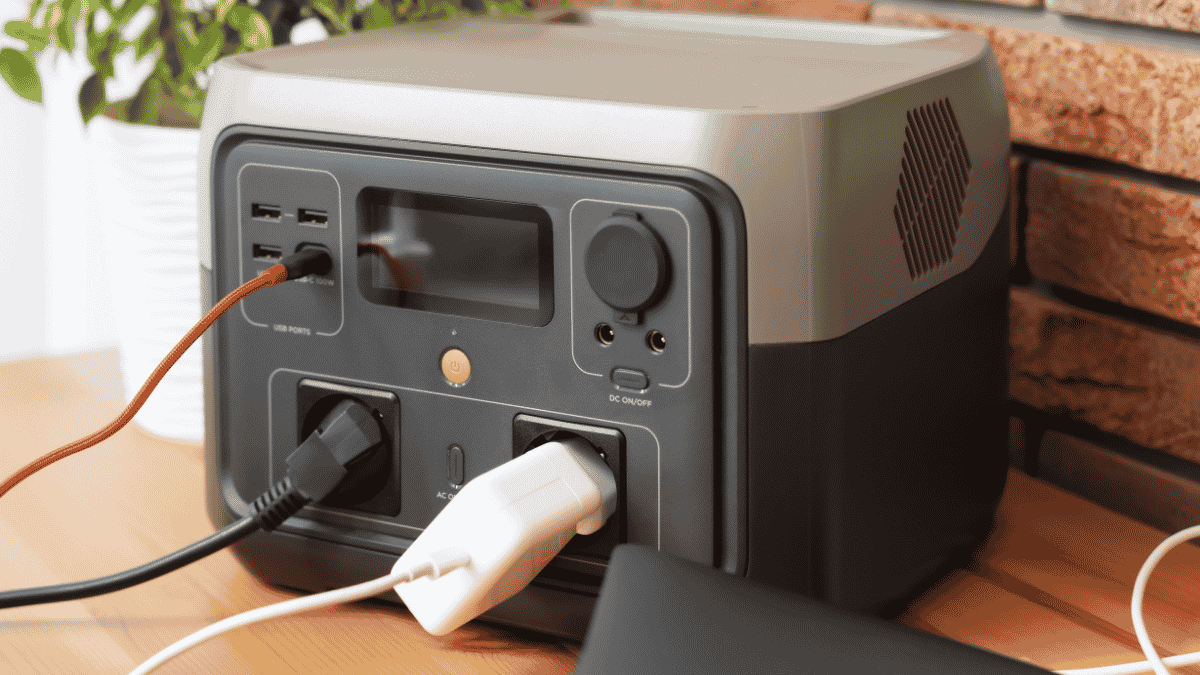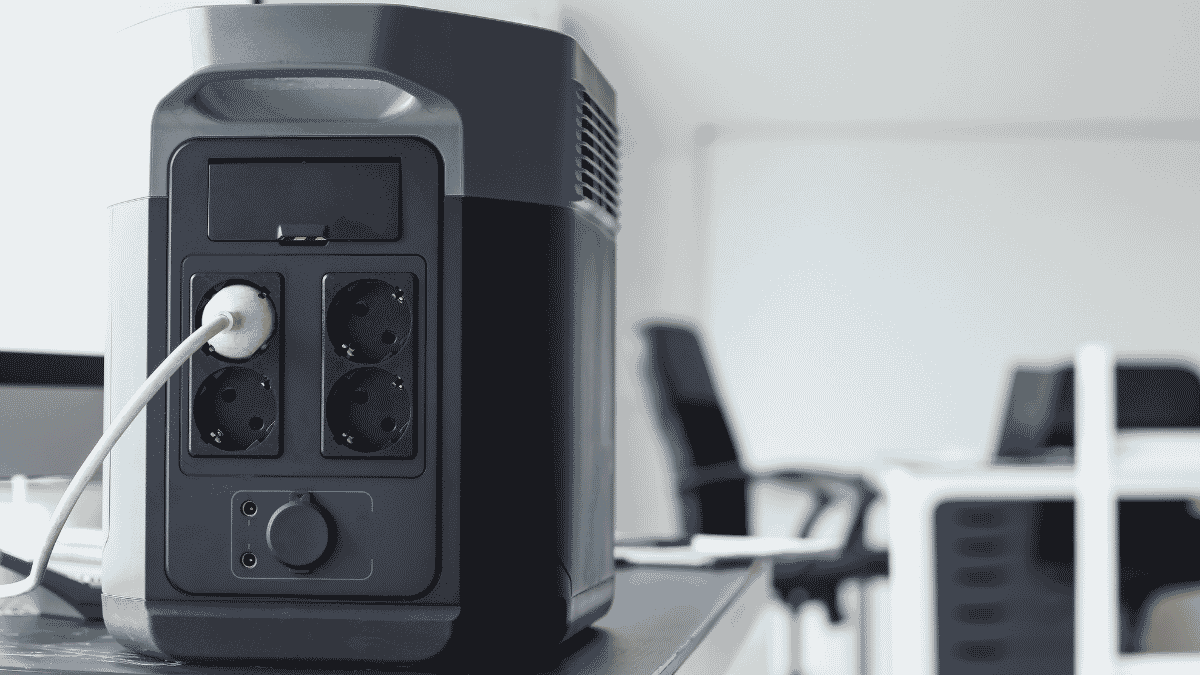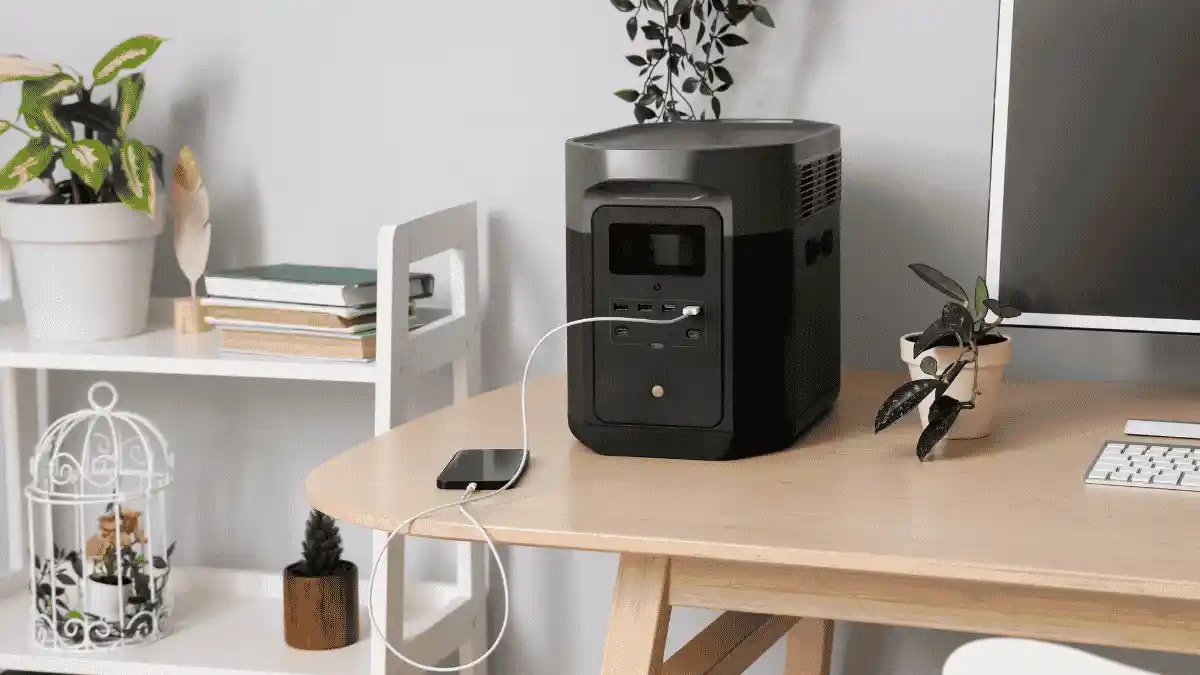
For a standard home refrigerator (150–200W running) and a Wi-Fi router (10–20W), running together for 8 hours, you need a portable power station with at least 1,500–2,000Wh of battery capacity and a surge rating of 600W or higher. For overnight or 24-hour backup, go for 2,500Wh or more.
The power goes out. Your food starts to warm up. Your internet drops. These are the two things most people want to protect first during an outage: a refrigerator and a working Wi-Fi connection. A portable power station can cover both, but only if you pick the right size.
Most buying guides online either oversimplify the answer or bury it in technical jargon. This guide cuts through that. You will get the actual math, clear size recommendations, and practical advice from real-world usage, so you buy the right unit the first time.
Why You Can’t Just Guess the Size
Picking a power station by gut feel is one of the most common and expensive mistakes people make. There are two completely different numbers that determine whether a setup works:
Watt-hours (Wh): This is the battery capacity. It tells you how long the unit can keep your devices running.
Watts (W): This is the output power. It tells you what the unit can run at all.
You need both numbers to line up. A large battery with a weak output will fail to start your fridge. A high-output unit with a small battery will start it but die in two hours.
There is a third number most people miss entirely: surge wattage. When a refrigerator compressor starts up, it pulls 2 to 3 times its normal running power for a few seconds. If your power station cannot handle that spike, the fridge simply will not turn on, regardless of how much battery capacity you have.
How Much Power Does a Refrigerator Actually Use?
Your fridge’s power draw depends on size, age, and how full it is. Here are realistic running wattage ranges by fridge type:
| Fridge Type | Running Watts | Startup Surge |
|---|---|---|
| Mini fridge / compact | 50–100W | 200–300W |
| Dorm / apartment fridge | 100–150W | 300–450W |
| Standard single-door fridge | 150–200W | 400–600W |
| Side-by-side / French door | 200–400W | 600–1,200W |
| Older or large full-size fridge | 300–500W | 900–1,500W |
Refrigerators do not run continuously. The compressor cycles on and off, typically running 30 to 50 percent of the time under normal conditions. This is actually good news: it means your real-world runtime will often be longer than a simple watt-hour calculation suggests, especially if you keep the door closed.
To find your fridge’s exact wattage, check the label inside the door or on the back panel near the compressor. It will list amps and voltage. Multiply them together (Amps x Volts = Watts) if wattage is not listed directly.
How Much Power Does a Wi-Fi Router Use?
A standard Wi-Fi router draws between 10 and 20 watts continuously. A modem, if separate, adds another 5–10 watts. Mesh network systems with multiple nodes can use 20–40 watts total.

Compared to a refrigerator, a router’s power draw is nearly negligible. But because it runs 24 hours a day, it does add meaningful watt-hours over time, especially if you are planning a full-day outage backup.
For most setups, budget 15–20W for your router and modem combined.
Step-by-Step: How to Calculate the Right Size
Follow these four steps to find your exact requirement.
Step 1: Find your fridge’s running wattage. Check the label or manual. If only amps are listed, multiply by 120 (standard US voltage). Example: 1.5A x 120V = 180W.
Step 2: Add your router’s wattage. Use 15W as a safe average if you do not know the exact number.
Step 3: Multiply total watts by your target runtime in hours. Example: (180W fridge + 15W router) x 8 hours = 1,560Wh
Step 4: Divide by 0.85 to account for inverter efficiency losses. 1,560Wh ÷ 0.85 = 1,835Wh required
Add another 15–20% buffer for door openings, ambient temperature, and battery aging. That brings the realistic target to around 2,100Wh for this example.
The formula:
(Fridge Watts + Router Watts) x Hours of Use ÷ 0.85 = Minimum Wh Needed
What Size Power Station Do You Actually Need?
Here is how the math translates into real buying decisions.
For Short Outages (2–4 Hours)
A 500–700Wh power station works here, but only for a mini fridge or compact fridge. A standard home refrigerator will drain a 500Wh unit in under 3 hours. If this is your use case, units like the EcoFlow River 2 (256Wh) or Jackery Explorer 500 (518Wh) are not suitable for full-size fridges.
For Standard Home Backup (6–10 Hours)
This is what most US households need during a typical power outage. Target a unit in the 1,500–2,000Wh range. This covers a standard fridge, a router, phone charging, and possibly a few LED lights simultaneously.
Good options in this range include the EcoFlow Delta 2 Max (2,048Wh), Bluetti AC200L (2,048Wh), and Anker SOLIX C1000 (1,056Wh, better for smaller fridges).
Make sure the unit’s surge/peak rating is at least 2–3x the fridge’s running wattage. For a 200W fridge, look for a surge rating of at least 600W, ideally higher.
For Overnight or 24-Hour Coverage
Go for 2,500–3,500Wh minimum. At this level, you can run a standard fridge through the night, keep the internet on, charge phones and laptops, and still have capacity left over. The Bluetti AC300 with B300 battery (3,072Wh) and the EcoFlow Delta Pro (3,600Wh) are strong choices here.
For large or older refrigerators (300–500W running load), these larger units become the minimum, not a luxury.
The Surge Wattage Problem: How to Avoid It
This is where a lot of buyers get burned. They calculate the watt-hours correctly, order a matching unit, plug in the fridge, and nothing happens.
The compressor startup surge trips the power station’s overload protection. The fridge never turns on.
To avoid this:
- Find your fridge’s starting (surge) wattage. It is sometimes labeled as LRA (Locked Rotor Amps) on the compressor plate. Multiply LRA x 120V to estimate surge watts.
- If you cannot find the surge rating, assume it is 3x the running wattage as a conservative estimate.
- Pick a power station whose peak/surge AC output is higher than this number, with margin to spare.
Most quality units from brands like EcoFlow, Bluetti, Jackery, Goal Zero, and Anker SOLIX publish both their continuous and surge ratings clearly. Always check both before buying.
Battery Chemistry Matters: LiFePO4 vs Standard Lithium-Ion
Most modern portable power stations use one of two battery types:
| Feature | LiFePO4 (LFP) | Standard Lithium-Ion (NMC) |
|---|---|---|
| Cycle life | 2,500–3,500+ cycles | 500–1,000 cycles |
| Safety | More thermally stable | Higher energy density, runs warmer |
| Weight | Slightly heavier | Lighter for same capacity |
| Cold weather performance | Better | Degrades faster in cold |
| Long-term value | Better | Higher upfront cost per Wh in some cases |
For home backup use, especially if you plan to use the unit regularly, a LiFePO4 battery power station is the smarter long-term investment. The longer cycle life means it will still perform reliably after years of regular use.
All major 2024–2025 EcoFlow Delta Pro, Bluetti AC series, and Anker SOLIX units now offer LFP battery options. Goal Zero’s Yeti line uses NMC but remains a strong performer for occasional use.
How to Extend Runtime Without Buying a Bigger Battery
Before spending more money on capacity, try these practical steps first:
Pre-cool the fridge. Run it at full power before the outage or trip. A colder fridge cycles less, using less power from your station.
Keep the door closed. Every time you open the fridge, warm air rushes in and forces the compressor to run longer. During an outage, open it only when necessary.
Pair with solar panels. This is the most effective way to extend runtime during daylight hours. A 200W solar panel can recover roughly 600–900Wh on a clear day, which can fully offset a fridge’s daily consumption. Most current power stations support solar input, and many, including EcoFlow and Bluetti, support fast solar charging.
Use pass-through charging. If grid power returns partially or you have access to a generator, some units allow simultaneous charging and discharging. This means the station tops up while still powering your fridge.
Common Mistakes to Avoid
Only looking at watt-hours. Battery capacity alone does not tell you whether the unit can start your fridge. Always check the surge rating too.
Ignoring inverter type. Use a power station with a pure sine wave inverter for refrigerators. Modified sine wave output can damage compressor motors over time or prevent the fridge from starting reliably.
Assuming all 1,000Wh units are equal. A 1,000Wh station with a 1,000W continuous output rating is very different from one rated at 600W continuous. The watt-hour number tells you duration; the wattage rating tells you capability.
Buying based on marketing claims. “Can run a refrigerator” is technically true for almost any power station, at least for a short time. Always run the calculation yourself based on your specific fridge and your target runtime.
Expert Recommendation: Which Size Should You Buy?
Based on real-world outage data and the way most US households use backup power, here is a straightforward recommendation:
For most households with a standard fridge and Wi-Fi router: A 1,500–2,000Wh unit with a surge rating of 3,000W or higher covers the majority of US power outages, which typically last under 12 hours. This is the sweet spot between cost, weight, and practical usefulness.
If you live in a storm-prone area (Gulf Coast, Southeast, Midwest tornado belt) where multi-day outages are realistic, go with a 2,500–3,600Wh unit or a modular system you can expand with add-on batteries.
If you only want internet backup (router + modem during short outages), a small 200–300Wh unit handles this easily for 12+ hours. You do not need a large system just for connectivity.
Portable Power Station Size Comparison at a Glance
| Scenario | Recommended Capacity | Key Spec to Check |
|---|---|---|
| Router only, 12 hrs | 200–300Wh | Any decent unit works |
| Mini fridge + router, 8 hrs | 500–700Wh | Surge rating 400W+ |
| Standard fridge + router, 8 hrs | 1,500–2,000Wh | Surge rating 600W+, pure sine wave |
| Standard fridge + router, 24 hrs | 2,500–3,500Wh | Surge 1,000W+, LFP battery preferred |
| Large/old fridge + router, 8 hrs | 2,000–2,500Wh | Surge 1,200W+, check LRA rating |
| Multi-day off-grid or storm prep | 3,600Wh+ or expandable | Solar input + LFP recommended |
Frequently Asked Questions
Can a 1,000Wh power station run a refrigerator and Wi-Fi router? Yes, for about 5–7 hours for a standard 150–200W fridge. A 1,000Wh unit is a reasonable starting point for shorter outages, but it will not last through the night on its own. Make sure its surge rating can handle the compressor startup.
What is the minimum size power station to run a refrigerator? For a mini fridge (50–100W), a 500Wh station is enough for 4–6 hours. For a standard full-size refrigerator, 1,000Wh is the practical minimum, good for only 5–7 hours. Most households benefit from 1,500Wh or more.
Will a portable power station damage my refrigerator?
Not if it uses a pure sine wave inverter, which all reputable brands do. Modified sine wave output can stress compressor motors over time. Always verify the inverter type before purchasing.
How long will a 2,000Wh power station run a fridge and router together?
For a 150–200W fridge cycling at 40–50% and a 15W router, a 2,000Wh unit will typically last 10–14 hours in real-world conditions. The exact runtime depends on ambient temperature, door openings, and the fridge’s age and efficiency.
Can I use solar to extend the runtime?
Yes. A 200W solar panel can add 600–900Wh on a clear, sunny day. Paired with a power station that supports solar input, this can keep your fridge and router running indefinitely during daylight hours off-grid.
Is a portable power station better than a generator for a fridge?
For indoor use during outages, a power station is far safer: no fumes, no noise, no fuel storage. The tradeoff is runtime: a gas generator can run indefinitely with fuel, while a power station depends on its battery and recharge options. For most short-to-medium outages, a power station is the cleaner, more practical choice.
Does a Wi-Fi router significantly affect how long the power station lasts?
No. A router uses 10–20W, which is a small fraction of the fridge’s load. Over 8 hours, a router adds roughly 80–160Wh to your total consumption. It is worth including in your calculation, but it is not the deciding factor in your battery size.