A portable power station should keep your small essentials running. It should not pretend to replace a whole-home generator. Under $300, the real win is not massive capacity. It is a safe lithium battery, useful AC output, USB-C PD, fast recharge, and a compact size. You also need enough watt-hours for phones, laptops, lights, routers, cameras, drones, and short blackouts.
We reviewed this category for users who want practical backup power without spending $700 to $1,500. Some models are better for camping. Others make more sense for Wi-Fi backup, small devices, or solar starter kits.
Skip the biggest number on the box. This review focuses on what these budget portable power stations can actually do.
Read on for the best portable power stations under $300 in 2026 (so far.)
What Is the Best Portable Power Station Under $300?
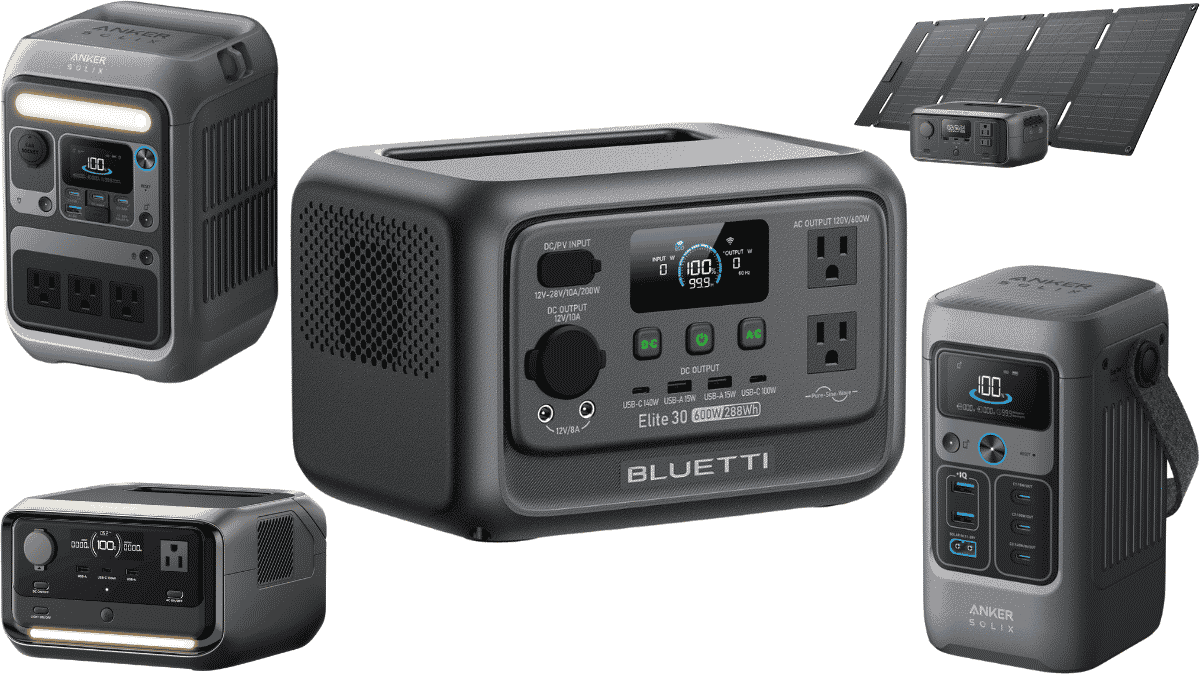
The best portable power station under $300 will of course be a model that balances capacity, output, battery chemistry, port selection, recharge time, and real-world reliability. Five models stand out for 2026. They are the BLUETTI Elite 30 V2, Anker SOLIX C300, EF ECOFLOW RIVER 3 Plus, EF ECOFLOW RIVER 3 with 45W Solar Panel, and Anker SOLIX C200 DC.
If you want the strongest AC output, the BLUETTI Elite 30 V2 is the most capable compact pick.
Want a trusted all-rounder for camping, laptops, and short outages? The Anker SOLIX C300 is our recommendation.
The RIVER 3 Plus is the better expandable option. The RIVER 3 solar kit is the simpler starter bundle. The C200 DC is ideal if you only need USB-C and DC power.
This review stays on budget. Need more than a compact unit? Our larger blackout review covers short blackout coverage without overspending.
Comparing the Best Portable Power Stations Under $300
Here we compare the best models. Each model has a different role, and the right choice depends on what you need to run.
| Product | Capacity | Output Type | Best For | Main Limitation | Pricing |
|---|---|---|---|---|---|
| BLUETTI Elite 30 V2 | 288Wh | 600W AC | Highest compact AC output | Limited runtime for large appliances | See Price Here |
| Anker SOLIX C300 | 288Wh | 300W AC | Best compact all-rounder | Not for heavy appliances | See Price Here |
| EF ECOFLOW RIVER 3 Plus | 286Wh | 600W AC | Expandable mini backup | Base battery is still small | See Price Here |
| EF ECOFLOW RIVER 3 with 45W Solar Panel | 245Wh | 300W AC | Solar starter kit | 45W panel charges slowly | See Price Here |
| Anker SOLIX C200 DC | 192Wh | DC and USB-C only | Lightweight USB-C travel power | No AC outlet | See Price Here |
Best Portable Power Stations Under $300
Here are the best portable power stations under $300 in 2026.
BLUETTI Elite 30 V2 | Best High-Output Compact Power Station
Category: Compact high-output portable power station for blackouts, winter storms, camping, road trips, Wi-Fi backup, CPAP backup, small appliances, laptops, routers, lights, and short emergency power.
Key Features:
- 288Wh LiFePO4 battery
- 600W continuous AC output
- 1500W Power Lifting mode for select resistive loads
- 12V car socket
- 0 to 80% recharge in about 45 minutes
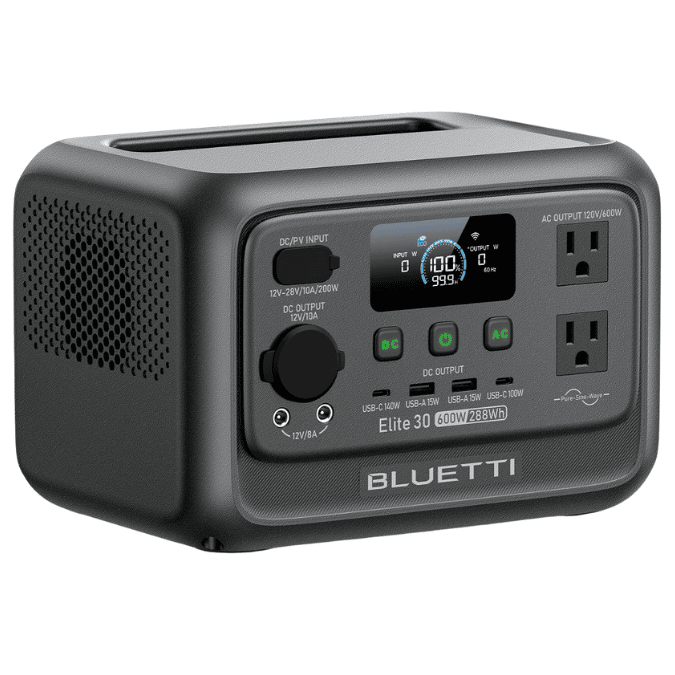
The BLUETTI Elite 30 V2 is the most powerful compact option under $300 when AC output matters. It delivers 600W continuous power and a 1500W Power Lifting mode. That gives it more headroom than many small portable power stations built only for phones, laptops, and lights. It is still a 288Wh unit, so runtime is limited. But you get a lot of usable power in a small, easy-to-store package.
People use it for power outages, camping, and travel trailers. It also runs routers, broadband phone systems, TVs, fans, lamps, small fridges, Starlink, laptops, 12V devices, shed lights, tools, and CPAP backup. Users love the app, fast charging, quiet operation, compact footprint, and UPS-style backup. It is ideal for overnight backup when heat settings are reduced. Phone and internet routers stay online with no interruption during an outage.
The tradeoff is simple. The Elite 30 V2 gives you high output, not large capacity. It handles short bursts and small to moderate loads well. It is not a long-duration refrigerator backup or a whole-home solution. Small drawbacks include standby power drain when left on and no built-in LED light. Customer-service or warranty concerns appear in isolated cases. If you want the most AC power in a compact budget station, this is one of the strongest picks. Still, match it to realistic runtimes.
| Pros | Cons |
|---|---|
| Strong 600W AC output for a compact 288Wh power station | 288Wh capacity limits runtime for larger devices |
| 1500W Power Lifting mode gives more flexibility for select resistive loads | No built-in LED light for emergency nighttime use |
| Fast wall charging and useful 200W solar input | |
| Good for routers, CPAP, TVs, fans, lights, laptops, and short outage backup |
Best For: People who want the most AC output possible in a compact under-$300 portable power station for short outages, routers, CPAP backup, laptops, phones, fans, lights, TVs, camping, road trips, and small off-grid setups.
Skip If: You need overnight refrigerator backup, whole-home backup, long heater runtime, or a power station you can leave on for days without caring about standby drain.
Anker SOLIX C300 | Best Compact All-Rounder Under $300
Category: Compact portable power station for camping, travel, remote work, Wi-Fi backup, small electronics, and short blackout coverage.
Key Features:
- 288Wh LiFePO4 battery
- 300W AC output, 600W surge
- One 120W car socket
- Recharges to 80% in about 50 minutes from a wall outlet
- Built-in handle
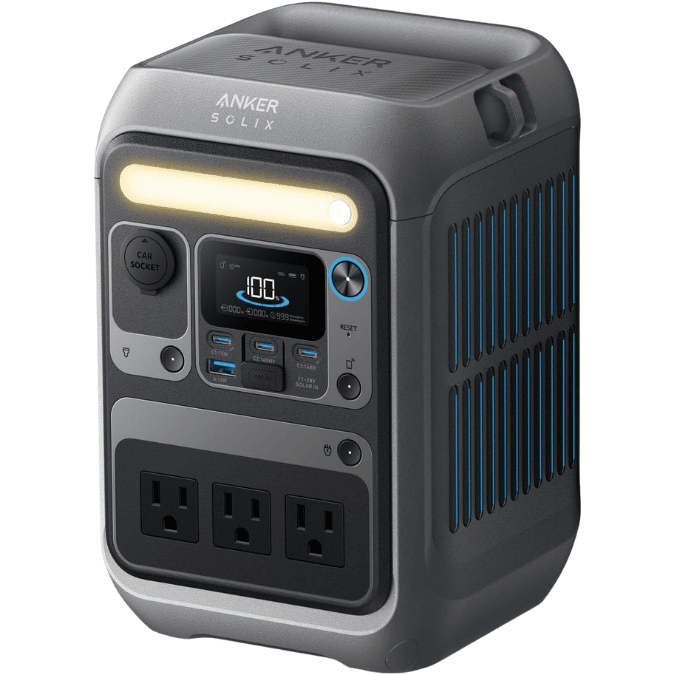
The Anker SOLIX C300 is one of the strongest portable power stations under $300. It suits anyone who wants a small, reliable unit from a brand people already trust. It is not a full home-backup system. But for camping, travel, laptops, phones, lights, cameras, drones, Starlink Mini, Wi-Fi routers, and short blackouts, it hits the sweet spot. It balances size, power, ports, and charging speed.
The C300 works well for laptops, home network equipment, camping lights, and phones. It also handles projector setups, fish tank equipment, portable coolers, and Starlink Mini. Laptops only drop the unit from 100% to ~60% after two hours. Lighter home network gear uses about 20% in two hours. That makes it practical for keeping essentials online during a short outage. It also suits working outside or charging multiple devices off-grid without carrying a large battery box.
The main weakness is capacity. At 288Wh, the Anker SOLIX C300 is built for small and moderate loads. It is not for kettles, air fryers, toasters, heaters, or long refrigerator backup. Solar charging may need manual reconnecting after low-light periods. UPS-style use can work. Still, sensitive desktop computers or network setups may be safer behind a dedicated UPS. For most people, though, this is a compact, fast-charging, easy-to-use power station. It feels more capable than its size suggests.
| Pros | Cons |
|---|---|
| Compact and easy to carry for camping, travel, and emergency kits | 288Wh capacity is limited for large appliances or long outages |
| Strong port selection with three AC outlets, USB-C, USB-A, and car socket | Not ideal for high-watt appliances like kettles, air fryers, heaters, or toasters |
| Fast wall charging and useful 140W USB-C support | |
| Good for laptops, routers, phones, lights, Starlink Mini, and small devices |
Best For: Users who want a compact under-$300 portable power station for camping, remote work, phones, laptops, drones, cameras, Wi-Fi router backup, Starlink Mini, small lights, and short emergency power.
Skip If: You need to run high-watt kitchen appliances, power a refrigerator for many hours, or use it as your only backup for sensitive desktop computer equipment without a dedicated UPS.
EF ECOFLOW RIVER 3 Plus | Best Expandable Mini Power Station
Category: Compact expandable portable power station for camping, routers, security cameras, home office backup, small fridges, phones, laptops, fans, lights, and short emergency power.
Key Features:
- 286Wh LiFePO4 battery
- 600W AC output
- Up to 1200W X-Boost output
- Expandable up to 858Wh with an extra battery
- 1-hour AC fast charging
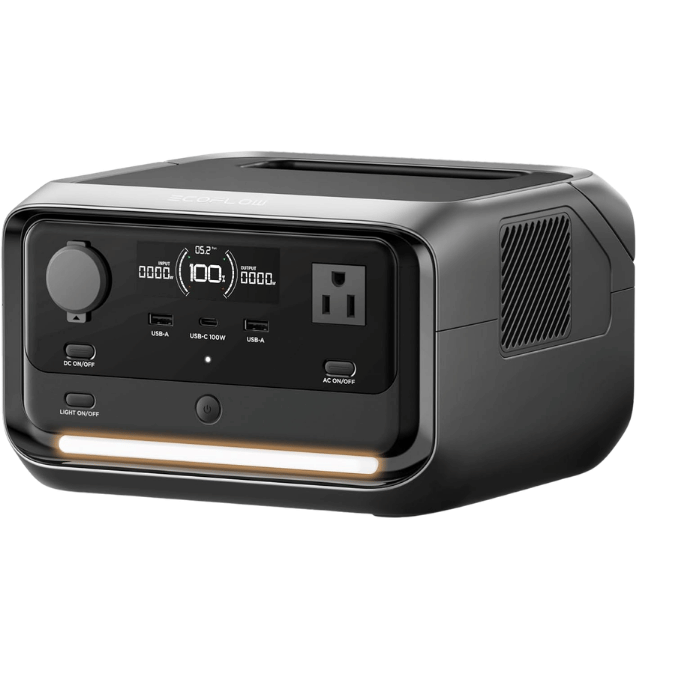
The EF ECOFLOW RIVER 3 Plus is the best under-$300-style pick if you want a compact power station that can grow later. Its 286Wh battery is still small. But the 600W AC output, three outlets, fast charging, UPS mode, and optional expansion battery add flexibility. That makes it more versatile than most mini power stations in this size class. It is a smart choice if you want a small unit now but may need more runtime later.
In real-world use, it delivers strong results for Wi-Fi routers, security cameras, phones, tablets, and laptops. It also handles TVs, fans, small lights, 12V coolers, and home office backup. It can power an AT&T gateway and Asus router for nearly 9 hours at a 26W combined draw. During short outages, it can also back up internet, TV, Fire Stick, DVD player, and a light. Users praise the quiet operation, app controls, and fast charging. They also like that it restores AC output after power returns when the correct setting is enabled.
The main drawback is runtime, not output. A 286Wh battery handles many small and medium loads. But refrigerators, CPAP machines with humidifiers, heaters, and other higher-draw devices can drain it quickly. X-Boost can mislead you if you expect long runtime from high-watt devices. The USB-C setup might be limited, and DC5521 ports can be missing. For routers, laptops, fans, coolers, and short backup needs, it is a strong fit. The RIVER 3 Plus is one of the most feature-rich compact power stations in this price range.
| Pros | Cons |
|---|---|
| Expandable from 286Wh up to 858Wh with an extra battery | 286Wh base capacity is limited for long outages |
| Strong 600W AC output with three outlets in a compact body | X-Boost can drain the battery quickly and should not be treated like true long-term 1200W power |
| Excellent UPS-style features for routers, security cameras, and home office gear | |
| Fast 1-hour AC charging, quiet operation, and useful app controls |
Best For: Users who want a compact expandable power station for routers, security cameras, laptops, phones, fans, small lights, 12V coolers, camping, weekend trips, and short home backup.
Skip If: You need overnight CPAP runtime with humidifier, long refrigerator backup, heavy appliance use, or a simple low-cost unit without app settings and expansion options.
EF ECOFLOW RIVER 3 with 45W Solar Panel | Best Solar Starter Kit
Category: Compact solar generator kit for camping, RV trips, short blackouts, small electronics, Wi-Fi backup, lights, tablets, laptops, and low-watt outdoor power.
Key Features:
- 245Wh LiFePO4 battery
- 300W AC output
- Up to 600W X-Boost output for select devices
- 45W portable solar panel included
- USB-A, USB-C, AC, and 12V DC output options
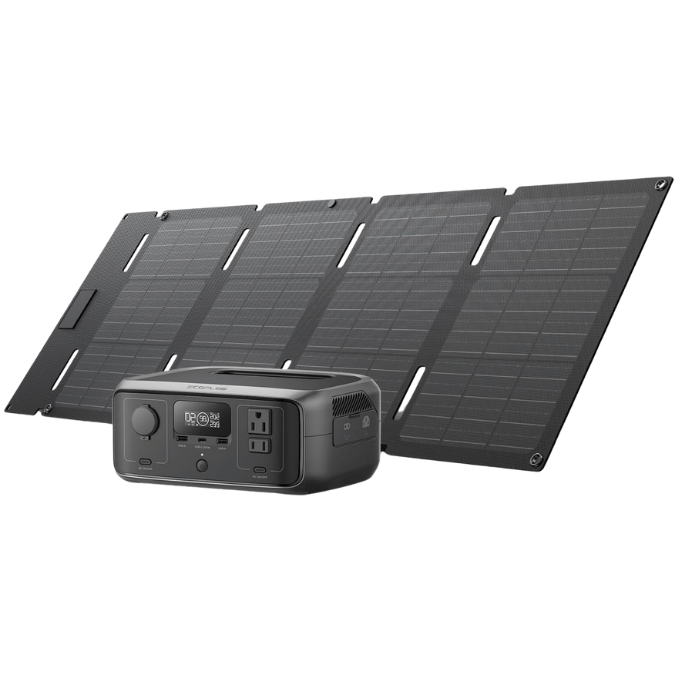
The EF ECOFLOW RIVER 3 with 45W Solar Panel is the most complete starter bundle in this lineup. You get a small portable power station and a solar panel in one package. It includes a 245Wh LiFePO4 battery, 300W AC output, fast wall charging, and UPS-style backup. That is enough output for phones, tablets, laptops, lights, fans, routers, small TVs, and other low-watt devices. Use it on camping trips or during short power outages.
In real-world use, users like the River 3 itself more than the included 45W panel. They praise the power station as compact, light, easy to set up, and quick to charge from the wall. It also proves useful during blackouts, camping, and RV use. Other uses include fish tank backup, ham radio use, 12V fridge support, and small-device charging. The app helps with monitoring. The unit is easy enough for first-time power station buyers.
The biggest weakness is the solar panel. The 45W panel works. But it might produce far less than 45W in real conditions. Poor angles, passing clouds, and partial shade all cut output. That makes this kit a light solar backup bundle, not a serious solar recharging setup. If solar charging is a major priority, pair the River 3 with a larger compatible solar panel. Do not rely only on the included 45W panel.
| Pros | Cons |
|---|---|
| Includes both the River 3 power station and a 45W solar panel in one starter kit | The 45W solar panel can be slow and inconsistent in sunlight |
| Fast 1-hour wall charging makes it easy to top up before a trip or storm | The 45W panel might produce less power |
| Compact and lightweight for camping, RVs, road trips, and short blackout use | |
| Good for phones, laptops, lights, Wi-Fi, fish tanks, and small electronics |
Best For: Users who want a ready-to-use solar generator starter kit for camping, RV travel, lights, phones, laptops, tablets, Wi-Fi routers, fish tank backup, small TVs, and short emergency power.
Skip If: You need dependable solar charging every day, want to run high-watt appliances, or expect this small 245Wh unit to power a refrigerator, heater, kettle, microwave, or full home backup setup.
Anker SOLIX C200 DC | Best Lightweight DC-Only Power Station Under $300
Category: Compact DC-only portable power station for USB-C laptops, phones, tablets, cameras, drones, Starlink Mini, small fans, LED lights, camping, travel, and light emergency backup.
Key Features:
- 192Wh LiFePO4 battery
- 200W total DC output
- One 140W two-way USB-C fast charging port
- Five total device charging ports
- Recharges to 80% in about 1.3 hours with a 140W USB-C charger
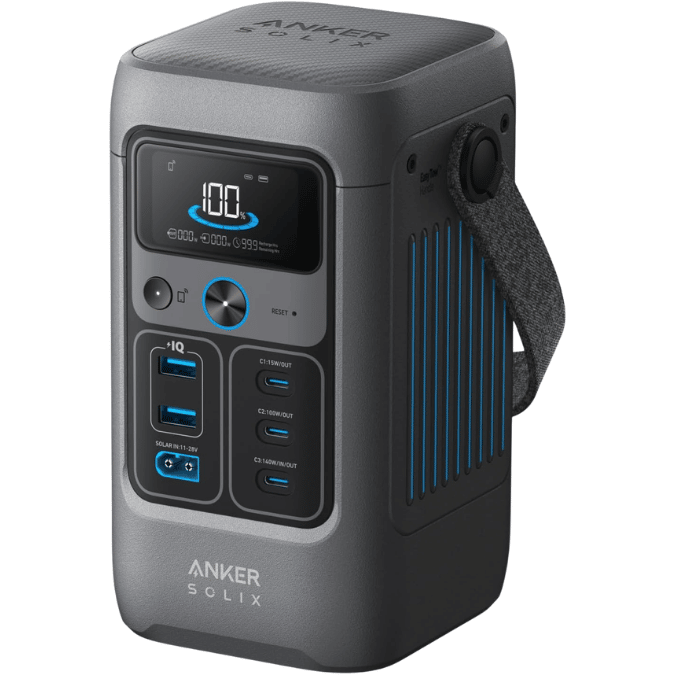
The Anker SOLIX C200 DC is the best pick here for USB-C and DC-powered gear. It is not for household plug-in appliances. It is smaller and lighter than most AC portable power stations. It still gives you a 192Wh LiFePO4 battery, high-watt USB-C output, and solar charging support. That is enough capacity for phones, tablets, cameras, drones, lights, small fans, and USB-C laptops.
In real-world use, it is ideal for camping, travel, daily mobile work, and small emergencies. It also suits Starlink Mini, gaming handhelds, phones, tablets, drones, and cameras. It works as a strong “top-up” battery for long trips and outages. Starlink Mini users report around 6 to 8 hours of use with the right USB-C adapter. It also helps if you want one larger, longer-lasting battery instead of several smaller power banks.
The catch is simple. This is not an AC power station. You cannot plug in a TV, kettle, mini fridge, CPAP AC adapter, projector with a wall plug, or normal home appliance. The exception is a device that runs from USB-C or another supported DC connection. The missing wall charger is also a concern. You need a compatible USB-C wall charger to recharge it properly. For the right user, though, the C200 DC is a clean, compact, long-life power bank station. It makes more sense than a bulky AC unit.
| Pros | Cons |
|---|---|
| Compact and light enough for travel, camping, fishing, hunting, and everyday carry | No AC outlet, so it cannot run normal plug-in appliances |
| Strong USB-C setup for phones, tablets, laptops, drones, cameras, and Starlink Mini | Wall charger is not included |
| LiFePO4 battery gives better long-term cycle life than many basic power banks | |
| Good for small emergencies, road trips, and off-grid device charging |
Best For: Users who mainly need USB-C and DC power for phones, laptops, tablets, cameras, drones, gaming handhelds, Starlink Mini, lights, small fans, camping, travel, and short emergency use.
Skip If: You need AC outlets for household appliances, a CPAP with a wall adapter, a TV, a mini fridge, or anything that requires a standard 120V plug.
How We Chose These Budget Portable Power Stations
We chose these models for real-world use, not just attractive specs.
A budget portable power station should be easy to store, simple to carry, and safe to use indoors. It should also be powerful enough for the devices most users need during camping trips or short outages.
Our main selection factors started with availability, price history, and lithium battery chemistry. Next came watt-hours, AC wattage, USB-C PD support, and recharge time. Brand reputation, port layout, app controls, UPS-style features, weight, and feedback completed the list. We also looked at practical limits. A cheap power station can disappoint if you expect it to run a heater, air fryer, kettle, or full-size refrigerator overnight.
At this price, LiFePO4 battery chemistry is a major advantage. It usually costs more than older lithium-ion designs. But it can offer a much longer cycle life. That matters if you keep a power station in an emergency kit for years. You will not replace it after a few seasons.
What Can a Portable Power Station Under $300 Actually Run?
A portable power station under $300 usually works best for small electronics and light emergency loads. Most good options in this range sit between 192Wh and 288Wh. That is enough for phones, tablets, laptops, Wi-Fi routers, LED lamps, small fans, drone batteries, cameras, and some Starlink Mini setups.
However, this category has limits.
A 250Wh to 300Wh unit can run a low-watt router for several hours. A heater or kettle can drain it in minutes or overload it instantly. A CPAP may work if the humidifier is off. But runtime depends heavily on the exact machine, pressure setting, heated hose, and adapter type.
| Device | Realistic Under-$300 Use |
|---|---|
| Smartphone | Many recharges |
| Laptop | Several hours, depending on wattage |
| Wi-Fi router and modem | Often several hours |
| LED light | Long runtime |
| Small fan | Useful for short outages or tents |
| Drone batteries | Good for field charging |
| Camera gear | Very practical |
| Starlink Mini | Possible with the right model and cable |
| CPAP without humidifier | Possible, but test before relying on it |
| Full-size refrigerator | Usually limited and not the main use case |
| Heater, kettle, air fryer | Not recommended |
Therefore, the best portable power station under $300 is not the one with the loudest marketing claim. It is the one that matches your devices, wattage, and expected runtime.
Does your device list include a router, laptop, fan, CPAP, or fridge? Check your exact runtime before purchasing. Do not trust the box estimate.
How Much Power Station Wh Do You Need?
Power station Wh means watt-hours. In simple terms, watt-hours tell you how much energy the battery can store. A higher Wh number usually means longer runtime. Output wattage still matters, though. Some appliances need more power than the inverter can supply.
The basic runtime formula is simple:
Runtime = usable watt-hours divided by device watts
In practice, you should subtract some capacity for inverter loss, heat, standby drain, and battery protection. So, a 288Wh portable power station will not always deliver the full 288Wh to your device.
Still unsure about size? A 288Wh power station suits phones, routers, lights, and laptops. It may disappoint if you add a fan, CPAP, or fridge. Use our Portable Power Station Calculator to estimate runtime before you purchase.
A 25W router setup may run for many hours on a 288Wh unit. A 60W laptop may run for a few hours. A 10W LED lamp can last much longer. However, a 500W appliance can drain the same battery very quickly, even if the power station can start it.
This is why watt-hours matter more than mAh in this category. Some listings promote large mAh numbers. But Wh gives a clearer view of real energy storage across different voltages.
Many people get stuck here. Understand the difference between 1000W and 2000W portable power stations before assuming a bigger watt number means longer runtime.
What Is the Best Portable Power Station for Home Under $300?
The best portable power station for home under $300 is a light backup unit for essentials. It is not a whole-home system. It should keep your modem, router, phone, tablet, laptop, lamp, small fan, or security camera running during short outages.
For home use, prioritize AC outlets, UPS-style backup, and LiFePO4 chemistry. Add app monitoring, fast wall charging, and enough USB-C PD power for laptops. Also check whether the AC outlets restart automatically after a full battery drain. This matters if you plan to power network equipment.
Need to run a refrigerator for many hours, power medical gear overnight, or cover multiple rooms? Move up to a larger power station. Under $300 is useful. But it is not the right range for serious whole-home backup.
Is your goal refrigerator backup, medical equipment, multiple rooms, or longer outages? Step up to a real home backup power station. Do not force a small battery to do a big job.
What Is the Cheapest Portable Power Station Worth Buying?
The cheapest portable power station worth buying is not always the lowest-priced model on the marketplace. Ultra-cheap units often cut corners. Battery chemistry, inverter output, port quality, recharge speed, warranty support, and real usable capacity all suffer.
A good cheap power station should still have a reliable lithium battery and a clear watt-hour rating. It needs enough output for your devices, safe charging options, and a brand with support. Otherwise, the cheaper unit costs more when it fails early. It also costs more if it cannot run what you bought it for.
For most users, the smarter target is value, not the lowest sticker price. A slightly better model can make more sense over several years. Look for LiFePO4 chemistry, faster recharge time, USB-C PD, and a stronger warranty.
Why Are Portable Power Stations So Expensive?
Portable power stations are expensive because they combine several costly parts in one compact box. The battery cells usually cost the most. But many other parts add to the price. These include the inverter, battery management system, USB-C PD hardware, solar charge controller, display, cooling system, app controls, safety protections, and warranty.
LiFePO4 models can cost more upfront, but they often last longer. In addition, better inverters and charge controllers improve safety, stability, and charging speed. That is why two power stations with similar Wh ratings can perform very differently in real life.
Compact size also adds engineering cost. Users want lightweight backup power that charges fast and runs quietly. It should support AC and USB-C, work with solar, and last for years. Packing all of that under $300 is difficult. That is why this category requires careful selection.
Portable Power Station vs Power Bank: Which One Should You Buy?
A power bank is better if you only need to charge phones, earbuds, tablets, or small USB devices. It is cheaper, lighter, and easier to carry every day.
A portable power station makes more sense when you need AC outlets or higher wattage. It also fits USB-C PD laptop charging, solar input, car charging, a flashlight mode, or emergency backup for home devices. It works better for camping, road trips, small fans, lights, routers, and camera gear.
| Feature | Power Bank | Portable Power Station |
|---|---|---|
| Phone charging | Excellent | Excellent |
| Laptop charging | Sometimes | Better with USB-C PD |
| AC outlets | Rare | Common |
| Solar input | Rare | Common |
| Camping use | Light use | Better |
| Router backup | Limited | Better |
| Small appliances | No | Sometimes |
| Weight | Lighter | Heavier |
| Price | Lower | Higher |
So, if your needs stop at phone charging, buy a good power bank. However, if you want emergency power for mixed devices, a compact power station is the better tool.
Best Use Cases for a Portable Power Station Under $300
A portable power station under $300 works best when you keep the load small. For camping, it can run lights, phones, cameras, a small fan, a laptop, or a 12V cooler for limited periods. For remote work, it keeps a laptop and phone going when no outlet is nearby.
For blackouts, it can keep communication devices online. That includes your phone, tablet, router, modem, and a small lamp. This matters more in the U.S. as storms, heat waves, and grid stress continue. Backup planning is now more practical for many households.
For drones and cameras, the category is especially strong. Most field creators do not need a 1,000Wh power station just to top up batteries. A compact unit with USB-C PD and AC outlets can be enough. It covers a day trip, short shoot, or weekend setup.
For Starlink Mini, choose carefully. Some DC-only models work well with the right cable and adapter. AC models give more flexibility. Still, always test the setup before depending on it in a remote location.
What to Avoid When Buying a Cheap Power Station
Avoid choosing only by mAh. Watt-hours give a clearer view of stored energy. Also, do not assume X-Boost or power-lifting modes mean long high-watt runtime. These modes can drain a small battery very fast.
Watch for weak solar bundles. A small 45W panel can help maintain charge. But it may take many hours to recharge a station in real sunlight. Shade, clouds, angle, and season all reduce solar output.
Also, do not buy a DC-only unit if you need AC outlets. This sounds obvious, but many compact “power station” listings look similar. Check the ports before you buy.
Finally, do not expect a budget portable power station to act like a gas generator. Battery stations are quiet and safe indoors. But they store limited energy. Gas generators produce more long-duration power. They must stay outside because of carbon monoxide risk.
Final Verdict
The best portable power station under $300 depends on what you need to power.
Choose the BLUETTI Elite 30 V2 if you want the strongest compact AC output. Choose the Anker SOLIX C300 if you want the safest all-round pick. It suits camping, laptops, routers, and short outages.
Choose the EF ECOFLOW RIVER 3 Plus if you want an expandable mini station with strong UPS-style features. Choose the EF ECOFLOW RIVER 3 with 45W Solar Panel if you want a beginner-friendly solar starter kit. Choose the Anker SOLIX C200 DC if you only need USB-C and DC charging in a lighter package.
For most homes, an under-$300 power station is best for small essentials and short-term backup. It can be a smart emergency tool. But it should not replace a larger home-backup power system.
FAQs
What is the best portable power station under $300?
The best portable power station under $300 is the one that matches your devices. For most users, a 250Wh to 300Wh LiFePO4 model offers the best balance of value and usefulness. Look for AC outlets, USB-C PD, fast charging, and compact weight.
Which portable power station is the best for the money?
The best portable power station for the money usually combines a LiFePO4 battery, useful AC output, and USB-C PD. It also offers fast recharge time and a reliable brand. A cheaper unit can look attractive. But weak output or poor battery life can reduce its real value.
What is the cheapest portable power station worth buying?
The cheapest portable power station worth buying should list its Wh rating clearly. It should include safe charging options and support the devices you need. Avoid no-name models that rely only on large mAh claims without clear watt-hour, output, and warranty details.
Can a portable power station under $300 run a refrigerator?
A portable power station under $300 can sometimes run a small fridge or 12V cooler for a limited time. It usually will not run a full-size refrigerator overnight. For refrigerator backup, a larger battery is normally the better choice.
Can a portable power station under $300 run a CPAP?
Some under-$300 power stations can run a CPAP without humidifier for part of the night. Runtime varies by machine and settings. Heated humidifiers and heated hoses use much more power. Always test your CPAP setup before relying on it during an outage.