Mid-level portable power stations can handle more than phones and a camping lantern. This price range includes LiFePO4 batteries, fast wall charging and useful AC outlets. Solar input and app control are also available.
Some provide enough watt-hours for Wi-Fi, laptops, lights and fans during short outages. CPAP machines and small fridges are also potential loads.
However, the best choice depends on your devices, not the biggest number.
Know which devices you want to run? Take 60 seconds to check your real runtime before choosing a size.
I compare the best portable power stations under $500 and explain common buying mistakes.
What Is the Best Portable Power Station Under $500 in 2026?
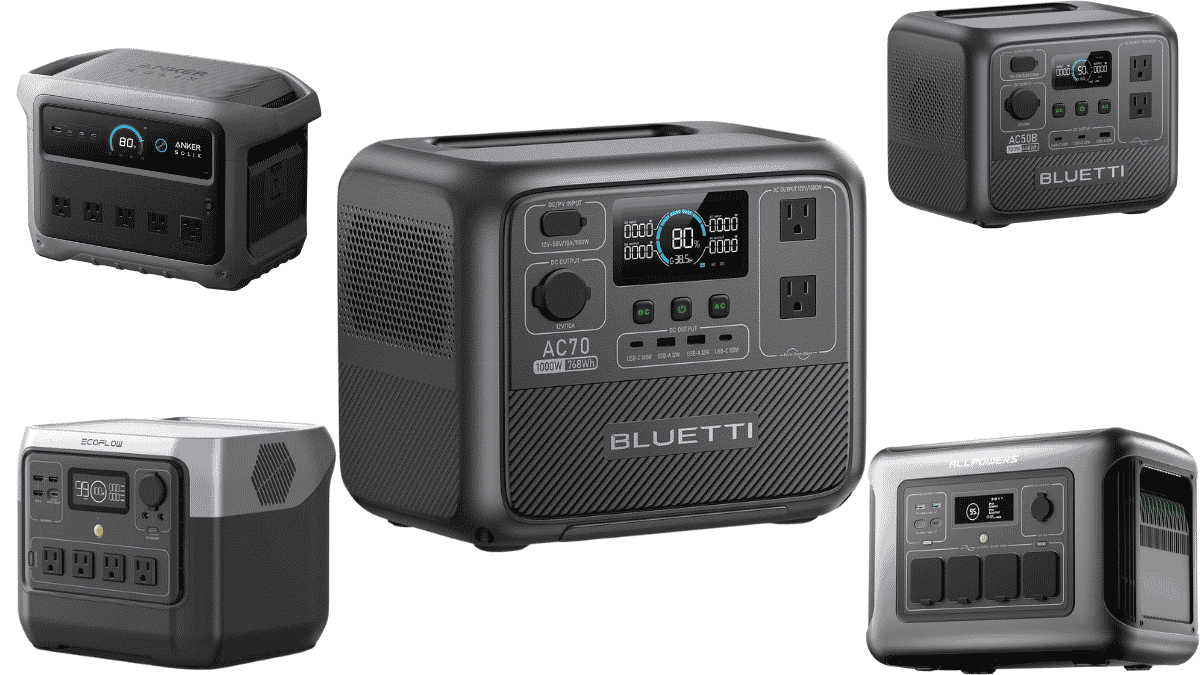
The BLUETTI AC70 is my best portable power station under $500 for most users. It balances 768Wh capacity, 1000W AC output and LiFePO4 battery life. Fast charging, useful ports and a practical size add to its appeal.
It fits camping, road trips, Wi-Fi backup, remote work and short home outages. You avoid stepping up to a heavier or more expensive station.
That said, not everyone needs the same setup. So our review includes five different picks, all covering various needs.
The Anker SOLIX C1000 Gen 2 is the high-output pick.
The EcoFlow RIVER 2 Pro is the proven EcoFlow option.
The BLUETTI AC50B is the compact value pick.
The ALLPOWERS R1500 LITE is the big-spec budget wildcard.
Top Portable Power Stations Under 500
This table gives you a quick view before we go into the full reviews.
| Product | Capacity | AC Output | Battery Type | Best For | Main Limitation | Pricing |
|---|---|---|---|---|---|---|
| BLUETTI AC70 | 768Wh | 1000W | LiFePO4 | Best overall value | Real AC usable capacity is lower than rated capacity | See price here |
| Anker SOLIX C1000 Gen 2 | 1024Wh | 2000W | LiFePO4 | Highest output under $500 | Usually sits close to the $500 ceiling | See price here |
| EcoFlow RIVER 2 Pro | 768Wh | 800W | LiFePO4 | Proven EcoFlow reliability | Less inverter power than newer rivals | See price here |
| BLUETTI AC50B | 448Wh | 700W | LiFePO4 | Compact camping and small backup | Not enough capacity for longer outages | See price here |
| ALLPOWERS R1500 LITE | 1056Wh | 1600W | LiFePO4 | Budget 1kWh value | A few support concerns | See price here |
Need something smaller for phones, laptops, lights, routers, and weekend trips? Our best under-$300 portable power stations may be a better fit.
Best Portable Power Stations Under $500 Reviewed
Here are the best portable power stations under $500.
BLUETTI AC70 Portable Power Station | Best Overall Value Under $500
Category: A strong mid-size option under $500 for camping, road trips and Wi-Fi backup. Also suitable for light home outages and everyday emergency power.
Key Features
- 768Wh LiFePO4 battery capacity
- 1000W AC output with 2000W power lifting mode
- 100W USB-C port for laptops, tablets, and fast device charging
- XT-60 solar input connection for more reliable solar charging
- App control through Bluetooth
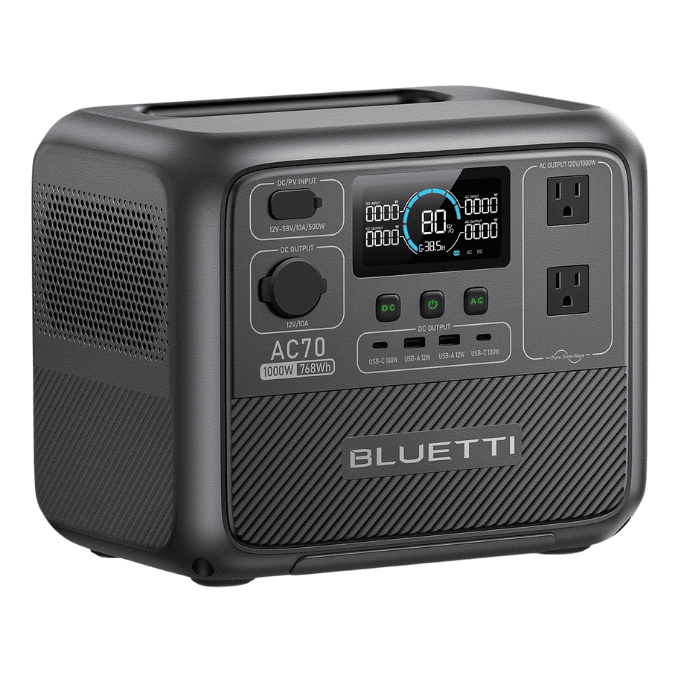
I rate the BLUETTI AC70 among the strongest options under $500. It balances capacity, inverter power, LiFePO4 battery life and fast charging. This mix makes it useful during outages. It is not just a phone-and-laptop battery. Its 768Wh capacity and 1000W AC output support more demanding loads. It can handle router setups, desktop workstations, TVs, lights and small fridges.
Other possible loads include CPAP machines, outdoor sound setups and basic camping appliances.
I value its fast charging, quiet operation and easy setup. A bright display and Bluetooth app control add convenience. Dependable backup performance is another strength. It suits outages, camping trips, outdoor events, CPAP backup and road travel. Backyard movie nights are another good fit. Its UPS-style backup suits Wi-Fi routers, fiber terminals and brief grid interruptions. Fast switching can keep many low-power devices running without disruption.
The biggest thing to understand is usable runtime. As with most stations, the 768Wh rating describes battery capacity. It does not guarantee that much AC energy at the wall. Inverter loss, depth-of-discharge limits and the unit’s own consumption reduce usable AC energy. Depending on the load, this may fall into the mid-400Wh to upper-500Wh range.
That does not make the AC70 a bad purchase. I consider it a strong light-to-medium backup station. It is not a full-home power solution.
| Pros | Cons |
|---|---|
| Strong 768Wh capacity for the under-$500 range | Real AC usable capacity is lower than the 768Wh battery rating listed |
| 1000W AC output handles more than basic device charging | Around 25 lb, so it is portable but not ultra-light |
| Fast charging and good solar input support make it practical for outages and camping | |
| Quiet operation, clear display, app control, and UPS-style use add real convenience |
Best For: Campers, road-trippers, remote workers, CPAP users, musicians and homeowners. I recommend it for reliable under-$500 backup during short outages. Suitable loads include Wi-Fi, laptops, lights, TVs and small fridges. It offers more backup ability than a small 300Wh station. You avoid moving up to a heavier 1kWh-plus unit.
Check your expected runtime before relying on the AC70 for outage backup. Enter your router, laptop, lights and small fridge into our Portable Power Station Calculator.
Skip If: You need long refrigerator runtime, whole-home backup or heavy appliance support. Also skip it for several days of emergency power without recharging. It is a mid-size station, not a compact power bank. It also falls short if you need very lightweight gear for hiking. Tight car-packing situations may call for something smaller.
Anker SOLIX C1000 Gen 2 Portable Power Station | Best High-Output Pick Under $500
Category: Maximum power under $500 for home backup, remote work and camping. Also suited to CPAP use, fridge backup and short emergency outages.
Key Features
- 1,024Wh LiFePO4 battery capacity
- 2,000W AC output with 3,000W peak power
- Full recharge in about 49 minutes with HyperFlash charging
- 10 total output ports for appliances, laptops, phones, routers, and camping gear
- Two high-output USB-C ports for laptops and fast device charging
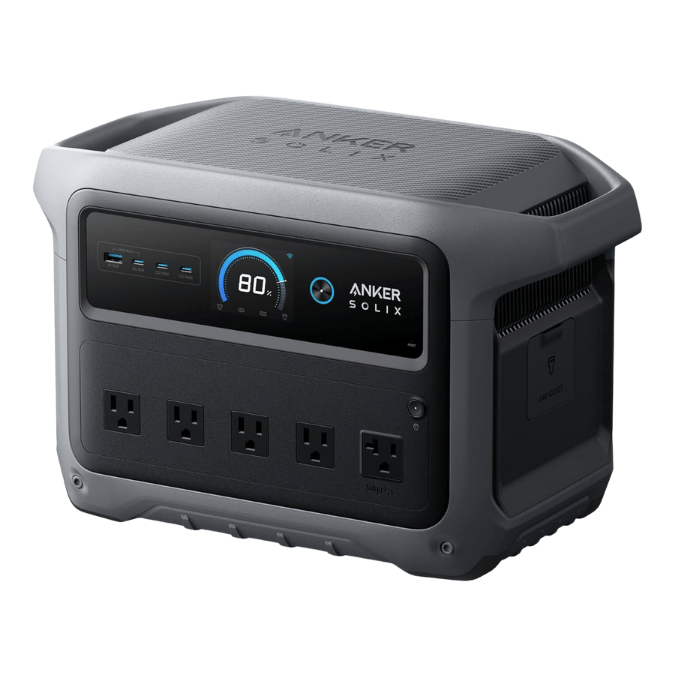
I rate the Anker SOLIX C1000 Gen 2 among the strongest under-$500 options. It pairs true 1kWh-class capacity with a 2,000W inverter. That combination makes it more capable than many budget mid-size units.
It is my top under-$500 pick for real backup power. Choose it when output power matters as much as battery size. Its main strengths are charging speed, high output, app control and backup reliability. Suitable uses include CPAP machines, full-size refrigerators, Starlink Mini and Wi-Fi routers. It also suits work desks, mini PCs, NAS equipment and laptops.
Other uses include fans, lights, camping appliances, electric blankets and tools. Fast recharging helps recover a large part of the battery during longer outages. Charging options include wall power, solar, a vehicle outlet and a small generator.
The main downside is its 1,024Wh capacity. This is not a whole-home battery. Heavy appliances, heaters, air conditioners, kettles and cooking gear can drain it quickly. That remains true even when the inverter can start or run them. Other drawbacks include app/account dependency, missing app notifications and cable storage issues. There is also no simple add-on battery path.
I see the C1000 Gen 2 as powerful portable backup for short outages. It cannot fully replace a large solar generator or gas generator.
| Pros | Cons |
|---|---|
| 1,024Wh capacity gives stronger backup runtime than smaller under-$500 units | Heavy loads can drain the battery quickly despite the strong inverter |
| 2,000W output and 3,000W peak power handle more appliances and tools | App features may require account setup and are not ideal for every offline-use buyer |
| 49-minute fast charging is excellent for outages, camping, and van life | |
| Strong UPS-style use for routers, workstations, CPAP machines, NAS gear, and fridge backup |
Best For: Homeowners, remote workers, campers, van-life users and emergency-prep users. CPAP and Starlink users may also want this high-output 1kWh station under $500. It suits short-outage support for a fridge, router, laptop setup, lights or fan. Medical devices are another use case.
Skip If: you need multi-day whole-home backup, expandable battery capacity, or a simple no-app experience. Also skip it if lightweight portability is your main priority. It is compact for its power class. However, smaller camping-focused power stations weigh less.
EcoFlow RIVER 2 Pro Portable Power Station | Best Proven EcoFlow Pick Under $500
Category: A trusted, compact, fast-charging option under $500. It suits camping, Wi-Fi backup, remote work, RV use and light home outages.
Key Features
- 768Wh LiFePO4 battery capacity
- 800W AC output with X-Boost support up to 1600W
- Four AC outlets for household devices and camping gear
- 70-minute fast AC charging
- 220W max solar input
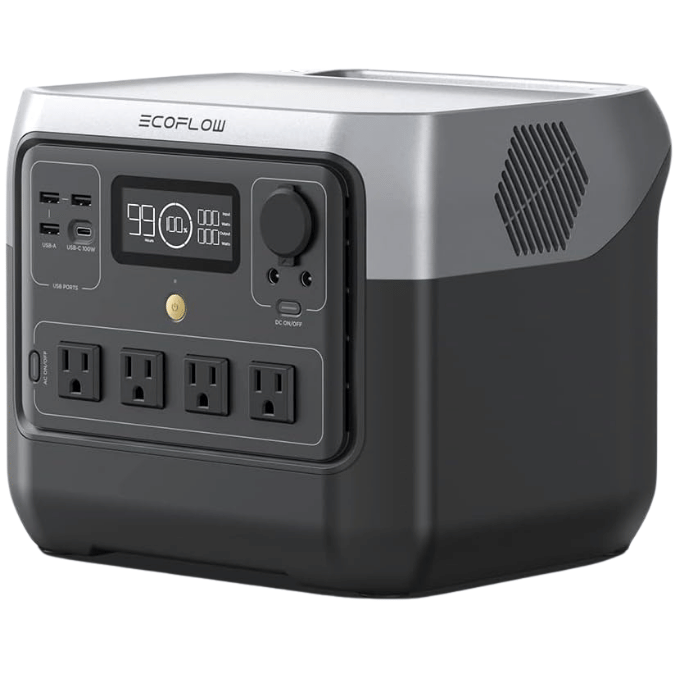
I consider the EcoFlow RIVER 2 Pro a practical option under $500. It balances portability, brand trust, fast charging and useful backup power. It pairs a 768Wh battery with 800W AC output. That is less power than a 2,000W unit offers. It can support laptops, routers, lights, fans, phones, cameras and small TVs. Other uses include CPAP machines, Starlink-style setups and some low-to-moderate appliance loads.
Its strengths include charging speed, easy app control, compact size and everyday reliability. It suits camping, remote work, music gigs and kids’ rooms during outages. Internet backup, CPAP support, portable fridges, outdoor events and small solar setups also fit. It is easier to carry than larger Delta-style units. That helps when moving between the house, car, campsite, RV, garage or backyard.
The main limitation is runtime under heavier loads. The RIVER 2 Pro can power useful devices. X-Boost can help with some high-wattage appliances. However, this 768Wh station is not a full home backup system. Refrigerators, heaters, freezers, sump pumps and cooking appliances can drain it much faster. Phones, routers, lights and laptops use less power.
Other concerns include customer service frustration, app dependence and fast-charging fan noise. There is only one USB-C port. I would choose it for light-to-medium backup. It is less suited to buyers prioritizing maximum power per dollar.
| Pros | Cons |
|---|---|
| Fast 70-minute AC charging is excellent for outages, camping, and frequent use | 800W output is lower than some newer under-$500 competitors |
| Lightweight 768Wh design is easier to move than many larger power stations | Customer service and app-related complaints |
| Strong real-world use for Wi-Fi backup, CPAP, laptops, lights, fans, and camping gear | |
| EcoFlow app control, four AC outlets, and 100W USB-C make it very convenient |
Best For: Campers, RV users, remote workers, families and CPAP users. Event vendors, musicians and homeowners may also prefer this compact under-$500 station. It comes from a well-known brand. Choose it for fast charging, portability and reliable light backup. Maximum inverter power is not its main advantage.
Skip If: You mainly need heavy-appliance support, long refrigerator runtime or whole-home backup. High-output tools are another reason to look elsewhere. Also skip it if you want the strongest specs under $500. Newer 1kWh and 2,000W-class models may offer more output at similar sale prices.
BLUETTI AC50B Portable Power Station | Best Compact Value Pick Under $500
Category: A lighter, easier-to-carry option under $500 for camping and road trips. It also suits CPAP backup, Wi-Fi backup, small appliances and short outages.
Key Features
- 448Wh LiFePO4 battery capacity
- 700W AC output with 1000W power lifting mode
- Two AC outlets for small appliances and electronics
- 0–80 % fast charging in about 45 minutes
- USB-C fast charging support for phones, tablets, and laptops
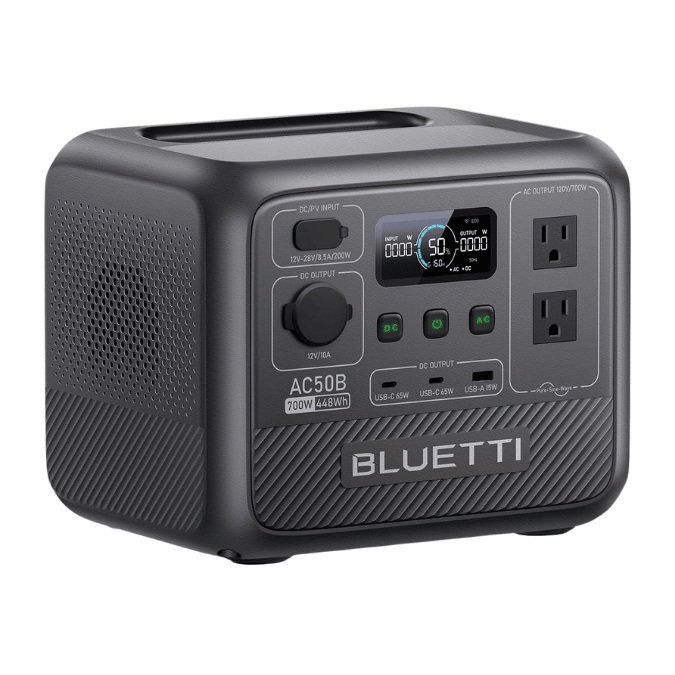
I consider the BLUETTI AC50B one of the strongest compact options under $500. It fills the gap between a small power bank and heavier home-backup units. You get 448Wh capacity and 700W AC output in a weekend-friendly size. Possible loads include light appliances, laptops, routers, CPAP machines, camp lights and fans. Tablets, phones and portable fridge setups are other uses.
The AC50B appeals to campers, road-trippers, storm-prep users, Starlink users and CPAP users. It also suits people wanting small emergency backup at home. Standout features include fast recharging, a readable display, app control and solid build. Its size remains manageable. You can pair it with a 100W or 120W solar panel while camping.
It suits Wi-Fi backup, fans during hot outages and outdoor sound systems. Camera batteries, beach trips and short power failures are other good uses.
The limitation is simple: this is a compact 448Wh unit, not a long-runtime backup station. It can run useful devices. Power Lifting helps with some resistive loads. It is not ideal for kettles, crockpots, large heaters or heavy motors. Long refrigerator runtime and whole-home outage coverage are also poor fits.
Efficiency loss and standby drain can reduce runtime. Depending on the load, you may need to recharge after several hours. I would buy it with those limits in mind.
| Pros | Cons |
|---|---|
| Lightweight, compact design is easier to carry than larger 700Wh to 1kWh units | 448Wh capacity limits runtime for fridges, cooking appliances, and longer outages |
| 700W output with 1000W power lifting gives more flexibility than many small stations | Not ideal for kettles, crockpots, large heaters, or heavy startup loads |
| Fast 0–80 % charging makes it practical for frequent camping and emergency use | |
| Strong fit for CPAP, Wi-Fi, phones, laptops, fans, lights, Starlink, and road trips |
Best For: Solo campers, weekend travelers, CPAP users, road-trip users and storm-prep households. It suits anyone wanting a compact under-$500 station for small essentials. Choose it when portability, fast charging and easy setup matter more than maximum capacity.
Skip If: You need long fridge runtime, whole-home backup or heavy appliance support. Multi-day outages without solar or car charging are another poor fit. Also skip it for high-wattage kitchen appliances or heaters. It is unsuitable for running several large devices at once.
ALLPOWERS R1500 LITE Portable Power Station | Best 1kWh Budget Wildcard Under $500
Category: The biggest-looking specs under $500, including a 1kWh LiFePO4 battery. Strong AC output and fast charging suit camping, RVs, parties and short home outages.
Key Features
- 1056Wh LiFePO4 battery capacity
- 1600W AC output with 3200W peak power
- 100W USB-C output for laptops and fast device charging
- 15ms UPS-style backup support
- Fast AC charging with up to 1200W AC input
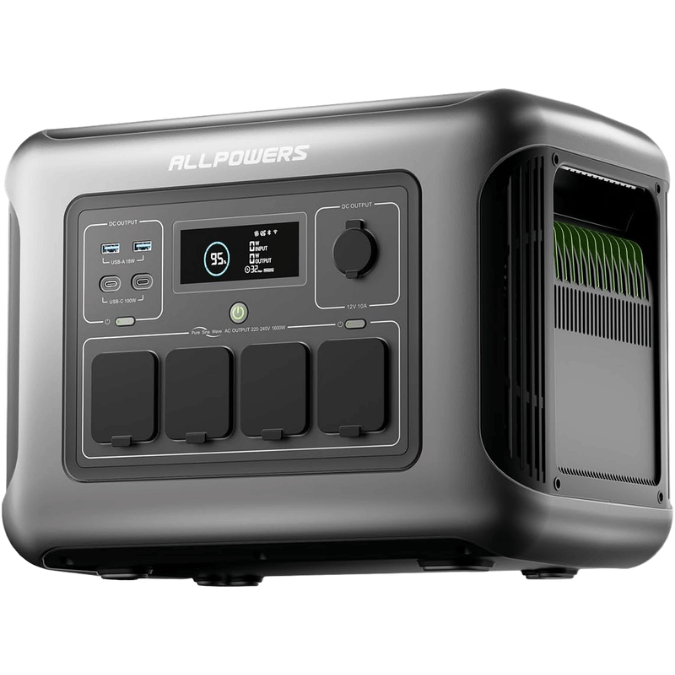
I see the ALLPOWERS R1500 LITE as this list’s most aggressive value pick. It offers a 1056Wh battery and 1600W AC output for under $500. Many similarly priced competitors offer less capacity or inverter power. Its watt-hours and output look attractive on paper. It can suit camping, RV use, parties, light home backup and fridge backup. Other uses include laptops, routers, fans, lights and short outages.
Its strengths include power per dollar, fast charging, quiet operation and UPS-style use. It can also run multiple devices during outages. It suits outages in high-fire areas, travel trailers, overlanding and office backup. Other uses include fridges, internet equipment, laptops, lights, electric blankets and home emergencies.
I would consider it for more capability than compact 448Wh or 768Wh units. It offers that step up without premium-brand pricing.
The honest warning is that this is the riskiest pick in the group. There can be reliability failures, app setup issues, customer support frustration, return problems, and safety concerns. There might also be some issues with sensitive electronics and the AC waveform quality. So this is not the safest overall recommendation.
Still, it belongs in this list because it’s a high-spec budget wildcard.
| Pros | Cons |
|---|---|
| Strong 1056Wh capacity for the under-$500 category | Smaller review base and weaker brand trust than Anker, EcoFlow, or BLUETTI |
| 1600W AC output and 3200W peak power give it serious appliance flexibility | Negative reviews raise reliability, support, app, and safety concerns |
| Fast AC charging and UPS-style backup improve real outage usefulness | |
| Very strong power-per-dollar value when priced below $500 |
Best For: Value-focused users seeking a 1kWh portable power station under $500. It offers output for fridges, laptops, routers, fans, lights and RV gear. Camping appliances and short outage backup are other uses. It appeals most when specifications matter more than buying from the most established brand.
Skip If: you want the safest, most proven, low-risk purchase. Also skip it if customer support, long-term reliability and app polish matter more. The same applies if sensitive-electronics confidence outweighs maximum capacity and output per dollar.
How We Chose These Portable Power Stations
We focused on real value within our $500 budget. Price alone did not decide our picks.
Low prices cannot compensate for weak output, poor battery chemistry or limited ports. Slow charging and repeated long-term owner complaints also reduce value.
Each pick had to suit camping, outages, road trips, remote work or RV use. Small emergency loads also mattered. Every pick also had to remain relevant to the under-$500 price bracket.
We looked at the following factors during our research:
- Availability, package, ratings and other product-related factors
- Battery capacity, AC output, inverter strength and port layout
- Recharge speed, solar input, LiFePO4 chemistry and pass-through charging
- Actual feedback and product weaknesses/drawbacks
This approach filters out products that disappoint in daily use. That includes models that look good in ads or sponsored sections.
The list suits under-$500 users who don’t want a $1,000 solar generator.
What Can a Portable Power Station Under $500 Actually Run?
Under $500, many stations can run phones, laptops, Wi-Fi routers and LED lights. Other common loads include fans, CPAP machines, camera batteries, tablets and small TVs. Starlink Mini, mini fridges and some small appliances are also possible loads.
However, runtime depends on watt-hours, device wattage and inverter efficiency. The number of connected devices matters, too.
For example, a router drawing 15 to 25 watts can run much longer. A refrigerator drawing 100 to 200 watts while cycling drains the battery faster.
A laptop may be easy to power all day. A kettle, heater, microwave or crockpot can drain a mid-size station quickly.
| Device | Typical Power Use | Under-$500 Expectation |
|---|---|---|
| Phone | 5 to 20W | Easy, many recharges |
| Laptop | 40 to 100W | Good for work sessions |
| Wi-Fi router | 10 to 30W | Strong outage use |
| CPAP machine | 30 to 90W | Often one night or more, depending on humidifier use |
| LED light | 5 to 20W | Very practical |
| Fan | 20 to 80W | Good for short outages |
| Mini fridge | 40 to 100W | Good with the right size station |
| Full-size fridge | 100 to 250W cycling | Possible, but runtime varies heavily |
| Starlink Mini | Around 25 to 60W | Good for camping and remote work |
| Kettle or heater | 800 to 1500W | Possible on some models, but drains fast |
Therefore, the best setup is not always the biggest one. A camper may prefer a lighter 448Wh unit. A homeowner may want 768Wh to 1024Wh for more outage flexibility.
How Many Watt-Hours Do You Need?
Watt-hours tell you how much energy a power station stores. Watts tell you how much power a device needs while running. Both numbers matter, but they answer different questions.
A simple runtime estimate looks like this:
Runtime = usable watt-hours ÷ device watts
A 768Wh station powering a 60W device suggests about 12.8 hours on paper. Actual AC runtime is usually lower.
The inverter uses energy, and the battery management system keeps reserve capacity. The station also consumes a small amount of power while running. A realistic DC estimate often uses 80% to 90% of the listed battery capacity. AC loads sometimes deliver less usable energy.
As a result, users should avoid planning based on perfect lab numbers. Instead, check the device wattage and leave a safety buffer.
For a home outage kit, 700Wh to 1000Wh is a useful target. For camping and phones, 300Wh to 500Wh can still work well. For a fridge, CPAP, router, and laptop together, a larger under-$500 model makes more sense.
500W, 700W, 1000W, or 2000W Output?
Output power tells you what the inverter can handle at one time. A station with enough watt-hours can still fail if the AC output is too low for the device.
An affordable 500W station can power phones, laptops, routers, lights and small fans. However, it may struggle with appliances that need higher startup power.
A 700W to 1000W station offers more flexibility for camping appliances. Other potential loads include CPAP machines, TVs, mini fridges and small cooking devices.
A 1600W to 2000W model gives the most headroom under $500. That kind of output can help with refrigerators, tools, electric blankets, coffee makers, and heavier campsite gear. Still, high-wattage devices drain batteries quickly, so strong output does not mean unlimited runtime.
Is LiFePO4 Worth It Under $500?
Yes, LiFePO4 is worth prioritizing in this price range. LiFePO4 batteries usually offer better cycle life than older lithium-ion chemistries. That improves long-term value when you charge and discharge your station often.
This matters for camping, outage prep, RV use, and home backup. Battery chemistry still matters if you only use the station twice a year. It matters even more for weekly trips, daily Wi-Fi backup and frequent solar charging.
Most of the strongest models in 2026 now use LiFePO4, which is good news for value-focused users. It means under-$500 power stations are becoming more durable, not just cheaper.
Best Portable Power Station Under $500 for Camping
For camping, my under-$500 priorities are portability, easy recharging and suitable output. Most campers need lights, phones, cameras, tablets, fans and a laptop. A small fridge and Starlink Mini may also feature in their setup.
The BLUETTI AC50B makes sense for short trips and solo camping because it stays compact. For more battery capacity and fast charging, consider the EcoFlow RIVER 2 Pro. It serves as a middle option.
The BLUETTI AC70 is my stronger weekend pick for more output and runtime. It avoids the step up to a large power station.
Also, solar input matters more for camping than many users expect. A 100W to 200W solar panel can help extend a trip. However, clouds, shade, heat and panel angle can reduce charging speed.
Treat solar as a range extender. It cannot guarantee a full recharge every day.
Best Portable Power Station Under $500 for Home Backup
For home backup, the goal changes. Weight matters less, while battery capacity, AC output, UPS-style use, and recharge speed matter more. The best portable power station for home under $500 should keep essential devices running during a short outage.
Common home essentials include Wi-Fi, phones, lights, a laptop and a fan. Some households also need a CPAP machine or refrigerator.
A 768Wh to 1024Wh station usually provides a better safety margin. Compact 300Wh to 500Wh units store less energy.
The Anker SOLIX C1000 Gen 2 is my strongest home-backup pick here. That recommendation depends on its price staying under $500.
The BLUETTI AC70 is the balanced option for users who do not need 2000W output. The ALLPOWERS R1500 LITE offers impressive specs for the price. However, mixed owner feedback calls for a more careful risk check.
Still, no under-$500 model should be treated as whole-home backup. These units work best for short outages, rotating key devices, or keeping one critical setup alive.
Portable Power Station vs. Gas Generator
A portable power station stores electricity. A gas generator creates electricity by burning fuel. That difference matters for safety, noise, maintenance, and indoor use.
A power station can be used indoors because it produces no exhaust while operating. It also runs quietly and works well for sensitive electronics. However, once the battery runs down, you need wall power, car charging, solar, or another generator to recharge it.
A gas generator can run longer if fuel is available. However, it must stay outdoors because of carbon monoxide risk. It also needs oil, fuel storage, maintenance, and noise tolerance.
Therefore, many homeowners use both. A power station handles quiet indoor essentials, while a gas or propane generator can recharge it during longer outages.
What to Avoid When Buying a Portable Power Station Under $500
The biggest mistake is choosing by peak watts alone. Peak power only tells you what the inverter may handle briefly. It does not tell you how long the unit will run.
Another mistake is confusing mAh with watt-hours. Watt-hours are more useful for comparing power stations because they show total stored energy. Also, avoid assuming that a “solar generator” includes solar panels. Panels are optional in many listings.
Watch for weak solar input, unclear battery chemistry and limited AC outlets. Poor app support and vague warranty terms also warrant caution. Be wary of very low prices from less-proven brands.
A good deal still needs a reliable battery, useful output, and enough real owner confidence.
Final Verdict
For most people, the BLUETTI AC70 is my pick for overall value. It balances capacity, output, LiFePO4 chemistry, fast charging and real-world usability. It fits the widest range of camping, road trip, and short-outage needs.
However, the best choice changes by use case. Choose the Anker SOLIX C1000 Gen 2 for the highest output under $500. It is also my strongest home-backup pick in this group.
Choose the EcoFlow RIVER 2 Pro for a proven EcoFlow model. Fast charging and good portability are its main draws.
Choose the BLUETTI AC50B for a compact, lighter station. It suits camping, CPAP use, Wi-Fi, fans and small essentials.
Choose the ALLPOWERS R1500 LITE for the largest spec sheet for the money. You must accept more brand risk.
The best portable power stations under $500 match the devices you actually use. Start with watt-hours, then check inverter output. Next, check ports, battery chemistry, recharge speed and feedback.
FAQs
What is the best portable power station under $500?
The BLUETTI AC70 is the best portable power station under $500 for most users. It balances 768Wh capacity, 1000W AC output and LiFePO4 battery chemistry. Fast charging, solar input and practical portability add to its value. It works well for camping, Wi-Fi backup, road trips, and short outages.
Which portable power station is best for camping under $500?
The BLUETTI AC50B is best for compact camping. The BLUETTI AC70 is better for longer weekends. Consider the EcoFlow RIVER 2 Pro for more battery capacity and fast charging. It also suits camping, RV use and remote work.
Can a portable power station under $500 run a refrigerator?
Yes, some under-$500 portable power stations can run a refrigerator for a limited time. However, runtime depends on fridge wattage, compressor cycling, battery capacity, inverter efficiency, and starting surge. A 768Wh to 1024Wh unit is a safer starting point than a smaller station.
Who makes the best portable power station under $500?
BLUETTI, Anker, and EcoFlow make some of the strongest portable power stations under $500. BLUETTI offers strong value. Anker stands out for high-output designs and app features. EcoFlow’s strengths include fast charging and compact power stations.
What is the best portable power station for home under $500?
The Anker SOLIX C1000 Gen 2 is one of the best home-backup options. Choose it when on sale for under $500. It delivers 1024Wh capacity and 2000W output. The BLUETTI AC70 is a better balanced pick for strong value. Choose it if you do not need 2000W output.