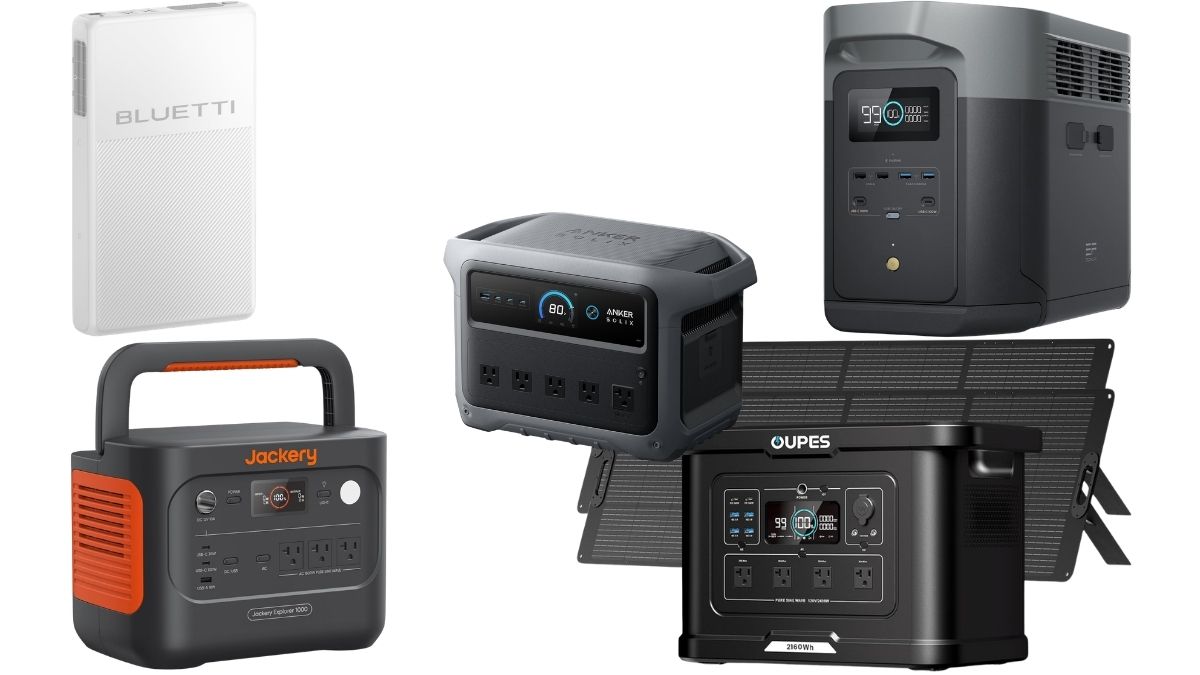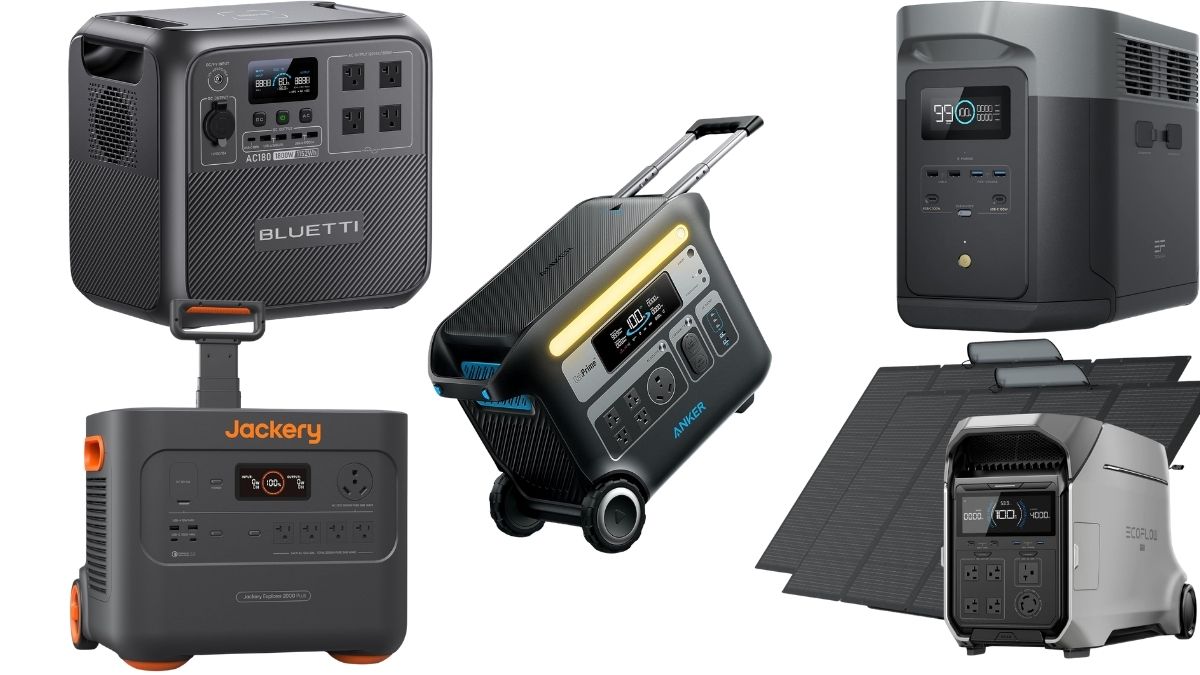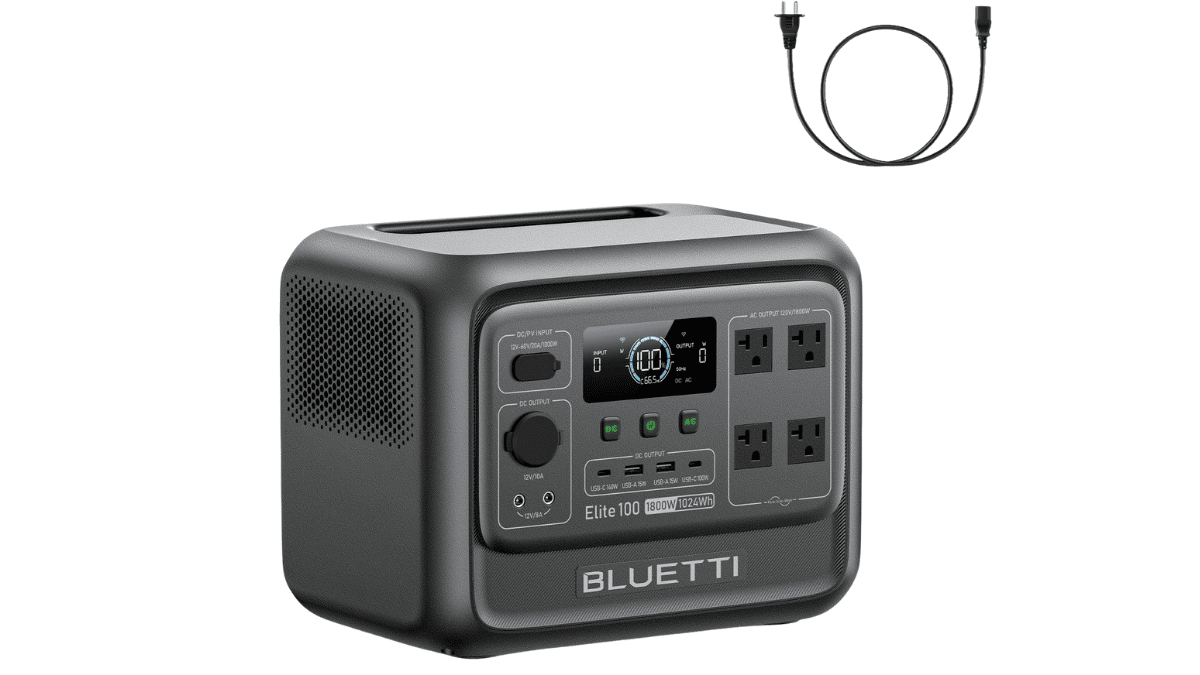
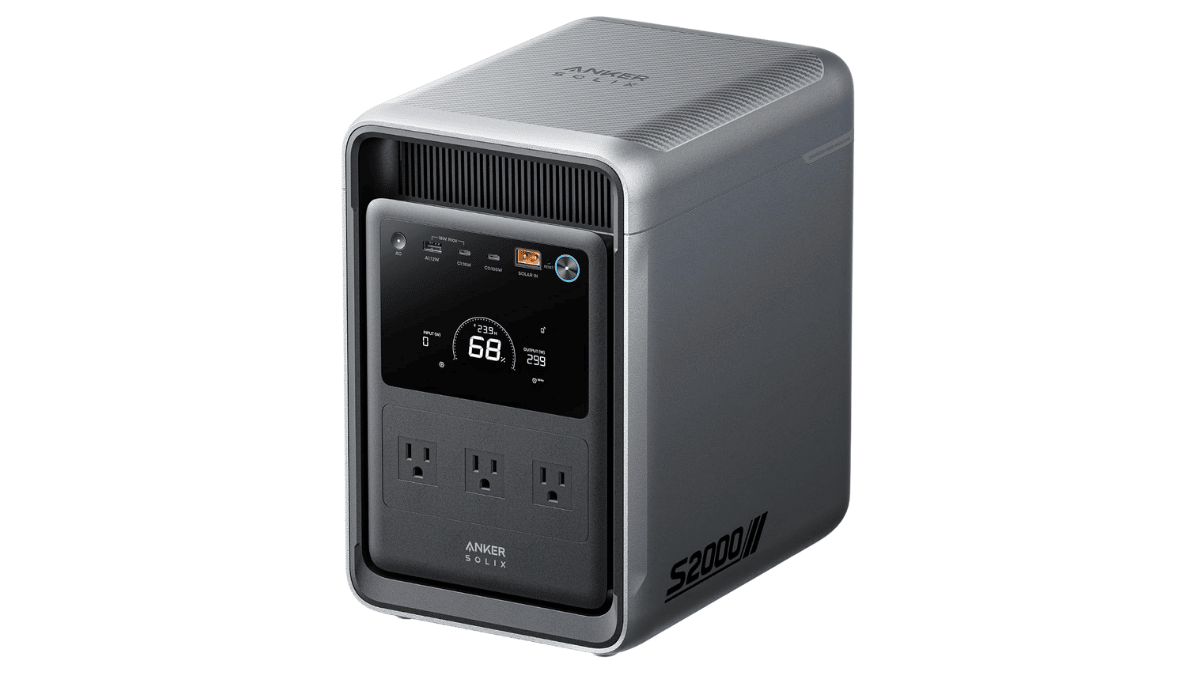
Quick Summary: The Anker SOLIX S2000 is the strongest portable power station for long-runtime security-camera backup. Its differentiator is not raw wattage; it is getting more useful recording time from a 2kWh battery by wasting remarkably little energy while waiting for and operating through an outage.
The Anker SOLIX S2000 tackles the outage problem that has humbled many top-notch camera setups: the cameras may be ready, yet the NVR, PoE switch, router, or fiber ONT goes dark.
A useful portable power station for security camera system backup needs efficient continuous power and predictable recovery. Only the ‘big peak wattage’ doesn’t cut it.
This S2000 Anker model gets those fundamentals right (just be wary of one maintenance detail at the time of installation.)
Is the Anker SOLIX S2000 good for security camera backup?
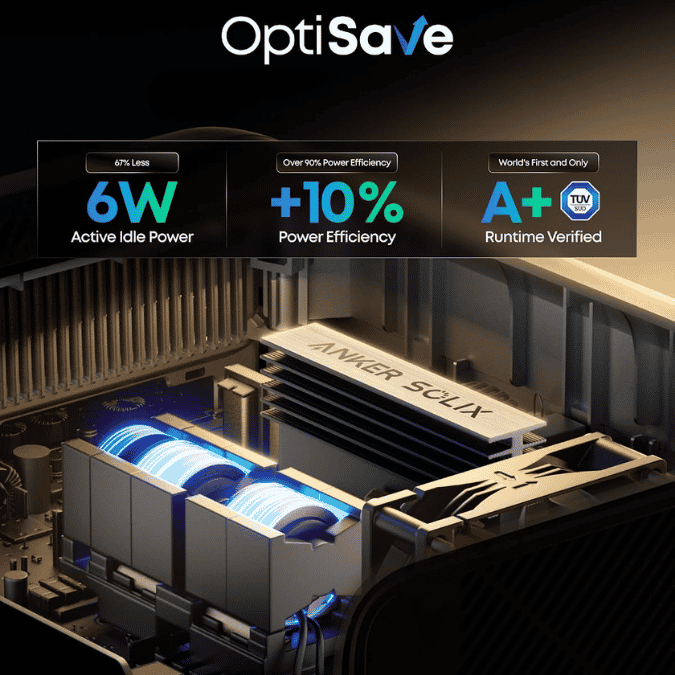
Yes. The S2000 is our leading portable power station for security camera system backup when hours of runtime are the main concern. Its 2,010Wh LFP battery, 6W active idle draw, pure sine wave output, and under 10ms UPS transfer suit continuous low draw systems.
However, it might not be a perfect substitute for every professional UPS. Firmware maintenance can interrupt AC output, and unattended recovery needs testing after a complete drain.
Specs of the Anker SOLIX S2000
| Spec | Anker SOLIX S2000 |
|---|---|
| Battery capacity | 2,010Wh LFP |
| AC output | 1,500W rated, 3,000W peak, pure sine wave |
| UPS transfer | Under 10ms |
| Active idle draw | 6W claimed, 6W independently measured |
| Connections | 5 AC outlets, 2 USB-C ports, 1 USB-A port |
| AC charging | 1,150W standard, up to 1,600W UltraFast |
| Solar input | 400W maximum |
| Size and weight | 8.2 x 11.1 x 12.7 inches, 35.7 pounds |
| Battery life | 6,000 cycles to 80%, 10,000 cycles to 60% |
| Warranty | 5 years |
For a power station for home security cameras, 1,500W offers ample headroom, while low idle loss preserves runtime.
What security equipment can the S2000 keep online?
The S2000 can power the full chain: NVR or DVR, PoE switch, camera adapters, Wi-Fi router, hub, modem, and fiber ONT. A live camera is little help if its recorder or network path is dark.
For most systems, capacity is more important than the 3,000W peak. PoE cameras often draw less than 8W to 12W, although motorized or floodlight models can reach 20W to 24W. Infrared lights and sensors can change consumption.
How should NVR power draw be measured?
Do not size the battery from camera count alone. Measure the complete nighttime load at the wall, add 15 % headroom, then run the NVR, PoE, router, and ONT watts through our portable power station calculator.
How long will the Anker SOLIX S2000 run a camera system?
About 11 to 55 hours for systems drawing 25W to 150W. To size this portable power station, we allowed 85 % usable AC energy and included its 6W idle draw.
Estimated runtime = 2,010Wh x 0.85 / (system watts + 6W)
| Total measured load | Typical security setup | Conservative runtime estimate |
|---|---|---|
| 25W | Router, ONT, hub, and a light Wi-Fi camera load | About 55 hours |
| 50W | Small NVR or four-camera PoE system plus networking | About 30 hours |
| 75W | Medium PoE system, NVR, router, and ONT | About 21 hours |
| 100W | Larger NVR system with several active PoE cameras | About 16 hours |
| 150W | Small-business camera and network rack | About 11 hours |
These are estimates, not guarantees.
A roughly 75W networking stack crossed 24 hours, while a larger rack reached about 13 hours. Temperature, night features, disk activity, and battery age change the result.
Testing measured 91 % efficiency and 6W active idle use, an excellent result for always-on loads.
Check how a coffee maker and mini fridge reshape the power budget, as sharing the battery can change numbers pretty quickly.
Does UPS mode prevent camera and NVR reboots?
Usually, yes. Anker rates transfer at under 10ms, and a simulated outage kept connected office equipment running. This also confirmed pass-through charging, while Anker lists 1,800W maximum bypass output.
Still, this is not an online, double-conversion UPS. It passes utility power through normally, so do not assume automatic voltage regulation or full-time conditioning. Sensitive equipment should pass a controlled unplug test first.
Firmware is the bigger drawback. AC outlets can switch off briefly during an update, restarting the network and recorder. Therefore, schedule maintenance carefully, or place a small conventional UPS downstream when no interruption is acceptable.
Complete depletion deserves a second test. Settings and firmware can affect recovery after grid power returns. For an unattended security camera backup system, disable any Device Timeout or Smart AC Output shutoff, then verify restoration, recording, timestamps, and alerts.
The same low-load auto-off risk appears in overnight CPAP power planning, where an unnoticed timeout matters even more.
How should the S2000 be set up for 24/7 surveillance?
Use this portable power station for security camera system backup only after an end-to-end test:
- Measure the full security and network load by day and night. Use the highest stable wattage, then add headroom.
- Connect the recorder, PoE supply, router, modem or ONT, and required hub. One unprotected link can break remote viewing or recording.
- Enable UPS operation and disable output timeouts. Use 100 % charge for maximum storm runtime, or 80 % to 90 % for gentler routine cycling.
- Pull grid power, restore it before depletion, then test recovery after full depletion. Confirm recording, remote access, alerts, time, and every feed.
- Schedule firmware work and keep vents clear. Anker recommends Silent Mode and 600W or less to reduce fan noise.
What is the S2000 like in daily use?
At a light load, the S2000 fades into the background. Its display and app show input, output, charge, and estimated runtime, which helps when checking an unoccupied property.

However, charge limits, schedules, and remote status are app-led. Physical AC controls still work, but users who avoid cloud-connected accounts should consider this little detail.
Five AC outlets split between front and rear keep permanent cables tidy. The compact tower saves space, although 35.7 pounds and shallow grips make frequent moving awkward.
Charging is the noisiest state. Full speed makes the fans prominent, while 500W to 600W is usually easier to live with and can refill the battery overnight.
Finally, Anker specifies 6,000 cycles to 80 % capacity and 10,000 to 60 %, plus a five-year warranty. That LFP profile suits frequent shallow cycling.
S2000 vs. a traditional UPS for CCTV
Here is how the Anker SOLIX S2000 compares to a traditional UPS:
| Decision factor | Anker SOLIX S2000 | Traditional UPS |
|---|---|---|
| Backup duration | Commonly many hours at camera-system loads | Commonly minutes, depending on battery size |
| Transfer time | Under 10ms | Often 2ms to 10ms, while online models have no transfer gap |
| Power conditioning | Pure sine output, but do not assume AVR or double conversion | AVR is common; online models provide stronger isolation |
| Battery | Long-life LFP, 2,010Wh | Often smaller sealed lead-acid batteries with periodic replacement |
| Unattended recovery | Must be configured and tested | Often designed around automatic restart and network management |
| Best role | Long runtime during extended outages | Short bridging, conditioning, and graceful shutdown |
For critical sites, the S2000 can supply energy while a compact UPS absorbs maintenance interruptions. However, this Anker S2000 system is perfectly suited for security camera system backup, and so it can handle most home systems alone.
Pros and Cons
| Pros | Cons |
|---|---|
| 2,010Wh capacity supports genuinely long camera and network runtime | Firmware updates can interrupt AC output, and full-depletion recovery needs testing |
| Under 10ms UPS transfer works well for common routers, NVRs, and PoE gear | Fast charging can be loud; capacity is not expandable and solar input stops at 400W |
| Excellent low-load efficiency and only about 6W active idle use | |
| Compact 2kWh LFP design with five practical AC outlets and strong app monitoring |
Buying guide
- First, get watt-hours, not watts. A camera system rarely challenges a 1,500W inverter, so low-load efficiency and stored energy matter more.
- Second, a portable power station for security camera system backup must cover camera power, recorder, networking, and alert hubs. If the provider fails upstream, local recording may continue even when remote viewing stops.
- Third, define the outage window and recharge plan. If heavy rain also threatens the basement, see how sump-pump startup and cycling change the backup calculation. The S2000’s 400W solar ceiling helps with daytime top-ups, but cloudy emergencies still need another charging source.
- Finally, test transfer, timeout, firmware, depletion, restoration, and app behavior. Capacity alone cannot prove reliability.
Who should buy it, and who should skip it?
The S2000 suits homes, renters, landlords, and small businesses with 25W to 150W of security and networking gear. It is compelling for hurricanes, winter storms, wildfires, and utility shutoffs. For lighter systems, compare capable backup stations under $500, or see which sub-$300 units can cover a router and a few Wi-Fi cameras.
Skip it for whole-building backup, expandable capacity, aggressive solar recovery, or certified zero-interruption power without another UPS. A well pump is a much harder load, so check voltage and motor-start demand before sizing well-pump backup. A basic UPS also remains cheaper when only minutes of camera protection are required.
Final verdict
The Anker SOLIX S2000 is an excellent portable power station for security camera system backup. We highly recommed it.
It combines 2,010Wh capacity, low idle use, efficient AC delivery, fast transfer, and monitoring for an always-on security stack.
If surveillance is only one piece of your outage plan, compare power stations built for broader home backup before committing.
That said, it’s not flawless. Fast charging gets loud, solar input is limited, and firmware or full-depletion behavior requires testing.
FAQs
Usually. Measure the full wall load because night vision, PoE losses, drives, router, and ONT determine runtime, not the camera count alone.
Yes, it supports pass-through charging and UPS use. Configure timeouts, provide ventilation, schedule updates, and retest periodically.
Yes, if every adapter, router, modem or ONT, and hub remains powered. Remote viewing needs the provider, while local recording may continue without internet.
Yes. Infrared LEDs, spotlights, processing, and PoE features consume more power. Therefore, measure after dark.
Not reliably. Weather, panel angle, daylight, and the 400W limit affect recovery, so multi-day plans need another charging option.