Quick Summary: The Jackery HomePower 3000 is the best overall portable power station for home medical-equipment backup right now. It combines substantial capacity, efficient low-load operation, pure sine-wave power and UPS functionality without becoming a permanently installed home battery. It has enough capacity for overnight CPAP use, oxygen concentrators, feeding pumps, nebulizers and temperature-controlled medication storage, depending on the device’s measured consumption.
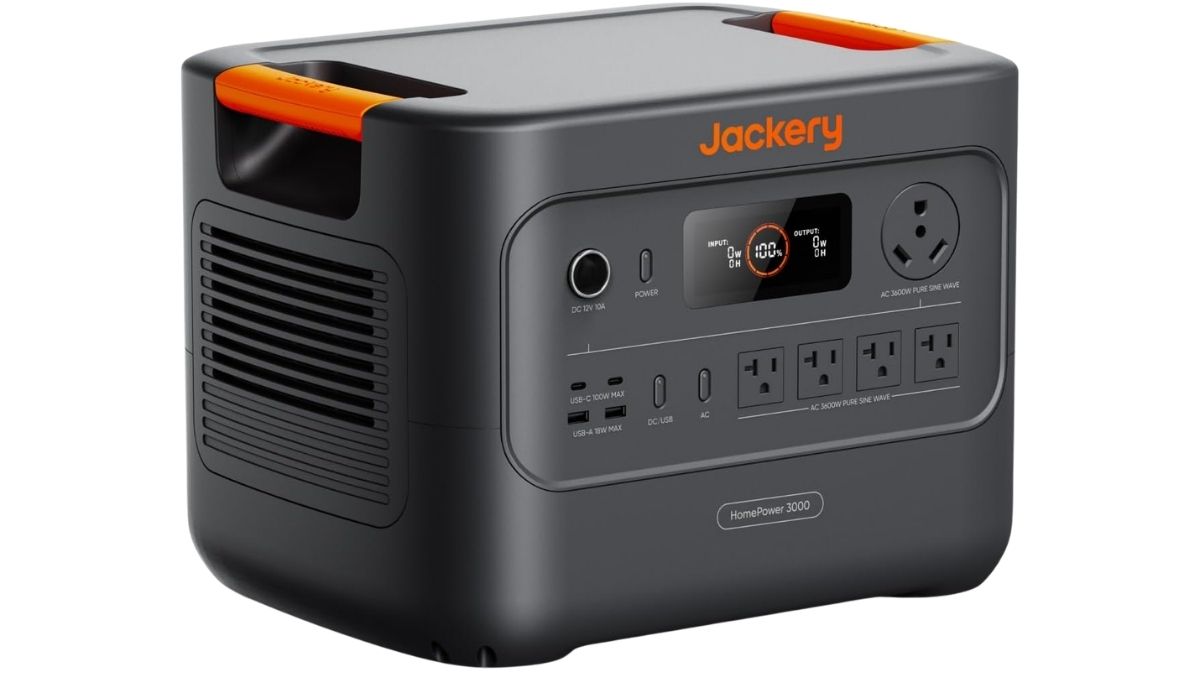
The Jackery HomePower 3000 is a high-capacity portable power station for medical equipment when a blackout turns routine care into a time-sensitive problem. Its 3,072Wh battery and pure sine wave output look reassuring, but medical backup also depends on transfer time and reliability.
This review covers those details before you trust it with a CPAP, oxygen concentrator, nebulizer, or medication refrigerator.
Is the Jackery HomePower 3000 Good for Medical Equipment?
Yes, we consider the HomePower 3000 a strong portable power station for medical equipment when the connected device can tolerate its 20ms transfer. It can cover multiple CPAP nights or several hours of oxygen concentrator use. However, it is not a medical-grade UPS or a sole backup for life-sustaining equipment.
The overalll feedback favors its outage performance, refrigerator backup, charging speed, and simple controls. Still, there are a few reliability concerns that matter more in medical use than in camping.
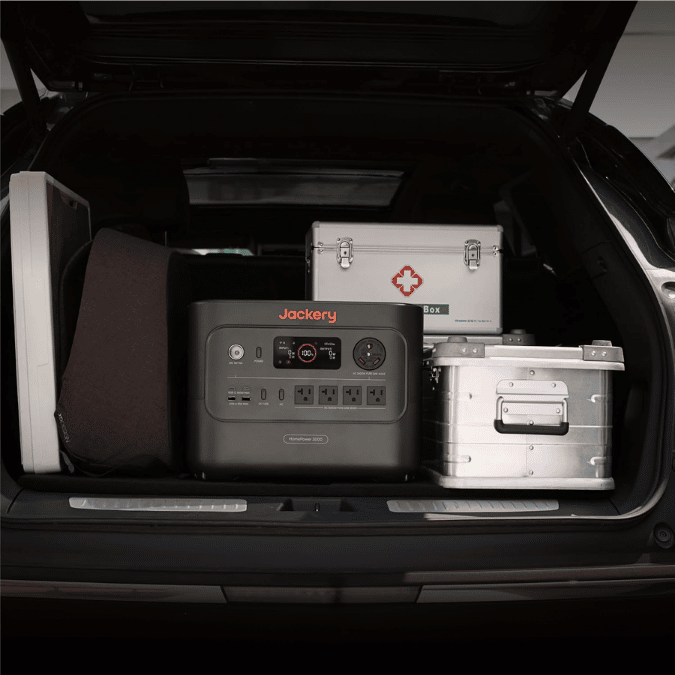
Our take: It suits households needing substantial backup for compatible 120V medical devices. Skip it if you require zero-transfer power, easy one-person mobility, or days of high-draw oxygen support.
Does the HomePower 3000 Meet Medical Backup Power Requirements?
A dependable portable power station for medical equipment needs clean output, realistic capacity, fast recovery, and an acceptable transfer time. The fundamentals are strong, although two output limits require attention.
| Medical backup requirement | HomePower 3000 detail | Our assessment |
|---|---|---|
| Battery capacity | 3,072Wh | Strong for overnight and short outages |
| AC waveform | Pure sine wave | Suitable when the device maker permits it |
| UPS transfer | Within 20ms | Automatic, but not seamless for every device |
| Household outlets | 2,400W combined | Ample for most medical loads |
| TT-30 outlet | 3,600W, 7,200W surge | High combined-load headroom |
| Bypass mode | 1,440W maximum | Critical while connected to wall power |
| Battery | LiFePO4, 4,000 cycles to 70 %+ | Strong long-term specification |
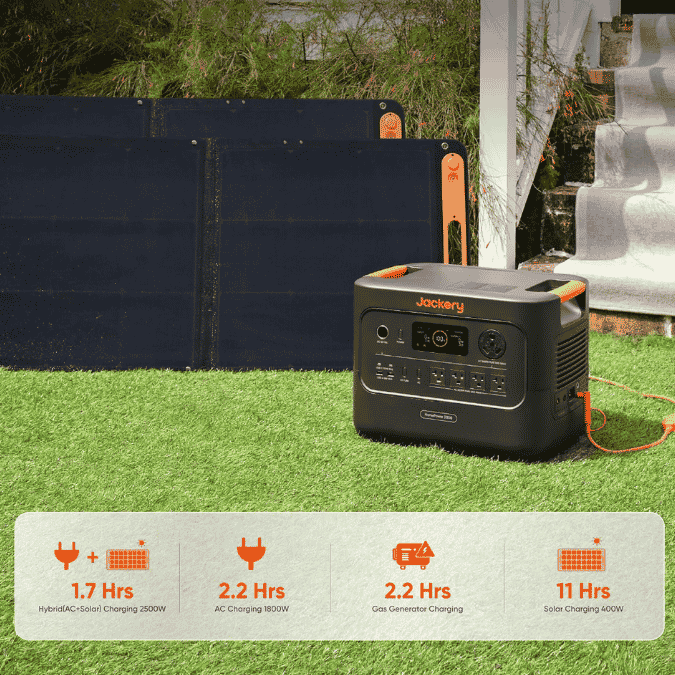
| AC recharge | About 2.2 hours | Fast recovery between outages |
| Weight | 59.52 pounds | Hard for people to move |
The four standard outlets share 2,400W, while the 30A outlet provides the full 3,600W. More importantly, bypass mode is limited to 1,440W while connected to wall power.
How Long Will It Run Medical Equipment?
Runtime is central when sizing a portable power station. Calculate your exact backup runtime while allowing for inverter loss and the station’s own consumption.
We are using 85 % usable energy plus 8W idle draw in these examples.
Estimated runtime = (3,072Wh × 0.85) ÷ (device watts + 8W)
| Medical equipment scenario | Example measured draw | Planning estimate |
|---|---|---|
| CPAP without heated accessories | 40W | About 54 hours, or 6 to 7 eight-hour nights |
| CPAP with humidifier or heated hose | 80W | About 30 hours, or nearly 4 nights |
| Oxygen concentrator | 300W | About 8.5 hours |
| Higher-draw oxygen concentrator | 600W | About 4.3 hours |
| Nebulizer used for 15-minute sessions | 100W | Roughly 90 treatments |
| Medical refrigerator using 1,000Wh daily | Cycled load | About 2.2 days with AC kept active |
These estimates are not medical guarantees. Temperature, settings, compressor starts, and battery age affect runtime. Measure the actual load and retain at least a 20 % reserve.
How Many Nights Can It Run a CPAP?
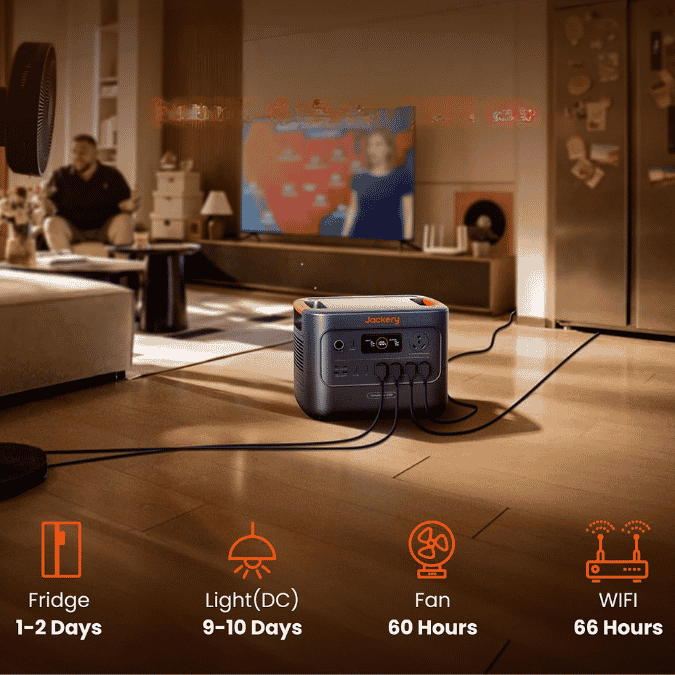
This power station can cover several CPAP nights, but heated humidification and tubing raise demand. A DC converter may improve efficiency. You can go nearly a day of mixed CPAP, refrigerator, light, heat-control, and television use with substantial charge remaining.
Can the Jackery HomePower 3000 Run an Oxygen Concentrator?
Yes, it can work as a power station for an oxygen concentrator using compatible 120V power. However, runtime is the constraint. A 600W unit may exhaust the battery in about four hours, so arrange good batteries, cylinders, relocation, or emergency assistance as a second layer.
What About a Nebulizer or Medical Refrigerator?
A nebulizer runs in short sessions, so the station can support many treatments if large household loads stay disconnected. For a medical refrigerator, measure a full 24-hour cycle instead of using compressor wattage alone. You can get 30 hours or longer of refrigerator operation.
Does Its UPS Mode Provide Truly Uninterrupted Power?
Not for every device. It transfers within 20ms, not 0ms. It’s not recommended for highly sensitive data servers, so medical compatibility should not be assumed.
This plays a role in backup power for medical devices without internal batteries. A short gap may cause an alarm, reset, or shutdown. Therefore, test the complete setup under supervision before overnight use.
Many units handle outages correctly. However, you might experience unexpected AC shutoffs, fan noise, firmware trouble, and continuous-bypass problems. So you also need to consider these points when purchasing.
A hot plug or cable requires immediate disconnection and professional evaluation. If interruption is unacceptable, use a genuine battery or medical-grade UPS as the immediate bridge. The HomePower 3000 can supply longer-duration energy behind it.
What’s to Like (and Dislike)?
Fast charging matches the two-hour range more often than not, while outage use commonly covers refrigerators, internet equipment, lights, and CPAP machines.
Still, “portable” needs context. Weight is the most consistent complaint, especially among older users and disabled people. A rated dolly is sensible, although one-device users may prefer lighter backup options under $500.
| Pros | Cons |
|---|---|
| Large 3,072Wh capacity supports meaningful outage runtime | The 59.52-pound body has no wheels and may be unsafe for one person to lift |
| Pure sine wave output and generous surge capacity suit varied household loads | It is non-expandable, while UPS, solar-input, app, and support problems are a point of concern |
| AC charging is genuinely fast in normal use | |
| Controls are straightforward, and many units hold charge well in storage |
Solar charging works well with this unit, but you might face DC-input errors, lockups, and reset issues. If solar is part of the plan, test every panel and cable before storm season.
How Should You Prepare It Before an Outage?
- First, record each device’s voltage, normal draw, start-up draw, and daily runtime. Next, ask its manufacturer whether pure sine wave battery power and 20ms transfer are acceptable.
- Then, fully charge the station and simulate an outage. Confirm that the device stays on, alarms work, and settings remain intact. Repeat this after firmware changes.
- Keep the station dry, ventilated, and accessible. Route cables safely and follow the oxygen provider’s placement and fire-safety instructions.
- Finally, create a fallback plan. The FDA recommends contacting the equipment manufacturer and notifying the utility and fire department when powered medical equipment is essential. Utility programs do not guarantee uninterrupted power.
Buying Guide
Start with compatibility, not battery size. Confirm voltage, plug type, maximum running watts, and start-up demand. Calculate the longest realistic outage and add a 20 % to 30 % reserve.
Next, check transfer tolerance. UPS mode can still include a short interruption, while the device’s own battery may or may not bridge it. The equipment manufacturer remains the final authority.
Portability also matters. Keep this nearly 60-pound unit accessible or on a cart. During winter outages, see how an electric blanket changes backup runtime before letting comfort heat consume the medical reserve.
Finally, plan recharging. AC is the most dependable method. Car and solar inputs add flexibility, although solar panels are not included and DC results are less consistent.
Who Should Buy It, and Who Should Skip It?
This portable power station suits compatible CPAP, nebulizer, oxygen, monitoring, or refrigeration devices through short outages. For broader needs, compare broader home-backup options first.
Skip it if you need zero-transfer power, expandable capacity, 240V output, or days of high-draw oxygen support. It is unsuitable as the sole backup for life-sustaining equipment.
Is the Jackery HomePower 3000 Worth Buying for Medical-Equipment Backup?
Yes, we recommend the HomePower 3000 as a strong high-capacity choice for compatible home medical equipment. It combines useful runtime, pure sine wave output, fast charging, and simple operation. However, its weight, fixed capacity, 20ms transfer, and probable UPS or solar issues require thorough testing and a separate emergency plan.
For users who understand those limits, this portable power station from Jackery offers useful backup without gas-generator fumes or fuel.
FAQs
Yes. A compatible CPAP should run overnight with substantial capacity remaining. Heated accessories and pressure settings can change runtime, so measure the complete setup.
Yes, with compatible 120V equipment. However, a 300W to 600W continuous load may reduce runtime to roughly four to nine hours.
Usually. Add every running and starting load. If cameras or networking gear share the station, check the full security-backup chain and stay below the 1,440W bypass limit.
Yes, but 20ms is not zero-transfer. Test it regularly because some owners report unexpected AC cutoffs.
No. It is a consumer power station, not an FDA-cleared medical device or medical-grade UPS. Life-sustaining equipment requires the backup specified by its manufacturer and care team.