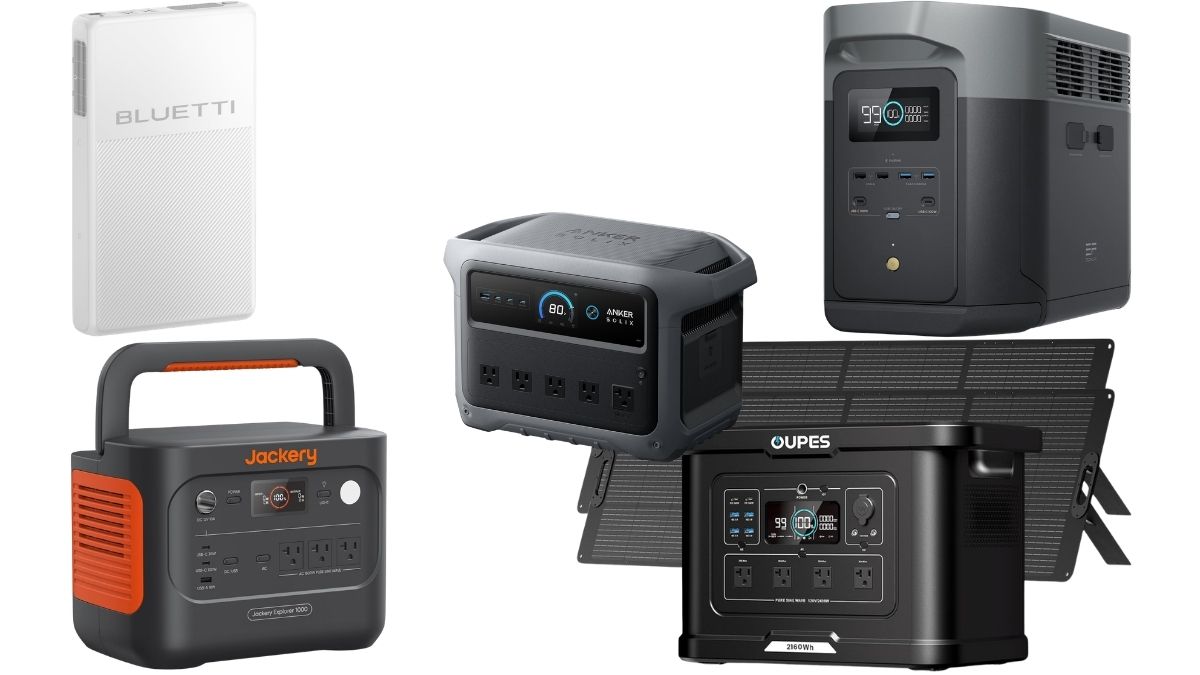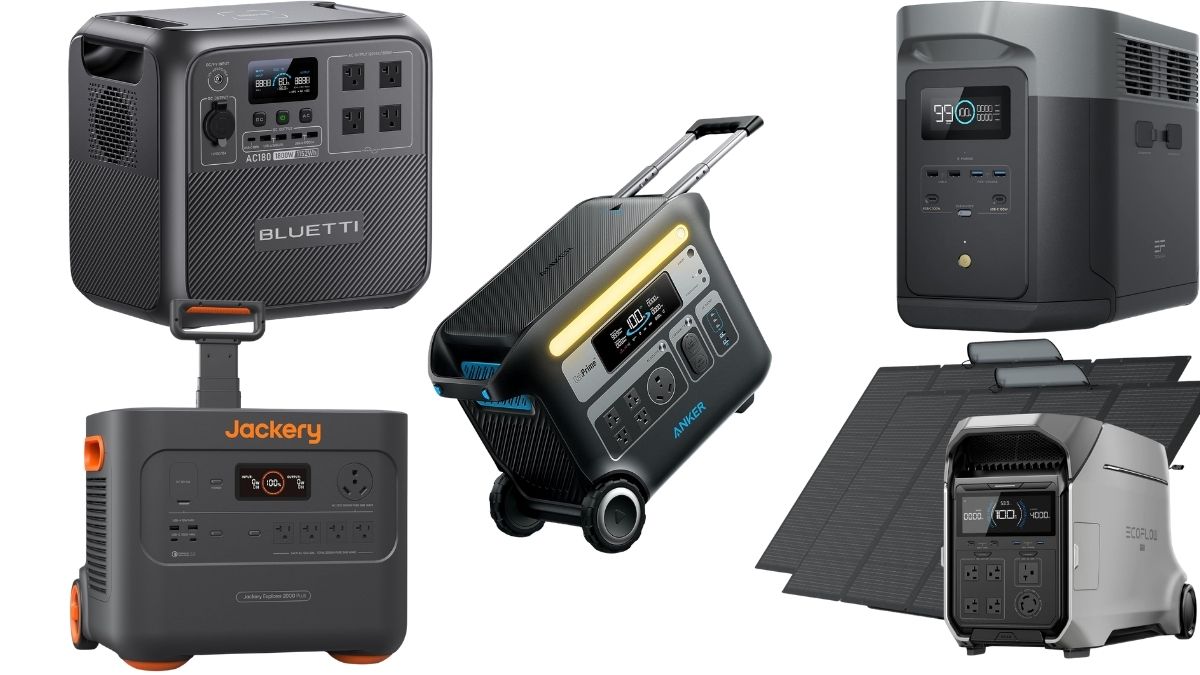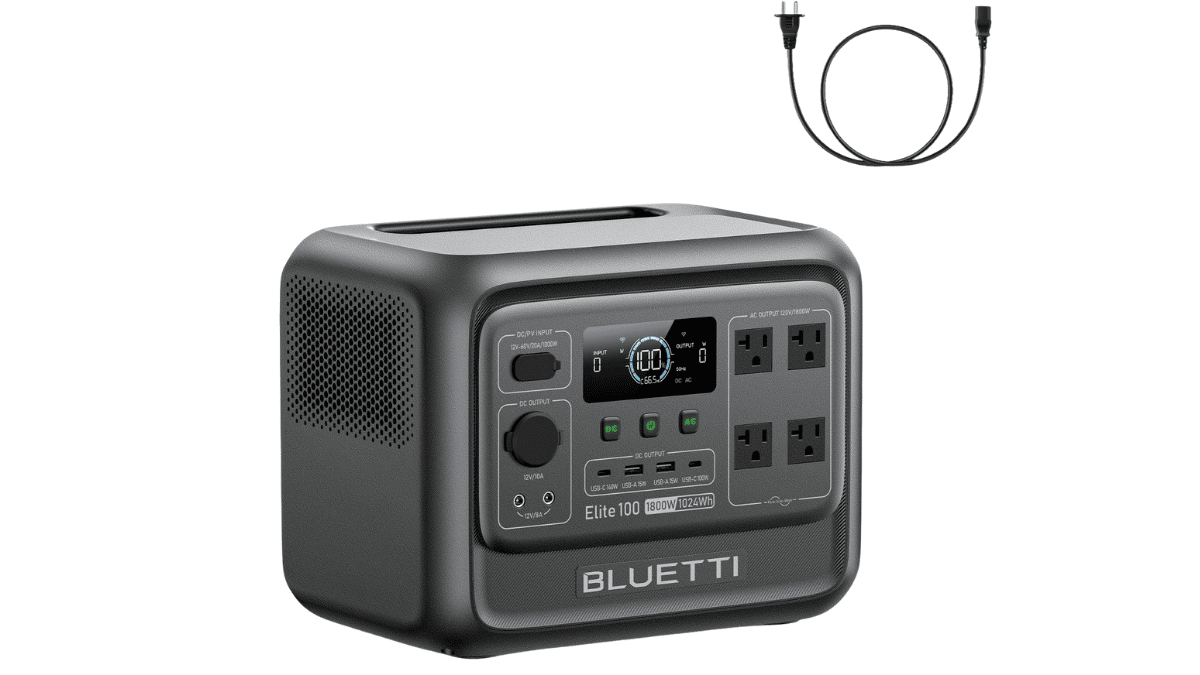
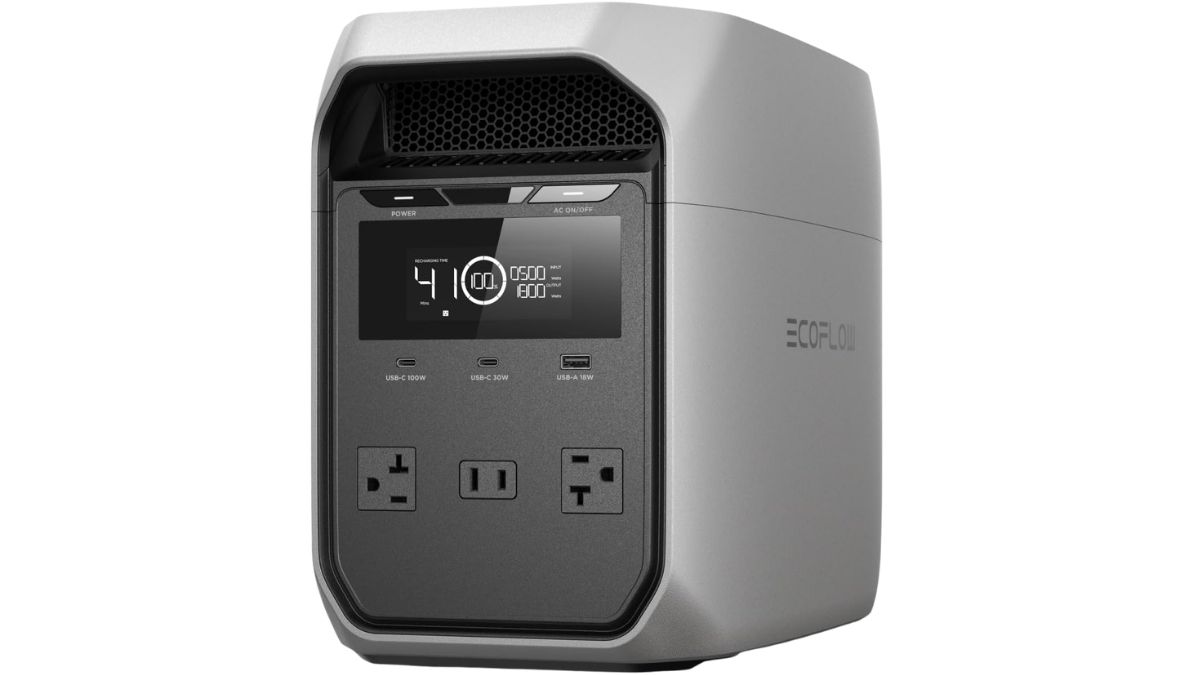
Quick Summary: The EcoFlow DELTA 3 Classic currently has to be the best pick for powering a standard 120V electric blanket during car, tent, or van camping. Its 1,024Wh capacity is comfortably sized for an overnight electric blanket. It does have a few cons, but it’s clearly the winner in this category.
The EF ECOFLOW DELTA 3 Classic addresses a familiar cold-night problem: a small battery may quit before morning. For a portable power station for electric blanket camping, usable capacity, reliability etc., matter more than oversized output. This particular EcoFlow model performs great on all fronts.
This review examines runtime, cold-weather limits, charging, safety, and its value for campers.
Can the EcoFlow DELTA 3 Classic Run an Electric Blanket While Camping?
Yes. The DELTA 3 Classic can run a standard 120V AC electric blanket with considerable output capacity to spare. Its 1,800W pure sine wave inverter is far above the usual demand of a heated blanket, so output power is not the real concern.
For a portable power station for electric blanket, runtime depends on watt draw, heat setting, thermostat cycling, and temperature. The battery stores 1,024Wh, but conversion losses reduce its usable AC energy.
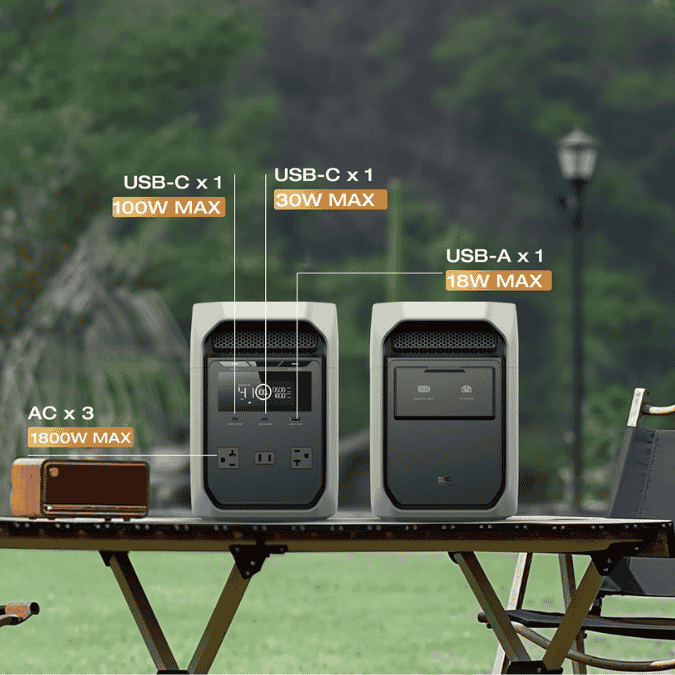
There is one compatibility catch. The DELTA 3 Classic does not have a 12V car-style socket. Therefore, this recommendation applies to 120V blankets with standard household plugs, not 12V camping blankets.
Specs of the EcoFlow DELTA 3 Classic
This unit suits 120V blankets better than 12V models. Check out the specs below.
| Specs | Model detail | Why it matters at camp |
|---|---|---|
| Battery | 1,024Wh LFP | Sets overnight runtime |
| AC output | 1,800W, 120V, 60Hz pure sine wave | Supports blankets |
| Outlets | Three AC, two USB-C, one USB-A | Covers a few essentials |
| AC recharge | 80% in 45 minutes, full in 60 minutes | Fast turnaround |
| Solar input | Up to 500W | Helps on longer trips |
| Noise | Up to 30dB at a 600W load | Suits sleeping areas |
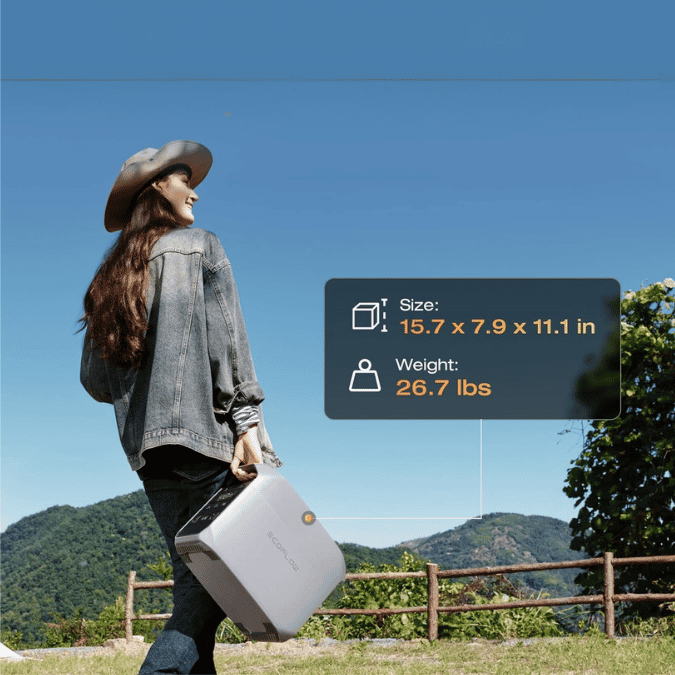
| Weight | About 26.7 pounds | Best near a vehicle |
| Warranty | Up to five years with registration | Longer purchase protection |
Note: These figures come from the official U.S. model. European voltage and port descriptions do not apply to this model.
How Long Will the DELTA 3 Classic Run an Electric Blanket?
The useful test for any portable power station for electric blanket is runtime. This particular model provides about 5 to 13 hours for blankets drawing continuously at 50W to 150W. Therefore, a low-wattage throw may last overnight, while a large blanket on high may not.
When measured, its inverter efficiency came out to about 83%, and the idle draw near 17W. The estimates below use roughly 850Wh of AC energy and include idle demand.
| Electric blanket watt draw | Conservative continuous runtime | Eight-hour outlook |
|---|---|---|
| 50W | About 12.7 hours | Strong reserve |
| 75W | About 9.2 hours | Generally sufficient |
| 100W | About 7.3 hours | Borderline without cycling |
| 150W | About 5.1 hours | Not enough continuously |
The formula is usable watt-hours divided by blanket watts plus inverter overhead.
For your exact setup, calculate the blanket and shared campsite load.
Will It Run a 100W Electric Blanket for Eight Hours?
A 100W blanket is close, but we would not promise eight continuous hours. The estimate is 7.3 hours. However, thermostat cycling may extend the overnight runtime.
Still, check your blanket’s label. If you use dual-zone heating or other campsite devices, the remaining battery will fall sooner.
How Does Cold Weather Affect Battery Efficiency?
Cold is the main uncertainty here. It slows battery chemistry, so an indoor runtime estimate may be optimistic after the station has been cold-soaked.
The optimal operating range is 68°F to 86°F. It allows discharging from 14°F to 113°F, but charging only from 32°F to 113°F. Therefore, the battery can power a blanket below freezing within its stated range, but it should not be recharged until its temperature is at least 32°F.
For cold weather camping, keep it dry, off frozen ground, and ventilated. If you camp below freezing, warm it above 32°F before charging. Never wrap the station in bedding or block its airflow.
Can You Run an Electric Blanket Off Grid for Multiple Nights?
This power station can cover one night with many low-wattage blankets. However, running an electric blanket off grid for a second night usually requires daytime charging.
The station reaches 80% in 45 minutes and 100% in one hour from AC power. Wall charging lands around 45 to 60 minutes, which is useful when a permitted outlet is briefly available.
Meanwhile, 500W solar can recharge it in about 2.5 hours under ideal sunlight. Winter conditions take longer. Prolonged cloud may prevent full recovery, while basic vehicle charging near 100W can require hours of driving.
How Does the DELTA 3 Classic Perform in Real Use?
Fast charging is its clearest strength. Starting near 30%, the battery can reach full charge in roughly 45 to 60 minutes from a normal outlet.
Reliability is also strong across van, backup, lighting, refrigerator, computer, and outdoor work use. Weekly operation over nine months has remained stable. Moreover, a mixed low-load setup ran for about 19 hours. If home surveillance is also on your backup list, size the cameras, NVR, and networking gear as one continuous load.
However, a 1,200W heater lasted only about 30 minutes. This explains why a heated blanket is sensible and a space heater is not.
The construction feels sturdy, while two top handles help inside a vehicle. In addition, the clear display, stable Bluetooth, and app-based watt monitoring simplify energy planning.
What Should You Check Before Buying a Power Station for a Heated Blanket?
Here’s a quick buying guide for you.
Confirm the Blanket’s Voltage and Plug
First, check whether the blanket requires 120V AC, 12V DC, or USB power. This portable power station supports a standard 120V plug, but not a 12V cigarette-lighter plug.
Use the Maximum Watt Draw
Next, read the wattage on the label or controller. For two controllers, calculate the combined draw with both zones heating.
For eight hours, a 75W blanket needs 600Wh before losses, leaving useful headroom. However, a continuous 150W load needs 1,200Wh and exceeds this battery.
Test the Blanket Controller Before Leaving
Pure sine wave output improves controller compatibility. Even so, cycling can drop the load near zero, allowing EcoFlow’s AC timeout to switch off the outlet.
Therefore, test the setup at home. If it stops early, check the blanket timer and set EcoFlow’s AC timeout to Never when appropriate. The EcoFlow manual explains intermittent-load timeout behavior.
Plan for the Whole Campsite
Finally, calculate every overnight device. A refrigerator, CPAP machine, lights, and phone charging all reduce blanket runtime. The app displays live power, battery percentage, and estimated time remaining.
Is an Electric Blanket and Power Station Safe in a Tent?
A power station produces no combustion exhaust, but electrical and heating risks remain. Keep it upright, dry, stable, and ventilated, with connectors away from condensation.
The safest strategy is preheating and switching off before sleep. ESFI advises against sleeping use, extension cords, power strips, folded blankets, and damaged wiring. Therefore, follow the blanket manufacturer’s instructions even if the battery can run longer.
Also, use a blanket approved by a Nationally Recognized Testing Laboratory. Do not tuck it tightly or pinch its cord.
Pros and Cons
| Pros | Cons |
|---|---|
| 1,024Wh provides practical overnight capacity for many 50W to 100W blankets | No 12V car outlet and no expansion-battery support |
| Roughly one-hour AC charging is genuinely useful between camping days | The 26.7-pound body and three AC outlets limit backpacking and larger shared setups |
| Quiet pure sine wave output suits tents, vans, and RV sleeping areas | |
| Solid construction, clear monitoring, and stable low-load performance inspire confidence |
If the live price is a stretch, compare the strongest camping-capable power stations under $500. Some compact power stations under $300 fit short preheating and device charging, not dependable all-night heat.
Who Should Buy It, and Who Should Skip It?
This power station, ideal for electric blanket, suits vehicle-based travelers with a 120V blanket drawing roughly 50W to 100W. Fast charging and quiet operation also support occasional home backup.
However, it is a poor fit for backpackers, direct 12V blanket owners, or campers expecting several cloudy nights without charging. Likewise, users who already know they need more than 1,024Wh should choose an expandable model instead.
If you prefer outage coverage, compare the best portable power stations for home backup before settling on a non-expandable 1,024Wh unit.
Also, do not reuse the blanket numbers/data for pumps. Start with sump-pump cycling and startup demand, or well-pump voltage and measured inrush, because either motor can overwhelm a station that easily runs a blanket.
Is the EcoFlow DELTA 3 Classic Worth It?
Yes, with the right blanket. As a top portable power station for electric blanket, the EcoFlow DELTA 3 Classic combines realistic overnight capacity, quiet output, rapid charging, and dependable monitoring. Those qualities matter more than its 1,800W output for this low-wattage job.
Still, the recommendation is conditional. Choose it for a standard 120V blanket and vehicle-based camping. Skip it if you require a 12V outlet, expansion batteries, backpacking portability, or guaranteed multi-night power without recharging.
FAQs
Yes, but capacity becomes a weakness then. Two 75W blankets create a 150W load and about five hours of conservative continuous runtime before other devices or cold losses.
The blanket may have reached its timer, cycled to zero draw, or encountered a controller issue. Also, EcoFlow’s AC timeout may switch off an apparently idle outlet. Check both timer systems before camping.
No. EcoFlow specifies 32°F as the minimum charging temperature. It can discharge down to 14°F, but battery efficiency in cold conditions may reduce runtime.
Lower settings consume less energy, but safety instructions take priority. Preheating and switching off before sleep is safer. If overnight use is specifically permitted, use the timer and lowest effective setting.