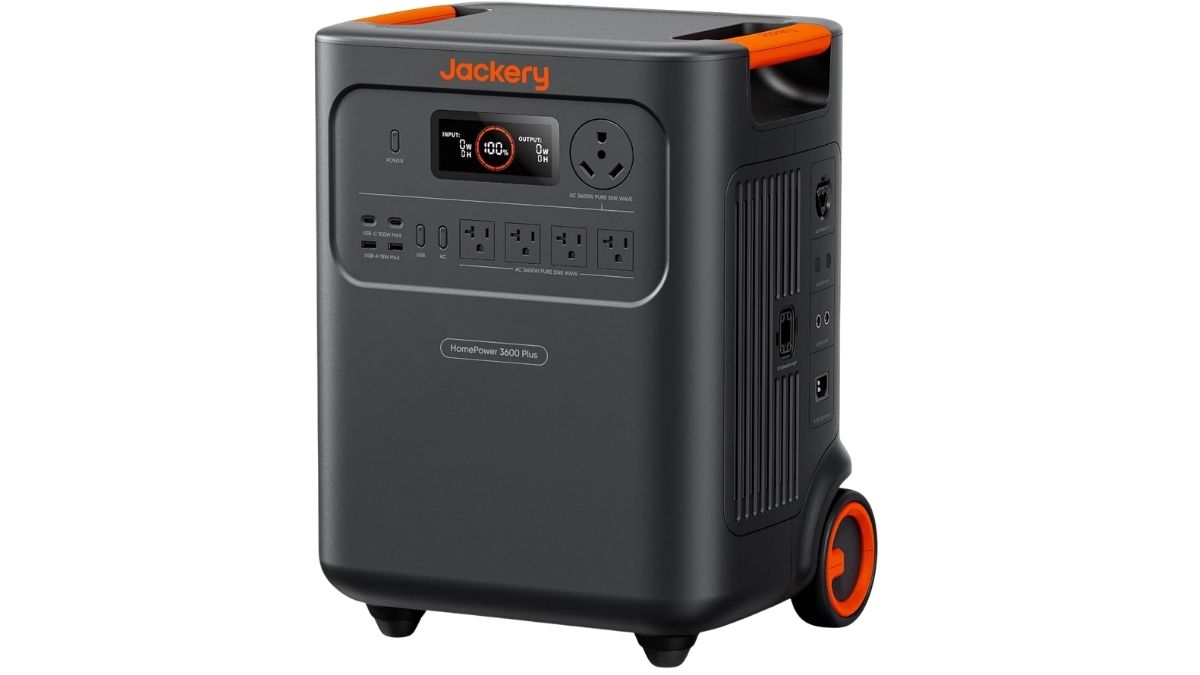
Quick Summary: The Jackery HomePower 3600 Plus is a serious portable power station for sump pump backup when heavy rain and a grid outage arrive together. Its 3,600W output and large LFP battery look ideal, but pump startup demand and the UPS limit matter just as much.
The Jackery HomePower 3600 Plus is one of the few portable power stations with enough surge wattage to run a full-size sump pump through a multi-day outage, not just charge a phone. That’s critical because a sump pump only draws power in short bursts, but those bursts tend to hit right when a storm has already taken your grid down. In this review, we explain its performance, runtime, and the limitation you should test.
Is This a Good Portable Power Station for Sump Pump Backup?
Yes, it is a strong choice for many 120V residential sump pumps, especially common 1/3 HP and 1/2 HP units. However, you must confirm that your pump’s starting watts fit the Jackery’s limits and test its automatic UPS operation.
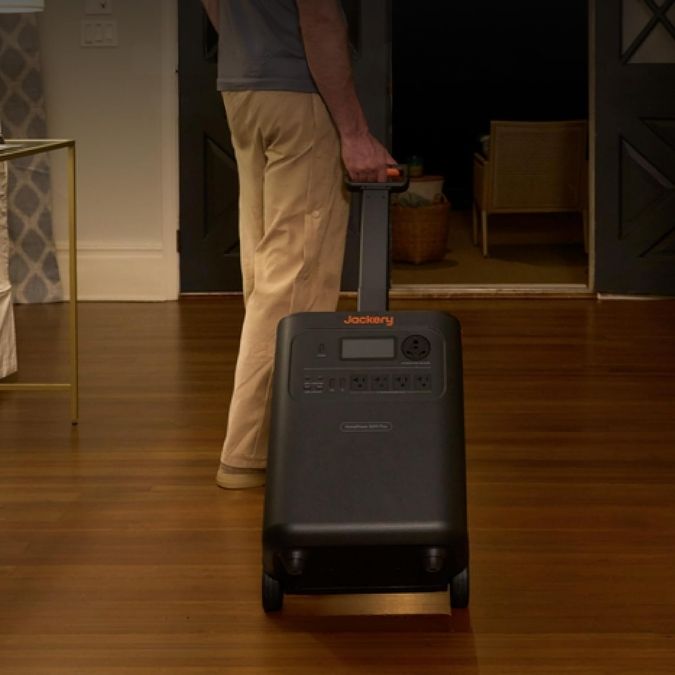
The Jackery HomePower 3600 Plus is rated for 3,600 watts of continuous output and 7,200 watts of surge output. Therefore, it has substantial starting headroom, while its 3,584Wh battery works without gasoline or engine noise.
That kind of surge power is non-negotiable if you want dependable emergency power for a sump pump rather than a unit that only looks capable on paper.
There is one catch, though. Bypass output is limited to 1,440W while the grid is available, even though full rated output returns after an outage. It is a compelling portable power station for sump pump backup, but automatic operation requires a successful UPS test.
Specs of the Jackery HomePower 3600 Plus
For a portable power station for sump pump backup, these are the most important specs:
| Specification | Jackery HomePower 3600 Plus |
|---|---|
| Battery capacity | 3,584Wh LiFePO4 |
| Continuous AC output | 3,600W total |
| Surge power | 7,200W |
| Single-unit voltage | 120V |
| UPS transfer time | Within 10 milliseconds |
| UPS bypass limit before an outage | 1,440W |
| Solar input | 1,000W maximum |
| Cycle life | 6,000 cycles to at least 70% capacity |
| Weight | About 77.16 pounds |
| Expandable capacity | Up to about 21kWh per unit |
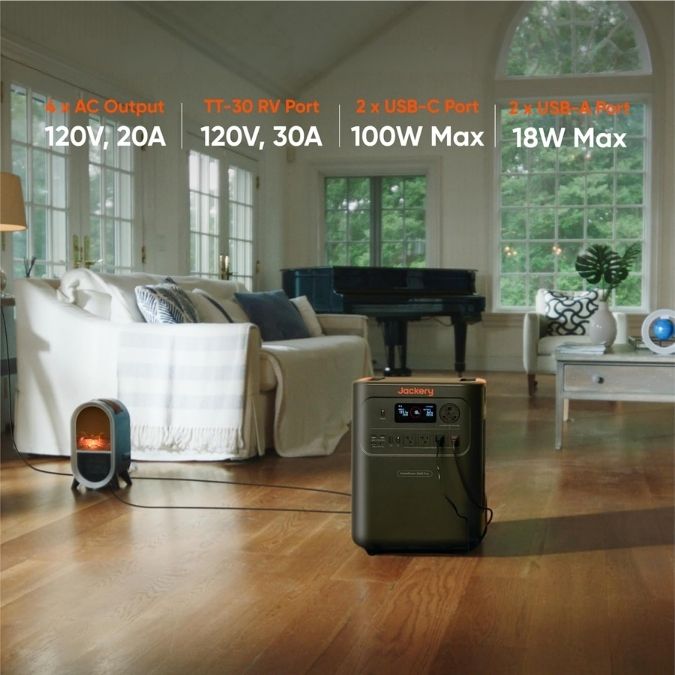
It also has four AC outlets, a 30A TT-30 outlet, USB ports, wheels, and a retractable handle. One unit supplies 120V, while 240V requires two units and the correct parallel equipment.
Or, you can refer to the brand’s provided User Manual here:
Can It Start and Run a 1/3 HP or 1/2 HP Sump Pump?
In most cases, yes, but horsepower does not confirm compatibility. Running watts describe normal operation, while starting watts are the brief motor-starting burst. This burst can reach two to three times the running figure, so size for all running loads plus the highest startup surge.
The Zoeller M98, for example, is a 1/2 HP pump rated at 115V and 9.4A, or roughly 1,081 volt-amperes before startup. Another 1/2 HP motor may differ, so use its nameplate, manual, or measured peak.
| Pump type | Likely fit with one Jackery | What to verify |
|---|---|---|
| 120V, 1/3 HP | Strong candidate | Running watts, startup peak, and UPS behavior |
| 120V, 1/2 HP | Usually suitable | Startup peak, especially against the 1,440W bypass limit |
| 120V, 3/4 HP | Conditional | Measured surge and any simultaneous loads |
| 120V, 1 HP | Do not assume | Outlet limit, surge demand, and repeated startup tests |
| 240V pump | Not with one unit | Two-unit parallel setup and professional connection |
How Long Will It Run a Sump Pump During an Outage?
Depends on cycling. A sump pump that runs for 15 seconds each minute uses far less energy than the same pump running continuously against severe water inflow.
To size a portable power station for sump pump backup, divide usable battery energy by average load. At 89% measured efficiency, this Jackery provides about 3,190Wh of usable AC energy. Its roughly 34W idle draw also continues between cycles.
| Example pump load | Duty cycle | Estimated runtime |
|---|---|---|
| 600W | 25% | About 17 hours |
| 800W | 50% | About 7.3 hours |
| 1,000W | Continuous | About 3.1 hours |
Note: Water inflow, lift height, restrictions, temperature, battery age, and other appliances can shorten runtime. You should record actual wattage during a wet-weather test.
An expansion battery can extend long-storm runtime. However, it does not increase pump compatibility or fix a failing pump.
For a closer estimate, calculate runtime using your pump’s actual watts and cycling pattern, then add any refrigerator, router, or lighting loads that will remain connected.
Will It Switch to Battery Automatically During an Outage?
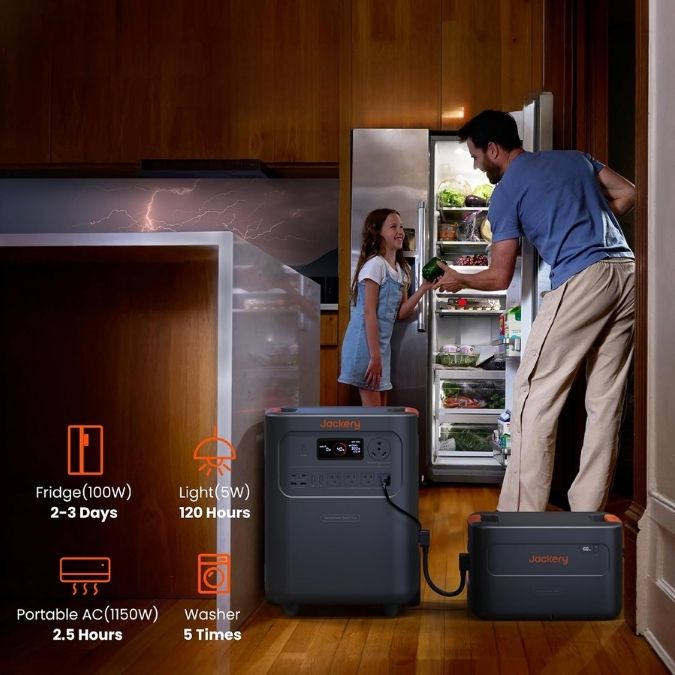
Yes, the HomePower 3600 Plus can switch to stored power within 10 milliseconds when connected in UPS mode. The Jackery manual limits bypass output to 1,440W before the outage and tells users to test device compatibility several times.
Furthermore, a pump may run from the battery’s full output yet exceed 1,440W during a grid-powered start through bypass. Therefore, do not trust unattended operation until the pump completes repeated starts before, during, and after a simulated outage.
Manual emergency power for a sump pump is simpler. After an outage, connect the pump directly and confirm stable output. However, this offers no protection when nobody is home.
How Should the Jackery Be Set Up in a Basement?
- Place the station indoors on a stable platform above any plausible flood level and away from the pit. Keep its vents clear and surroundings dry. The manual warns that water can cause short circuits or charger damage.
- Connect the pump to a suitable Jackery outlet and avoid improvised adapters. If the pump manufacturer permits an extension cord, use a short, grounded cord sized for motor startup current.
- A manual transfer switch can supply selected circuits, but a qualified electrician should install it to local code. Never backfeed a receptacle or use a homemade connection cable.
- Before storm season, charge fully, inspect the pump and check valve, confirm AC output, and trigger the float. Then simulate an outage safely and watch several complete cycles.
Pros and Cons
The strongest points are fast setup, quiet operation, useful wheels, and enough output for a range of essentials. Refrigerators, fans, communications gear, and cooking devices can share the system when their combined loads are managed.
Load timing carries great importance. Our review of the best portable power station for coffee maker and mini fridge shows why a heating appliance, refrigerator compressor, and sump pump should not all start together.
For AC charging, the number is about 2.5 hours. Hybrid AC and solar can reduce that to about two hours, although weather dictates solar performance.
| Pros | Cons |
|---|---|
| Strong 3,600W continuous output for motor loads | UPS bypass is limited to 1,440W before an outage |
| Large, durable LFP battery with expansion support | The 77-pound indoor-only unit needs dry, elevated placement |
| Quiet operation and fast wall charging | |
| Wheels, useful outlets, and straightforward controls |
The app helps monitor charging and consumption, but core controls remain on the unit.
Is a Power Station Enough Protection Against Basement Flooding?
No. A portable power station for sump pump backup solves lost electricity, not a seized motor, blocked discharge, failed float, or excessive inflow. Ready.gov advises considering a sump pump with a battery for flood preparation.
| Backup method | Covers a grid outage | Covers primary pump failure | Powers other devices |
|---|---|---|---|
| HomePower 3600 Plus | Yes | No | Yes |
| Dedicated secondary pump and battery | Yes | Yes | Usually no |
| Portable gas generator | Yes | No | Yes |
High-risk basements need layers. A secondary pump covers main-pump failure, while the Jackery powers the primary pump and other essentials. Gas generators must stay outdoors, more than 20 feet from windows, doors, and vents, according to the CDC.
If sump-pump protection is only one part of your outage plan, compare power stations for wider home-backup before choosing a system for refrigeration, medical equipment, lighting, and internet access.
Buying Guide
Before you purchase, check your system in this order:
- Confirm that the pump is 120V rather than 240V.
- Find the running amps, running watts, and manufacturer-listed starting current.
- Measure startup demand when no reliable figure is available.
- Estimate the pump’s worst likely duty cycle during heavy rain.
- Add every other connected appliance.
- Test bypass, outage transfer, and motor restart.
- Plan a dry, elevated location and a safe connection method.
- Plan recharging for long outages.
- Add a water alarm or independent backup pump where flood risk is high.
Volts multiplied by amps gives volt-amperes, not always true motor watts. Motor power factor and startup behavior make a measured peak more reliable.
Who Should Buy It, and Who Should Skip It?
The Jackery suits users with a compatible 120V pump who also need quiet power for refrigeration, communications, or a gas-furnace blower. It is useful where fuel storage or an outdoor generator is impractical.
If respiratory equipment is also part of your emergency plan, see how to plan CPAP runtime for camping and overnight outages before sharing the battery with a cycling sump pump.
Skip it for a 240V pump, an unverified high-surge motor, or any location floodwater could reach. It should not be the only safeguard against pump failure.
The HomePower 3600 Plus may also be more capacity than a lighter emergency kit requires. For phones, Wi-Fi, lights, a CPAP, or short refrigerator support, these stronger backup portable power stations under $500 offer a more affordable starting point.
If your goal is an even smaller grab-and-go battery for communication and low-draw essentials, see what the best portable power stations under $300 can realistically handle. These compact units should not replace the Jackery for a sump pump unless the exact starting load has been verified.
Final Verdict
The Jackery HomePower 3600 Plus is a top portable power station for sump pump backup right now. Its output, capacity, fast charging, and quiet LFP design are convincing. However, automatic use with a 1/2 HP pump must be proven because UPS bypass is capped at 1,440W.
For a verified 120V setup, we recommend it as a versatile power station for basement flooding and wider home outages.
FAQs
Usually, yes. Its 3,600W continuous inverter has substantial headroom, but the pump’s startup demand and the 1,440W UPS bypass limit must be checked separately.
It may run for several hours continuously or much longer when the pump cycles. Use the measured running load and duty cycle rather than horsepower alone.
UPS mode switches to stored power within 10 milliseconds. Still, the AC output must be enabled, the pump must remain connected, and compatibility should be tested repeatedly.
Yes, if their combined running watts and the largest overlapping startup surge stay within the outlet and inverter limits. Staggering compressor starts creates more headroom.
Yes, but only in a dry, ventilated, elevated location outside the possible flood zone. It should never sit beside the pit or on a floor that may take on water.