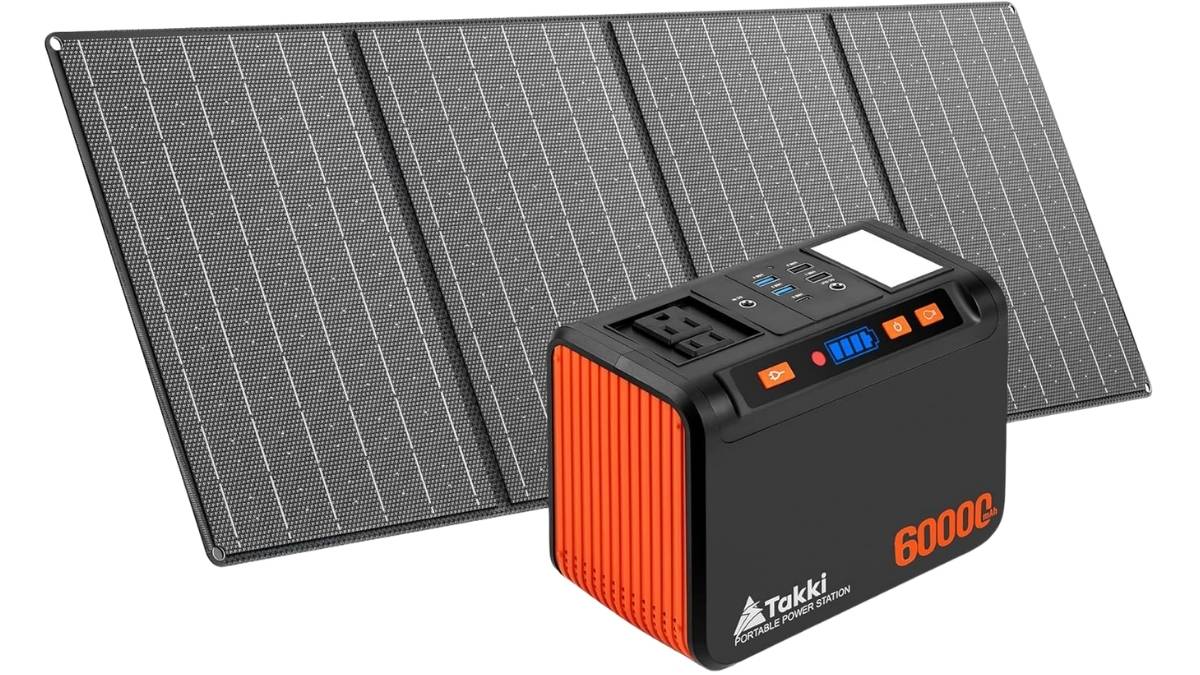
Say you need backup power for small devices without spending $400 to $1,000 on a big-name power station. That’s exactly the gap the TAKKI portable power station fills, so in this review I look at the TAKKI Solar Generator 250W kit: an ultra-budget battery station for camping, outages, road trips, CPAP backup, phones, laptops, lights, and basic USB gear.
To be clear, it isn’t a full home backup unit. Still, in my view this small solar kit has a practical role.
Is the TAKKI Portable Power Station Worth It?
In my view, the TAKKI portable power station is worth considering if you want a low-cost solar generator kit for small electronics, short camping trips, and basic outage backup. For example, it suits phones, tablets, LED lights, a laptop, a small fan, a router, and limited CPAP use.
However, it isn’t built for refrigerators, coffee makers, heaters, microwaves, air fryers, hair dryers, or heavy tools. The 250W rated output is the hard limit here, so if your device needs more than 250W of continuous power, this is the wrong station.
For most budget-conscious buyers, I’d call this a “small devices first” product. In fact, owners use it for camping, phone charging, flashlights, car trips, and emergency basics. Problems only start when you expect big-generator performance from a small unit.
TAKKI Portable Power Station Specs
To start, the TAKKI Solar Generator Kit pairs a 222Wh battery with a 40W foldable solar panel.
As a result, it’s more useful than a normal portable charger, but still much smaller than a 500Wh or 1000Wh power station.
| Spec | TAKKI Solar Generator Kit |
|---|---|
| Battery capacity | 222Wh, 60,000mAh |
| Rated AC output | 250W |
| Peak output | 450W |
| AC outlet | 110V AC outlet |
| Solar panel | 40W foldable panel included |
| Ports | USB-A, QC 3.0 USB, USB-C 18W, DC output |
| Weight | About 5.95 lbs for the station |
| Best use | Small electronics, camping, light outage backup |
| Main limit | Not for high-wattage appliances |
In other words, the important number isn’t just 222Wh; it’s also 250W. Capacity tells you roughly how long the unit can run something, while wattage tells you whether it can run that device at all.
So if you’re unsure whether 222Wh is enough, run your actual devices through my portable power station calculator before choosing a small solar kit.
Key Features I Like
| Feature | Why it matters |
|---|---|
| 222Wh battery | More useful than a tiny phone power bank |
| 250W AC outlet | Runs small AC devices within the limit |
| 40W solar panel | Adds off-grid charging value |
| Multiple USB ports | Good for phones, tablets, lights, and cameras |
| Built-in light | Useful for tents, cabins, and outages |
| Compact body | Easier to carry than larger power stations |
What Can the TAKKI 250W Power Station Run?
Basically, the TAKKI portable power station runs small electronics under 250W. In practice, that means phones, tablets, small laptops, LED lights, radios, cameras, small fans, and some CPAP setups. It may also handle a mini car fridge for a short window, but I wouldn’t rely on it for refrigeration.
| Device | Can it run it? | Reality check |
|---|---|---|
| Smartphone | Yes | In fact, one of its strongest uses |
| Tablet | Yes | Especially good for travel and camping |
| Laptop | Yes | Best when you use a lower-watt charger |
| LED light | Yes | Also good for tents and outages |
| Wi-Fi router | Yes | Especially useful during short outages |
| Small fan | Maybe | Depends on wattage and speed |
| CPAP | Maybe | Better when you turn off the heated humidifier |
| Mini fridge | Maybe | Only for a short runtime, though |
| Full-size fridge | No | Too demanding, since compressors draw a lot |
| Coffee maker or heater | No | Because they usually draw far above 250W |
That said, a small TAKKI battery station isn’t weak just because it can’t run a space heater. Instead, it simply isn’t designed for that job.
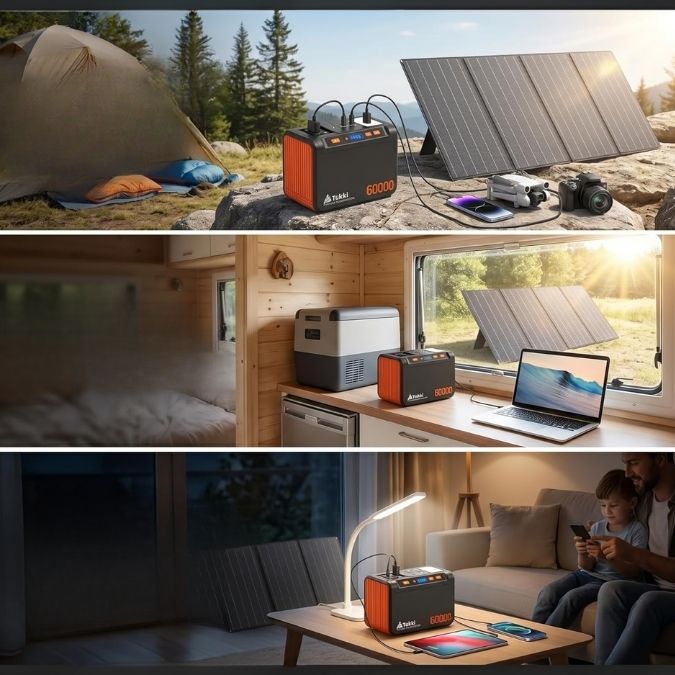
For apartment outages, it all comes down to expectations. So if you need more than phone, router, lamp, and short CPAP backup, compare it with my apartment blackout power station post before relying on a 222Wh unit.
How Long Does the TAKKI Power Station Last?
First, a 222Wh battery gives you about 222 watt-hours before efficiency losses.
In simple terms, a 20W device could run for around 11 hours in theory. However, real-world runtime is usually lower, because AC conversion, battery management, temperature, and device behavior all reduce usable power.
| Device load | Rough theoretical runtime |
|---|---|
| 10W | About 22 hours |
| 20W | About 11 hours |
| 40W | About 5.5 hours |
| 60W | About 3.7 hours |
| 100W | About 2.2 hours |
| 200W | About 1.1 hours |
Before you buy, use this formula: 222Wh divided by your device’s watts equals rough runtime in hours.
Furthermore, if you’re a CPAP user, this TAKKI station offers about 6 hours of CPAP backup. It also helps while camping, but it might not last all night. So my takeaway is simple: treat it as a short CPAP backup, check your CPAP wattage, and skip the heated humidifier when possible.
Charging: Wall, Car, and the Included 40W Solar Panel
Also, the TAKKI recharges from a wall outlet, a car socket, or the included 40W solar panel. Of these, I’d treat the wall charger as the most reliable option. The solar panel is useful outdoors, but think of it as backup charging, not a magic refill button.
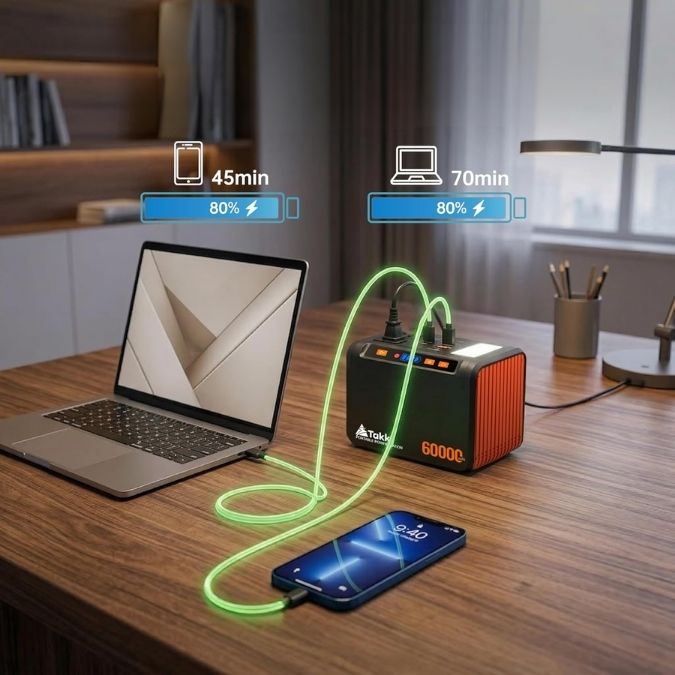
For me, the 40W panel is the standout reason this kit is attractive, because many cheap power stations don’t include a panel at this price. However, solar charging depends on direct sunlight, panel angle, clouds, heat, shade, and how much power the panel actually delivers.
Owners like the solar panel for camping, car rides, and daytime top-ups. Still, keep in mind that solar charging can be slow or underperform. Therefore, my advice is to charge the station fully before your trip, then use solar to stretch runtime during daylight. If you need more capacity for trips, see my list of the best portable power stations for camping.
TAKKI Portable Power Station Pros and Cons
| Pros | Cons |
|---|---|
| Affordable solar generator kit with panel included | 250W output is too limited for appliances |
| Lightweight and easy to pack for camping | Solar charging can be slow in actual use |
| Good for phones, tablets, lights, and laptops | |
| Helpful for short outages and emergency basics |
Note: these cons can become deal breakers, especially if you want serious power for home appliances.
TAKKI vs. Bigger Budget Power Stations
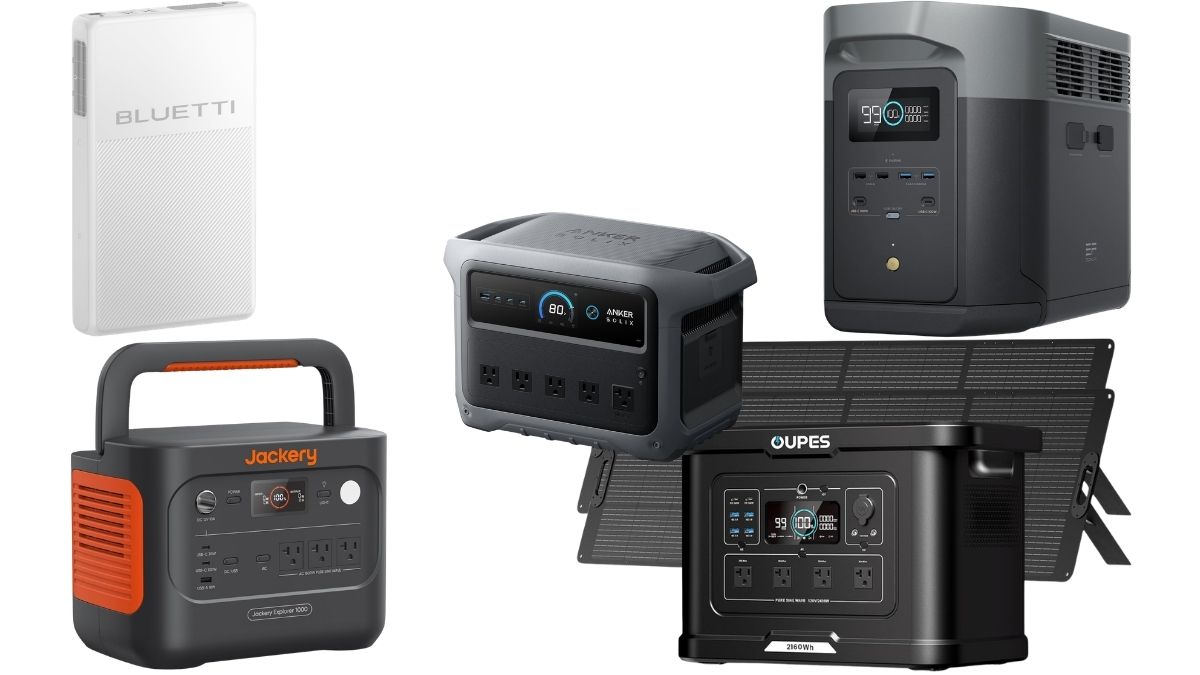
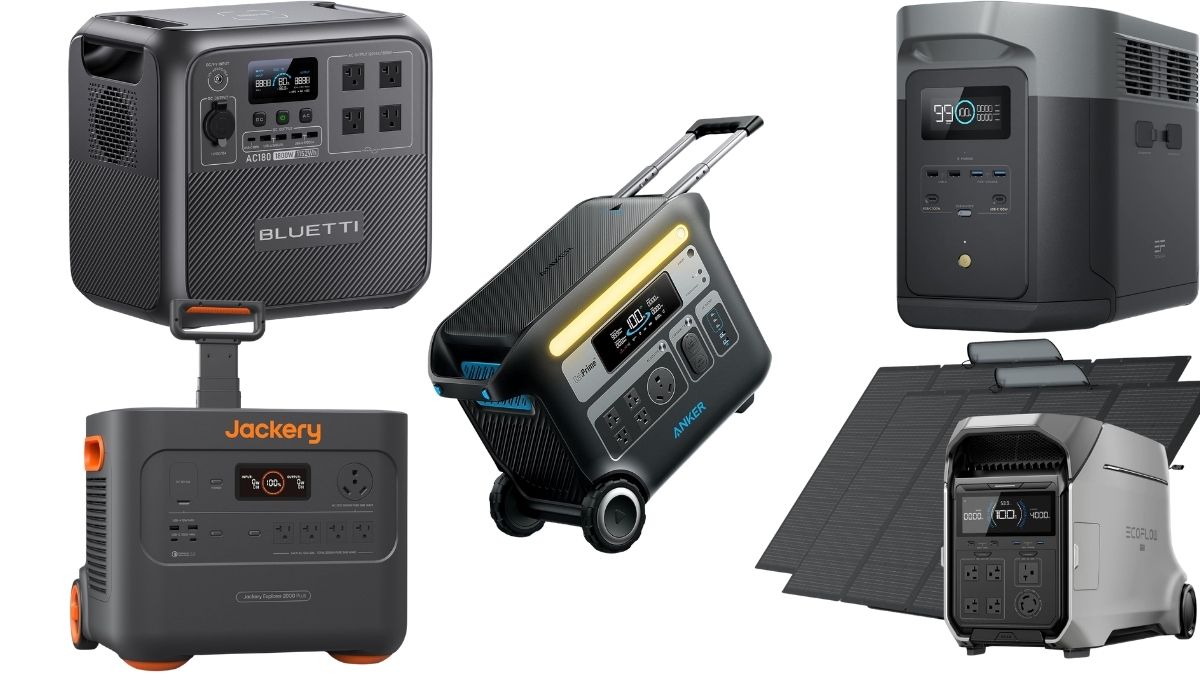
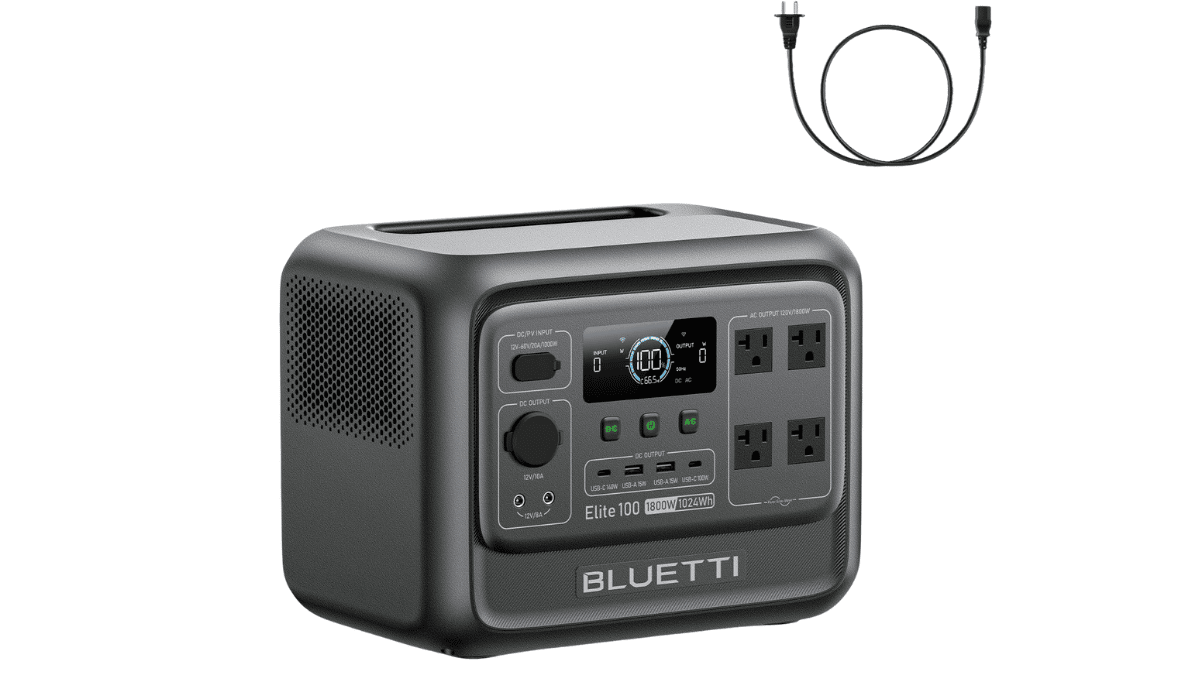
Overall, the TAKKI portable power station wins on price, size, and simplicity. On the other hand, bigger stations from Jackery, EcoFlow, Anker, and BLUETTI usually win on output, faster USB-C, battery chemistry, charging speed, warranty, and long-term brand trust. For example, my BLUETTI EB3A review shows what a step up in output and charging speed looks like.
| Product type | Best for | Compromise |
|---|---|---|
| TAKKI 250W 222Wh kit | Cheap starter solar kit | Although cheap, power is limited |
| 300Wh compact station | Better laptop and fan backup | However, it usually costs more |
| 500Wh station | Longer camping and outages | Still, it is heavier and pricier |
| 1000Wh station | Fridge, tools, more appliances | Therefore, it is much more expensive |
So in my view, this is the best TAKKI portable power station for buyers who want a cheap, compact solar kit for small devices.
However, if it feels a little too limited but you still want to stay cheap, my best portable power stations under $300 guide is a better fit.
Should You Choose a Small TAKKI Power Station?
When choosing a small power station, I check capacity, output, ports, and realistic device needs. Capacity is measured in watt-hours, while output is measured in watts, and both matter.
A 222Wh battery can be useful, but only for smaller loads. Also, a 250W output limit means you should avoid appliances with heating elements, motors with high startup draw, and anything that demands steady high power.
Next, check the ports. The TAKKI has AC, USB, USB-C, and DC outputs, which is good for mixed camping gear. However, its 18W USB-C port isn’t impressive in 2026.
Finally, think about brand risk. Because TAKKI is a low-cost brand, I recommend it for light-duty use, not for mission-critical backup.
Also, if you’re comparing low-cost brands, my MARBERO portable power station review is a useful side-by-side reality check.
Who Should Buy the TAKKI Portable Power Station?
Specifically, I’d consider the TAKKI portable power station if you want an affordable way to keep phones, tablets, lights, small fans, cameras, and a laptop alive during camping or a short outage. It also makes sense for apartment renters who can’t use a gas generator indoors and want something compact for basic backup.
Who Should Skip It?
However, skip it if you need to run a refrigerator overnight, power a coffee maker, operate a heater, run power tools, or support several devices for a full weekend. Also skip it if you need fast USB-C charging, app monitoring, LiFePO4 cycle life, or stronger warranty support.
In those cases, a 500Wh to 1000Wh power station is the smarter buy. Although it costs more, it reduces the risk of buying too little power.
For stronger outage use, I’d step up to my best portable power stations under $500 picks instead of forcing a small TAKKI battery station to do a bigger job.
My Final Verdict
In my view, the TAKKI Solar Generator 250W 222Wh kit is the best TAKKI portable power station for budget buyers who want a small, affordable solar generator with a panel included. It’s compact, easy to use, and practical for camping, phones, tablets, lights, laptops, and short emergency backup.
Above all, the key is managing expectations. Don’t buy it as a home backup system; instead, buy it as a low-cost portable charger with an AC outlet, extra ports, and solar top-up ability.
Overall, it’s a useful little kit. But if you skip your homework on wattage, it will feel underpowered.
FAQs
Is TAKKI a good portable power station brand?
TAKKI is a budget brand, not a premium one. It’s best for affordable, small-wattage backup, camping, and basic charging. However, it isn’t the first brand I’d choose for heavy-duty home backup.
What can the TAKKI portable power station run?
It can run phones, tablets, laptops, LED lights, radios, cameras, small fans, and some low-watt CPAP setups. However, don’t use it for coffee makers, heaters, microwaves, full-size refrigerators, or tools above 250W.
How long does the TAKKI 222Wh power station last?
It depends on device wattage. For example, a 20W device may run for about 11 hours in theory, while a 60W device may run for about 3 to 4 hours. Real-world results are usually lower.
Can the TAKKI 250W power station run a CPAP?
Yes, it can run some CPAP machines for short backup. However, runtime depends on your CPAP wattage, pressure settings, and whether you use a heated humidifier. For medical reliability, follow your CPAP maker’s power guidance.
Can the TAKKI portable power station run a refrigerator?
I don’t recommend it for a full-size refrigerator, because the 250W output and 222Wh capacity are too small for dependable fridge backup. Instead, start with a 500Wh to 1000Wh station.